Sarah Whitmore had forty-seven cents in her purse when she became Thomas Blackwood's wife.
She knew the exact amount because she had counted it three times that morning, once while sitting on the edge of the narrow boardinghouse bed, once while standing outside the law office with October wind tugging at her coat, and once again beneath the desk while attorney Calvin Caldwell explained the marriage contract in the careful voice of a man determined not to acknowledge how desperate the woman across from him truly was.
Forty-seven cents.
Three dresses.
One leather valise.
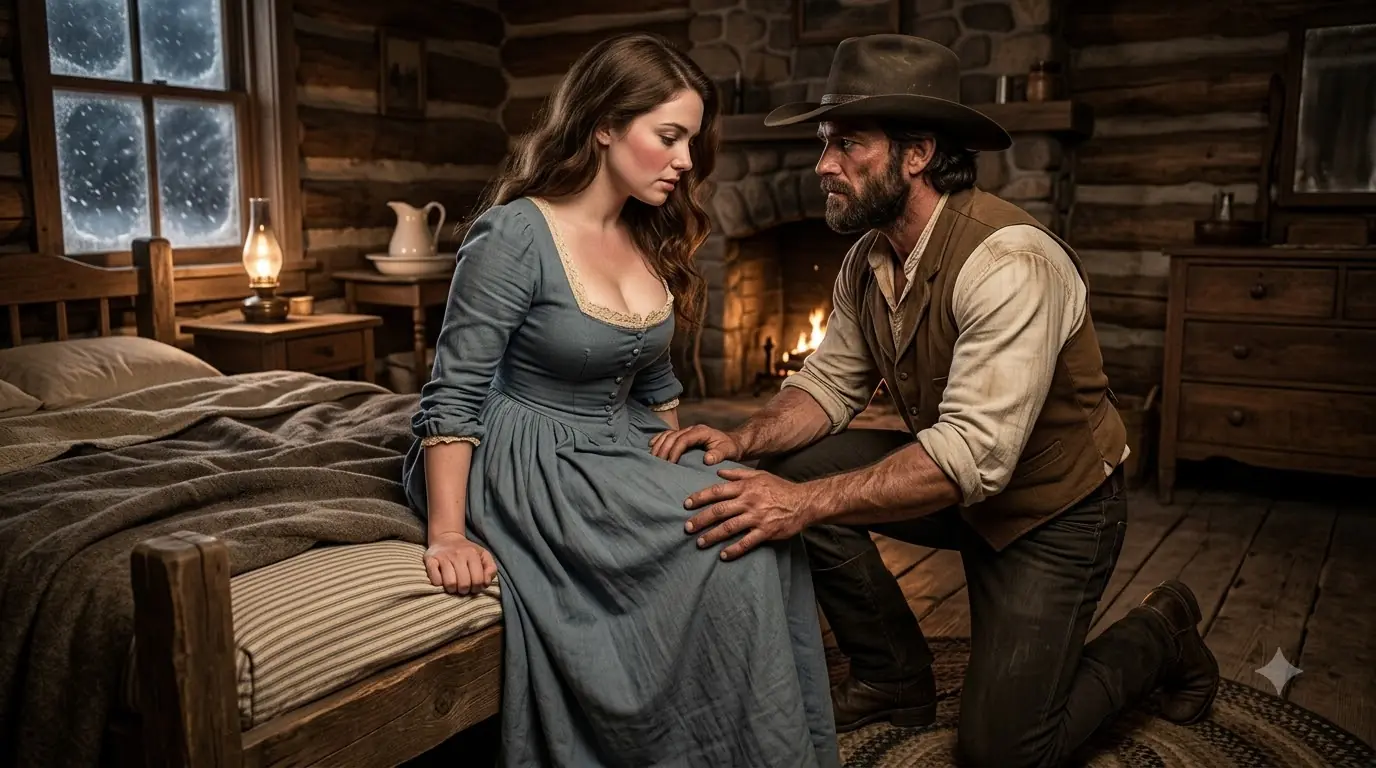
A pair of shoes whose left sole had begun separating at the toe.
That was all that remained after her father died.
Edmund Whitmore had been a good man with disastrous instincts for money. He taught Latin, literature, arithmetic, and the conviction that a clever mind could somehow overcome practical realities if one simply refused to surrender to them. Sarah had inherited the mind, the stubbornness, and unfortunately some portion of the refusal.
What she had not inherited was a house.
The house belonged to the bank.
So did most of the furniture.
The savings her father had spoken of did not exist.
For nearly six weeks Sarah had walked through Butte asking for respectable employment and discovering how little use respectable employers had for an educated unmarried woman of twenty-nine. She could balance commercial books faster than most clerks. She could draft correspondence, calculate compound interest, remember nearly everything she read, and organize records with the precision of a military quartermaster.
None of that mattered.
She was too educated to scrub floors without attracting questions and too female to keep accounts without attracting more.
Then came the advertisement.
Montana ranch owner. Man of property and substance. Seeks educated woman of good character for permanent matrimonial arrangement. Separate personal allowance. Household authority. Security guaranteed.
Sarah had read it twice.
Then a third time.
Not romantic.
Not flattering.
Not dishonest.
That last quality mattered.
She answered.
Thomas Blackwood wrote back in twelve sentences.
No poetry.
No promises of affection.
He owned twelve thousand acres outside Butte, ran cattle, employed fourteen hands, had previously been married, had no children, and required a wife capable of maintaining a substantial household and understanding ranch operations.
He did not ask for beauty.
Sarah liked him slightly for that.
He did not describe his own.
She liked him more.
Three letters later, he proposed an interview.
Two weeks after that, she sat in Caldwell's office signing her name beneath his.
Thomas stood beside the desk while she wrote.
He was not what she had imagined.
Sarah had expected a soft-handed landowner with money inherited from somebody more competent. Instead Thomas Blackwood looked as if the Montana landscape had created a man for the specific purpose of arguing with winter.
Broad shoulders.
Dark hair.
A short beard with the first hint of gray near the chin.
Hands scarred and calloused.
Eyes that were not simply blue but that hard blue-gray color the sky became before snow.
Thirty-nine, perhaps.
Older than she expected.
Far more physically imposing.
And completely silent.
Sarah finished signing.
Caldwell sanded the document.
Thomas looked at her.
“Do you have questions?”
She nearly laughed.
“Several.”
“Ask.”
“Here?”
Caldwell cleared his throat.
Sarah looked toward him, then back to Thomas.
“No.”
Thomas nodded.
“Then tonight.”
Caldwell appeared surprised.
Sarah was too.
The agreement should have made her feel trapped.
Instead the first strange comfort of the day came from knowing that when Thomas said tonight, he apparently meant that her questions deserved answers.
They left the office married.
No church.
No flowers.
No witnesses except Caldwell and his clerk.
Thomas loaded her valise into his wagon himself.
Sarah climbed beside him.
The silence lasted forty minutes.
Then she lost patience.
“How many cattle?”
“Approximately eighteen hundred.”
“Approximately?”
“Winter changes numbers.”
“I assume calves aren't counted until branding.”
He looked at her.
“Yes.”
“How much grazing land is deeded and how much leased?”
Another glance.
“Eight thousand deeded. Four thousand leased.”
“What is your annual loss percentage?”
This time he looked longer.
“You always ask questions like this?”
“When nervous.”
“You're nervous?”
“Yes.”
“You don't seem nervous.”
“I have practice.”
Something moved near the corner of his mouth.
Not a smile.
The possibility of one.
Sarah watched the road.
“How much debt?”
Thomas's hands remained steady on the reins.
“Considerable.”
“That is not a number.”
“No.”
She waited.
He did not elaborate.
Interesting.
“Do I get that number tonight too?”
“Yes.”
Sarah nodded.
“Good.”
The wagon continued west.
Mountains rose in the distance.
By late afternoon, Blackwood Ranch appeared beyond a ridge.
It was enormous.
Not grand in the polished eastern sense. No white columns. No ornamental gates built for admiration. The buildings looked designed by people who expected weather to attack them personally.
A massive barn.
Equipment sheds.
Corrals.
Bunkhouse.