The first person to tell the Farm Girl she was ruining her father’s land did not even bother stepping out of his truck.
He slowed beside the fence on a warm April morning, rested one weathered arm through the open window, and stared across the forty acres she had just finished preparing.
“What are you putting in there?”
“Sunflowers.”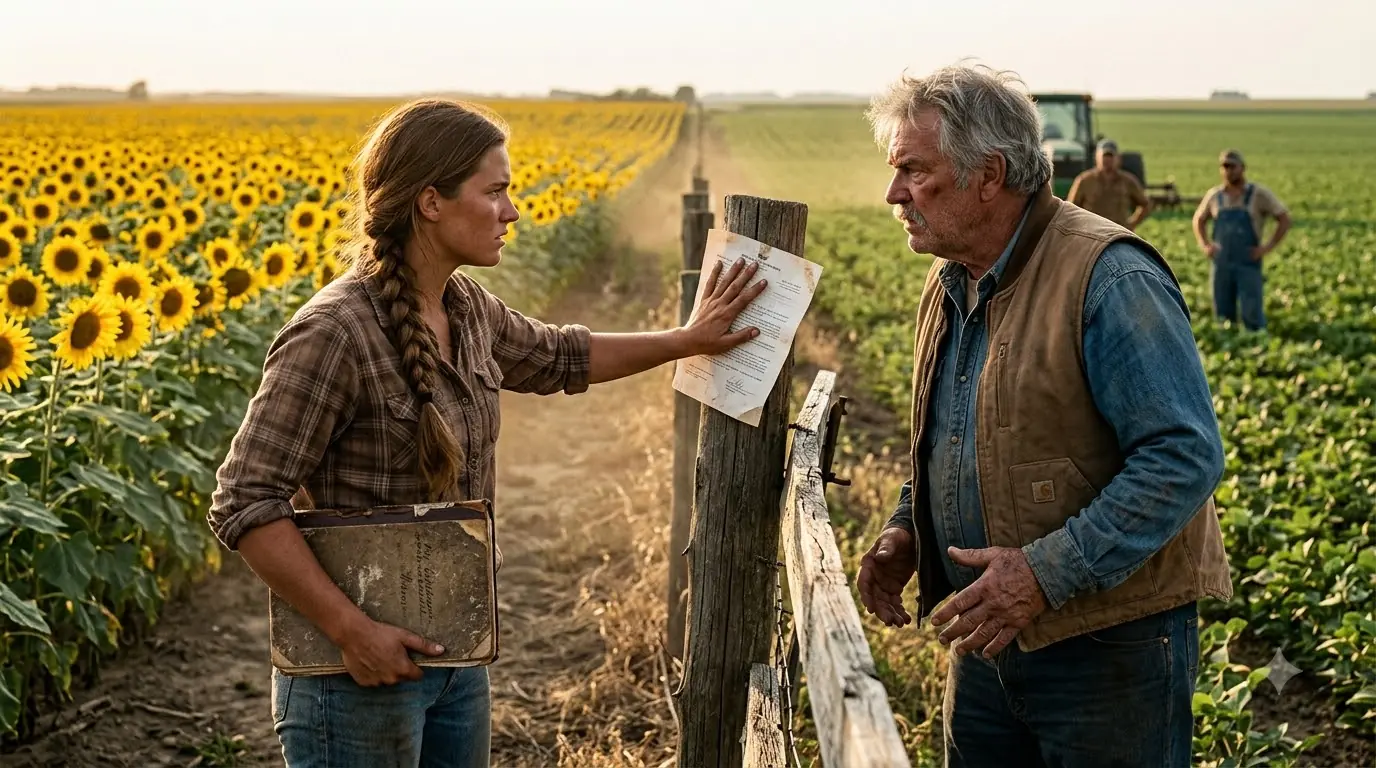
The Old Farmer laughed.
Not cruelly at first.
Almost as though he believed she was joking.
When she did not smile, his expression changed.
“All forty acres?”
“Yes.”
The Old Farmer shifted his toothpick from one side of his mouth to the other.
“Your daddy know about this?”
The Farm Girl looked toward the farmhouse.
Her father had been dead for eleven months.
Everyone in Whitfield County knew that.
The Old Farmer realized the mistake.
His face tightened.
“You know what I mean.”
“No.”
He cleared his throat.
“I mean he spent thirty years building that ground into soybean ground.”
The Farm Girl wiped dirt from her palms onto her faded jeans.
“He planted soybeans there because soybeans paid.”
“Exactly.”
“They don’t pay enough this year.”
The Old Farmer gave her the same look men in the county had been giving her since she inherited Whitfield Farms.
Patient.
Amused.
Slightly pitying.
The expression suggested that if everyone waited long enough, she would eventually become reasonable.
She was twenty-three.
Five feet seven.
Lean from work, not fashion.
Long chestnut hair usually tied in one heavy braid down her back.
She had grown up checking fence after school, driving tractors before she could legally drive a truck, and falling asleep in the combine cab while her father harvested around her.
But in the months since his funeral, half the county seemed to have forgotten she had spent her entire life on the farm.
They remembered only that she was young.
And female.
And alone.
The Old Farmer pointed toward the bare field.
“You know sunflower prices?”
“Yes.”
“You know insurance rates?”
“Yes.”
“Contracted buyer?”
“Yes.”
That answer surprised him.
“Who?”
“Prairie Oilseed Cooperative.”
The Old Farmer’s smile returned.
“They’ll take them if the grade is good.”
“Yes.”
“And if it isn’t?”
“I own the problem.”
He leaned back.
“You sure about that?”
The Farm Girl met his eyes.
“Yes.”
The Old Farmer looked at the field again.
Forty acres.
The south parcel of Whitfield Farms.
Rich black soil on the upper end.
Lighter ground toward the bottom.
A low rise running northwest to southeast.
He had farmed next door for almost forty years.
He knew that field.
Or believed he did.
“You’re going to regret it.”
“Maybe.”
“Your father would’ve planted beans.”
The Farm Girl’s expression cooled.
“My father isn’t farming it.”
The Old Farmer stared at her.
Then nodded once.
“Fair enough.”
He put the truck into gear.
Before leaving, he called through the window.
“Don’t say nobody warned you.”
The Farm Girl watched him drive away.
Then she looked toward the forty acres.
Rows had not been planted yet.
Only prepared.
The soil looked empty.
That made her nervous.
Empty ground could become anything.
That was the beauty of spring.
It was also the terror of it.
Her father had understood both.
The Farm Girl walked back toward the machine shed.
Inside, beneath an old workbench, sat the reason she was planting sunflowers.
A brown ledger.
The cover had softened from decades of use.
Her father’s handwriting filled almost every page.
Rainfall.
Planting dates.
Seed varieties.
Fertilizer rates.
Fuel.