At first glance, the newest image is encouraging.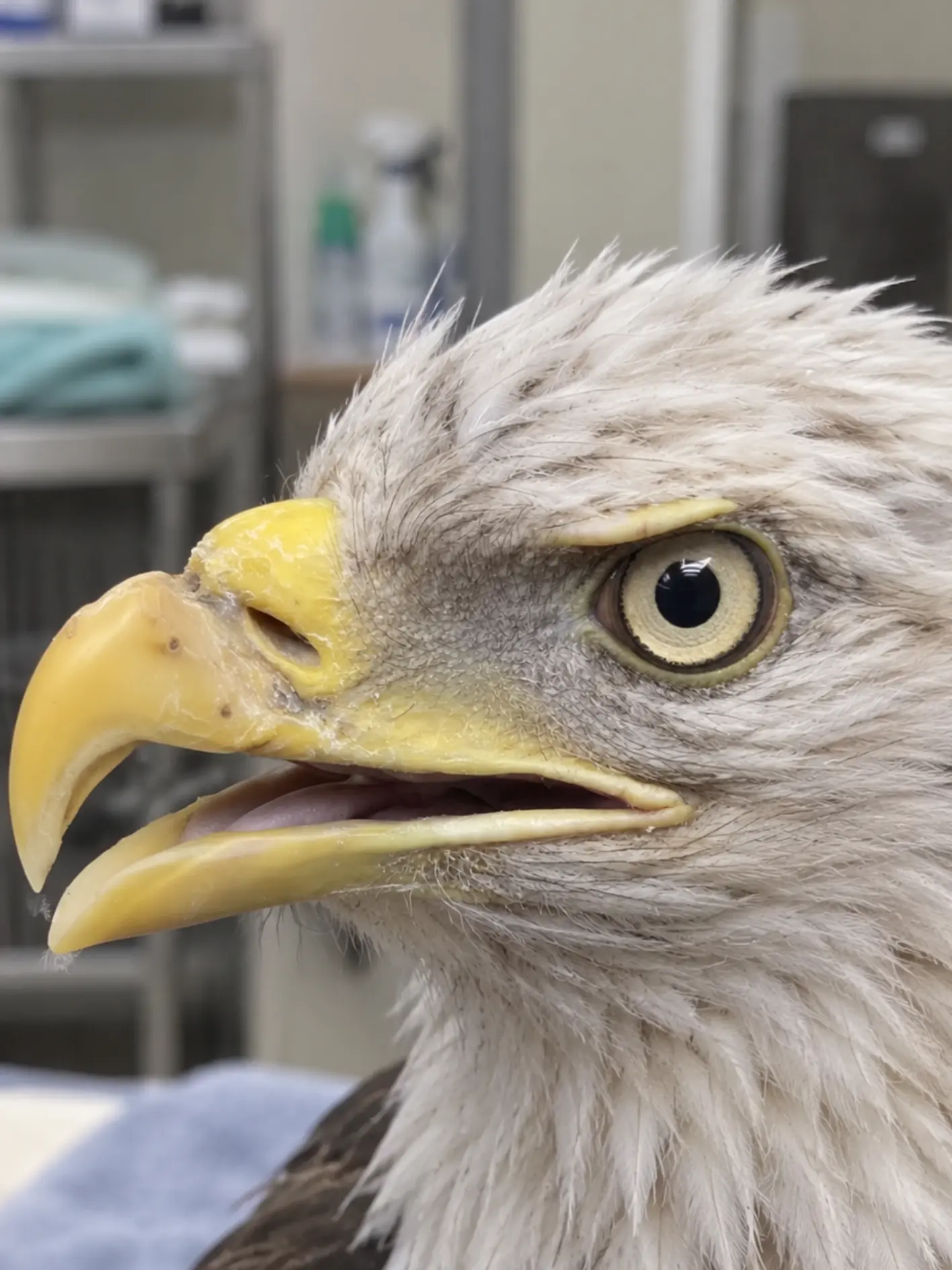
The adult Bald Eagle is alert. Its eye is bright and focused. The overall shape of the beak has been preserved, and the damaged area appears to be healing. To a casual observer, the bird may even seem to be on a steady path back to normal.
But that visible progress tells only the end of a much harder story.
Only a short time earlier, this same eagle arrived in rehabilitation with a serious injury to the beak — one severe enough to threaten not only the bird’s comfort, but its ability to survive at all. Veterinary findings were considered consistent with gunshot trauma, and the case immediately raised concern because injuries involving the beak are among the most difficult to manage in a wild raptor.
For a Bald Eagle, the beak is not simply part of its appearance. It is an essential survival tool. Eagles rely on it to tear food, manipulate prey, defend themselves, preen their feathers, maintain hygiene, and interact with their environment. Damage to the beak can quickly become life-threatening, even when the rest of the bird appears relatively stable. A bird that cannot use its beak normally may be unable to eat efficiently, may struggle to groom, and may become increasingly debilitated in a short period of time.
That is why this case was treated as urgent from the beginning.
According to the rehabilitation team, the eagle was found in distress and brought in for emergency evaluation after observers noticed obvious trauma around the face and upper beak. Blood and tissue damage were concentrated near the base of the bill, the region where even a relatively small wound can create outsized problems. This part of the beak is close to sensitive soft tissues, the nostrils, and the supporting bone underneath the keratin sheath. When that area is compromised, the bird’s ability to eat, breathe comfortably, and heal properly can all be affected.
On intake, the veterinary team’s first priority was stabilization. As with any injured Bald Eagle, the bird had to be assessed carefully but efficiently. Staff evaluated body condition, hydration status, mentation, and posture. They examined the eyes, facial symmetry, nostrils, and oral structures. They checked the alignment of the upper and lower portions of the beak, looked for fractures or instability, and assessed whether the bird could open and close the bill appropriately.
In suspected trauma cases, appearances can be misleading. A bird may be standing, alert, and responsive, yet still be carrying significant structural damage beneath the surface. For that reason, the team proceeded with diagnostic imaging to better understand the extent of the injury.
Radiographs were a critical part of the workup. Imaging helped determine whether the injury involved only the outer keratin layer or whether the underlying bone had also been affected. It also allowed the team to evaluate the degree of disruption near the base of the upper beak and to look for fragments or patterns of damage consistent with penetrating trauma. In cases like this, radiographs and, when necessary, advanced imaging can make the difference between guesswork and a realistic treatment plan.
The findings confirmed that this was not a superficial injury.
The trauma had affected important structures associated with the beak, but there was one promising element: the beak’s overall framework still appeared potentially salvageable. That distinction mattered enormously. In raptor medicine, the question is not only whether a wound can close. The larger question is whether the bird will ever be able to use that beak well enough to function independently in the wild. A beak may look improved externally and still fail to perform adequately. For a releasable Bald Eagle, cosmetic recovery is not enough. Functional recovery is the real standard.
Treatment began with careful wound management.
The damaged area had to be cleaned and assessed for contamination, devitalized tissue, and instability. In beak trauma, infection is a major concern because the area can be difficult to protect and because the bird continues to use the injured structure every time it tries to feed or manipulate objects. The veterinary team focused on reducing pain, controlling inflammation, and protecting the healing tissues. Depending on the specifics of a case, treatment may also include antibiotics, wound dressings, supportive stabilization of the beak, and close monitoring for changes in alignment or tissue viability.
Supportive care was equally important.
An eagle with a painful or damaged beak may not eat normally, even if food is offered. Staff therefore monitored appetite, body weight, hydration, and fecal output. The bird’s nutrition had to be maintained while minimizing additional trauma to the healing structures. If a bird cannot tear or grasp food normally, rehabilitation becomes significantly more complicated. Every day then becomes a balance between encouraging function and preventing setbacks.
That challenge is what makes the recent improvement so meaningful.
The current image shows more than a bird that survived. It shows a bird whose beak is healing after a potentially devastating injury. The abnormal tissue and discoloration associated with trauma appear to be resolving, and the bird’s expression and posture suggest a level of stability that may not have been possible during the earliest phase of care. For veterinary staff, those outward signs matter — but they matter most when paired with functional gains: eating independently, maintaining weight, using the beak with more confidence, and tolerating handling and examination without evidence of worsening pain or structural failure.
In other words, the real progress is not just that the beak looks better. It is that the bird may be regaining the ability to use it.
Even so, recovery from a suspected gunshot injury to the beak is rarely simple or quick. Healing tissue must be monitored over time. Beak growth and wear need to remain balanced. Any disruption in alignment can lead to abnormal contact between the upper and lower bill, which in turn can interfere with feeding. If underlying structures were damaged, the rehabilitation timeline may be prolonged. And because the beak is constantly in use, setbacks are always possible.
The rehabilitation team therefore continues to take a cautious approach.
That caution is especially important because Bald Eagles are not domestic patients. They are powerful wild birds that often conceal weakness until they are severely compromised. A bird may appear strong long before it is truly ready for release. Before any eagle can return to the wild, it must demonstrate more than basic survival in a clinical setting. It must be able to feed independently and efficiently, maintain normal posture and activity, and eventually, if the case advances that far, fly and behave appropriately in a conditioning environment.
Cases involving suspected intentional harm also carry another layer of importance.
When an eagle presents with injuries considered consistent with gunshot trauma, wildlife authorities may need to be notified. In the United States, Bald Eagles are protected under multiple laws, and the intentional shooting of an eagle is a serious matter. Rehabilitation staff and veterinarians do not determine criminal responsibility on their own, but they do document injuries carefully. Photographs, examination notes, and imaging findings can become important records in any subsequent wildlife law-enforcement review.
That legal context matters, but so does the broader conservation message.
The Bald Eagle’s recovery across the United States remains one of the country’s most recognized wildlife success stories. The species rebounded dramatically after decades of decline tied to habitat loss, persecution, and the devastating effects of DDT. That recovery is often celebrated — and rightly so. But population recovery does not mean the threats have disappeared. Eagles today still face poisoning, vehicle collisions, lead exposure, electrocution, habitat disturbance, entanglement, and direct human-inflicted trauma, including gunshot injuries.
Cases like this one are a reminder that recovery is not permanent by default. It depends on continued public responsibility.
That is why this eagle’s case should be viewed as more than an isolated rehabilitation story. It is also an opportunity to remind people what eagle protection looks like in practical terms.
First, if someone finds a Bald Eagle that appears injured, grounded, bleeding, unable to fly, or unable to use its beak or wings normally, the most important action is to call licensed professionals. The public should not attempt to feed, medicate, or treat a wild eagle. These birds are both vulnerable and dangerous to handle improperly. Even a weakened eagle can inflict severe injury with its talons. Licensed wildlife rehabilitators, animal control officers, conservation officers, or state wildlife agencies are the appropriate first contacts.
Second, people who witness possible intentional harm to an eagle should report it to the proper wildlife authorities. They should not confront a suspected offender directly. Timely reporting can preserve evidence and improve the chances that authorities can assess what happened. Protected wildlife cases depend heavily on accurate information from the public.
Third, communities should continue supporting licensed wildlife rehabilitation centers. A case like this requires far more than compassion. It requires trained personnel, protective equipment, diagnostics, medications, housing, nutritional management, and sustained monitoring. Rehabilitation medicine is labor-intensive, specialized, and expensive. When people donate to reputable, permitted wildlife hospitals and raptor rehabilitation organizations, they are directly increasing the likelihood that birds like this one receive a genuine second chance.
There is also a broader educational lesson here.
Many people think of a gunshot injury only in terms of an immediate wound. In reality, the consequences can extend much further. A bird may survive the initial trauma but later succumb to infection, starvation, or functional disability. That is especially true when the injury involves the beak. Because the beak is so central to everyday survival, even a nonfatal wound can become catastrophic without specialized care.
This eagle did not have the option of recovering alone.
Without intervention, a bird with major beak trauma might be unable to feed adequately. It might become progressively weaker, more susceptible to secondary complications, and less able to defend itself or maintain feather condition. In the wild, even a short period of impaired feeding can push a raptor into dangerous decline. The fact that this bird is now showing healing is a testament not only to the eagle’s resilience, but also to the speed and quality of the care it received.
That kind of outcome should inspire gratitude — but also accountability.
Wildlife rehabilitation can repair some of the damage people cause, but it cannot prevent the injury from happening in the first place. Prevention still matters most. Eagles should not be shot. They should not be poisoned indirectly by avoidable environmental hazards. They should not be left to suffer untreated because people assume nature will simply take care of itself. Respect for wildlife must include action: responsible behavior, lawful conduct, timely reporting, and support for the systems that protect injured animals when prevention fails.
For now, the encouraging news is that this eagle appears to be moving in the right direction.
The beak is healing. The bird is alert. The structure of the bill appears to have been preserved well enough for cautious optimism. That does not guarantee a final outcome, and any responsible rehabilitation team would say so clearly. But improvement is meaningful. In raptor medicine, each functional milestone matters: tolerating treatment, healing without major infection, maintaining alignment, resuming independent feeding, and ultimately proving readiness for life beyond the clinic.
Each of those steps represents survival earned, not assumed.
And each one underscores why the public should care.
Bald Eagles are more than symbolic birds. They are long-lived apex scavengers and predators whose health reflects the condition of the ecosystems around them. When one arrives with a preventable, human-caused injury, the story is never just about a single patient. It is about the relationship between people and wildlife, and whether that relationship is defined by indifference or stewardship.
This case offers a clear answer to what stewardship can look like.
Someone noticed the bird in distress. Someone made the call. Professionals stepped in. Veterinarians and rehabilitators committed the time and expertise needed to preserve function in a profoundly important structure. And now, because of that chain of action, a Bald Eagle that might otherwise have been lost is still fighting its way back.
That should matter to all of us.
The image of this healing eagle should not be read only as a happy ending. It should also be understood as a warning and a responsibility. A beak injured by suspected gunfire is not just a veterinary challenge; it is a sign that eagle protection still requires vigilance. Recovery stories are powerful, but prevention remains the true goal.
If this case leads to anything beyond one bird’s progress, let it be this:
Report injured eagles promptly.
Report suspected wildlife crimes responsibly.
Do not attempt amateur treatment.
Support licensed rehabilitation centers.
And speak clearly, in every community, for the protection of the species that still depend on human restraint as much as human rescue.
Today, the beak is healing.
With continued care, the bird may recover enough to reclaim the full use of the structure it depends on most. Whether that journey ends in release or lifelong management will depend on function, not hope alone. But the progress so far is real, and it is worth recognizing.
A Bald Eagle survived a suspected gunshot injury to the beak.
Its healing now reflects expert care, resilience, and a second chance.
What happens next for America’s eagles depends on whether people are willing to help ensure that fewer of them need that second chance in the first place.