Raymond Colter had spent most of his adult life hauling things other people considered important.
For twenty-two years, he drove refrigerated freight and hardware loads between western Kansas, eastern Colorado, the Oklahoma panhandle, and the long flat slices of Nebraska that look empty until you drive them often enough to know where every elevator, diner, and fuel island sits. He had hauled seed, frozen chicken, fence posts, bottled water, and once a trailer full of lawn tractors he still talked about because the paperwork had been such a mess that he nearly missed two sleep breaks arguing with dispatch.
At fifty-eight, Raymond still preferred the road to almost anything else. He liked a job that had a beginning, a route, and an end. He liked the quiet from two-thirty to five in the morning, when the interstate felt as if it belonged only to truckers and insomniacs. He liked the way small-town truck stops carried the same smell everywhere—coffee, diesel, fryer oil, rubber, floor cleaner, and weather.
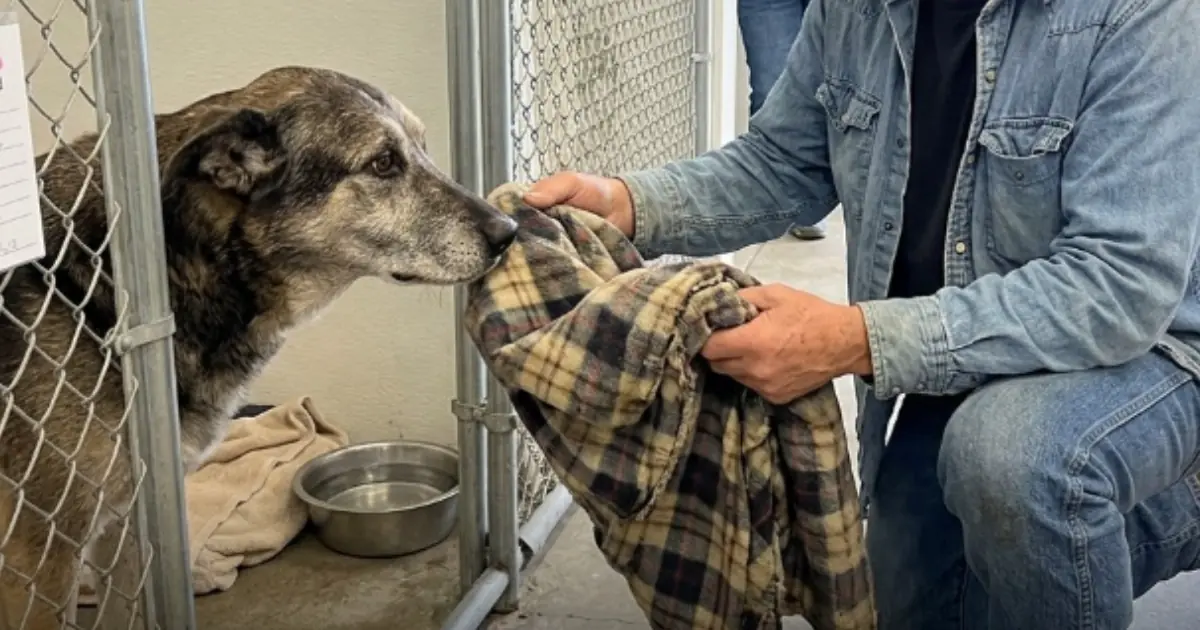
Mostly, he liked knowing what mattered in practical terms. Keep the truck moving. Keep the freight cold. Keep your paperwork straight. Call ahead if weather turns. Show up when you said you would.
So when people later asked him why he had driven four hundred miles with nothing in his trailer and only an old plaid blanket folded on the passenger seat, Raymond always gave the same answer.
“Because it belonged to Joe,” he said. “And the dog was still here.”
Joe Merrick had been one of Raymond’s oldest friends, though neither man would have used the phrase “best friend” because men of their age and temperament tended to avoid language that sounded like it came from a greeting card. They met twenty-six years earlier at a truck wash outside Salina when both were younger, harder on their knees, and still stupid enough to think black coffee counted as hydration during August runs.
Joe was two years older than Raymond, a former Army mechanic with a habit of speaking only when he had a reason and then doing it in short, efficient sentences. He drove a flatbed for years before arthritis in one shoulder and a bypass surgery pushed him off long-haul work and into regional dispatch at a small freight company outside Wichita. Raymond stayed over the road. Their lives crossed at truck lots, repair shops, holiday weekends, and the sort of funerals and retirement cookouts that slowly replace bachelor parties once men cross into their fifties.
Joe never married. That was not because he disliked people. He simply liked quiet, dogs, and his own routines more than he liked compromise. For years his life orbited around old trucks, weather radios, diner breakfasts, and a small white bungalow in Pratt, Kansas, with a narrow driveway and a detached garage full of organized tools. Then, eight years before the drive that would make people on the internet call Raymond a hero, Joe came home from the county shelter with a dog named Buddy.
Buddy was listed as a shepherd-Lab mix, though anyone who looked at him for more than a minute could see there were probably three or four other breeds buried somewhere in the arrangement. He had the broad head of a Lab, upright semi-floppy ears that never made a final decision, a thick coat the color of old wheat and dust, and a black saddle along his back that darkened in winter. He was around two years old when Joe got him—nobody knew exactly—and had already developed the guarded manners of a dog who expects disappointment before kindness.
Joe understood that type.
According to the shelter woman who handled the adoption, Buddy had been found after wandering near grain bins outside Greensburg. He was not starving, exactly, but he was underweight and too careful with strangers. He watched hands. He flinched at fast movement. He ate quickly and then stepped backward as if expecting the bowl to be taken away.
Joe brought him home because, as he later told Raymond, “He looked like he was tired of explaining himself.”
That was the sort of thing Joe said when he was accidentally honest.
Buddy changed the tempo of Joe’s life in ways neither man would have described romantically. He got up earlier because the dog liked to patrol the yard before dawn. He kept better food in the house because there is something embarrassing about feeding a dog rotisserie chicken while you yourself live on saltines and bologna. He took fewer weekend dispatch shifts because Buddy expected an evening walk by the levee road and had no respect for overtime.
Raymond met the dog six days after Joe brought him home. He had pulled through Pratt on a Sunday and stopped by Joe’s place because his reefer load was delayed until Monday. Joe opened the door, and there was Buddy standing half behind his leg like a skeptical child.