For seven years, the kingdom had lived beneath the shadow of an empty throne.
The throne itself was not truly empty. It stood beneath a great bronze sun inside the royal citadel, elevated above white stone steps polished by generations of kings, and every morning servants wiped dust from its carved arms as though its owner might return before supper.
But no king had sat there since the royal fleet vanished beyond the western horizon.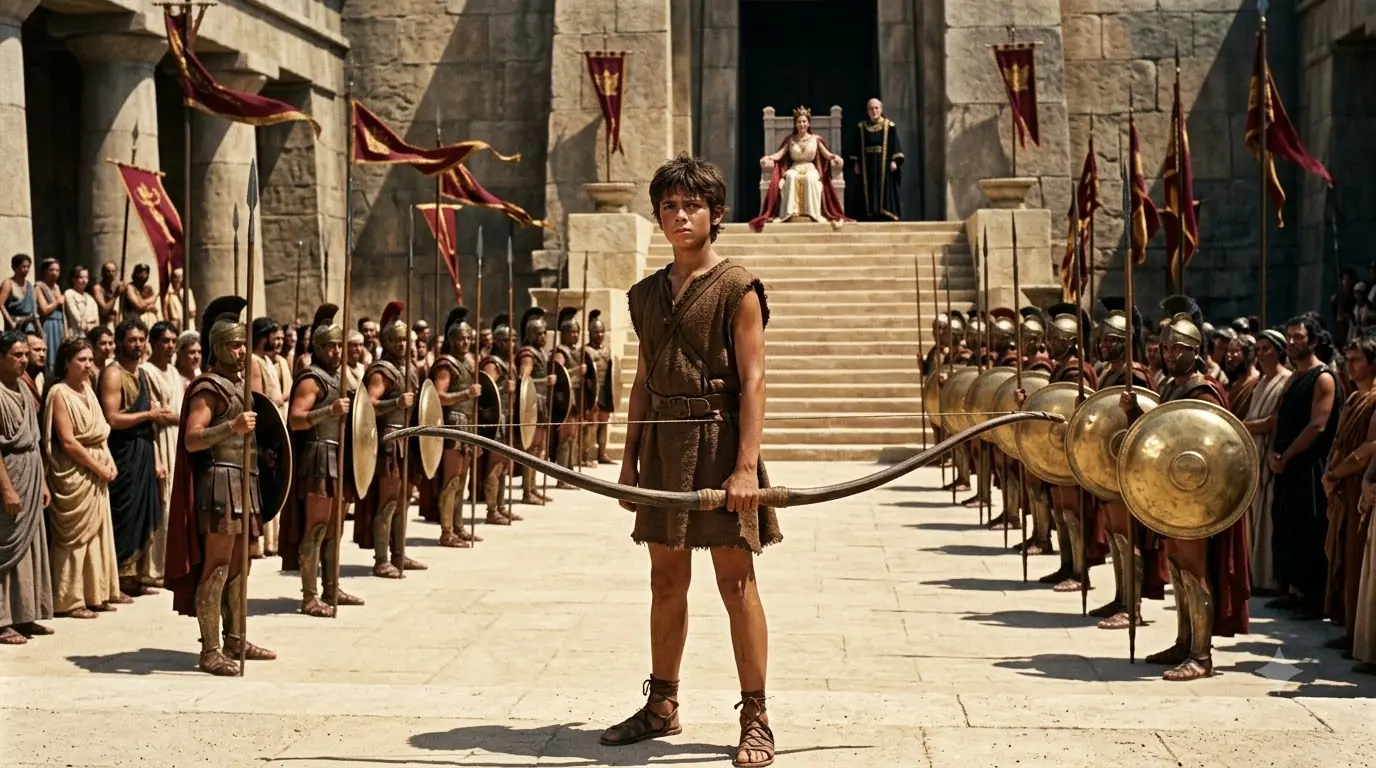
The people had once watched for sails.
They no longer did.
The fishermen along the coast stopped speaking about the missing fleet after the third winter. Merchants replaced the King’s portrait on their account books with the Queen’s seal. Children who had been infants when the ships departed grew old enough to train with spears without remembering the King’s face.
Only three people inside the palace still behaved as though he might walk through the gates.
The Queen was one.
The Young Prince was another.
The third was the Royal Regent.
But the Regent waited for a very different reason.
The Young Prince had been five years old when his father sailed away.
He remembered fragments rather than complete memories.
A huge hand covering his small one around the grip of a bow.
The smell of salt on a crimson cloak.
A booming laugh echoing beneath palace arches.
A scar beneath his father’s left eye.
And the last morning.
The King had crouched before him at the harbor while soldiers loaded bronze shields and food barrels onto twelve black-hulled warships.
“Look at me.”
The boy had tried.
But behind his father the fleet fascinated him.
Hundreds of oars.
Blue sails.
Spearmen.
Archers.
The golden lion carved into the flagship’s prow.
His father had caught his chin gently.
“Not the ships. Me.”
The boy looked up.
The King smiled.
“You know what courage is?”
The boy had answered as children often did when they were desperate to impress their fathers.
“Not being afraid.”
The King laughed.
“No.”
The answer had embarrassed him.
The King leaned closer.
“Fear is useful. A man without fear walks into pits because he never bothers looking down.”
The boy frowned.
“Then what is courage?”
“Knowing what frightens you and moving anyway.”
The King tapped two fingers against the boy’s chest.
“Remember that.”
Then he stood.
The Queen waited nearby with tears she refused to let anyone see.
The King embraced her.
He boarded the flagship.
By sunset, the fleet had become twelve dark marks against a burning horizon.
By morning, it was gone.
Three months later, one damaged ship returned.
No King.
No flagship.
No clear explanation.
The surviving sailors claimed a great storm scattered the fleet near an island chain forbidden on royal charts.
Some spoke of raiders.
Others spoke of reefs.
One delirious soldier claimed the sea itself had opened beneath the King’s ship.
The Royal Regent dismissed such tales publicly.
“Men who nearly drown often confuse terror with gods.”
He had been the King’s most trusted minister.
He was also the Queen’s uncle by marriage, which placed him close enough to the royal family to appear loyal without possessing a direct claim to the throne.
At first, everyone was grateful for him.
The Queen had lost a husband.
The Prince had lost a father.
The kingdom needed grain counted, judges appointed, taxes collected, borders defended, and ships rebuilt.
The Regent handled everything.
He never wore a crown.
That was the genius of it.
He merely stood beside one.
Years passed.
The Regent’s influence grew.
Commanders who questioned him retired unexpectedly.
Governors who resisted his taxes lost contracts.
Merchants who supported the Queen found inspections becoming strangely frequent.
Even palace servants learned which corridors belonged to the Regent’s men.
The Queen saw it.
But seeing a trap was not the same as knowing where the jaws would close.
So she waited.
And she taught her son to wait.
The Young Prince hated waiting.
At twelve, he had inherited his father’s dark eyes and his mother’s ability to remain silent while furious, though he had not yet mastered the second trait.
He was thin, quick, stubborn, and far better with a bow than the Regent realized.
That was because the Queen had forbidden him from practicing publicly.
“You think I should look weak.”
“No.”
They were standing one evening on a high palace balcony overlooking the sea.
The Prince held a wooden training bow.