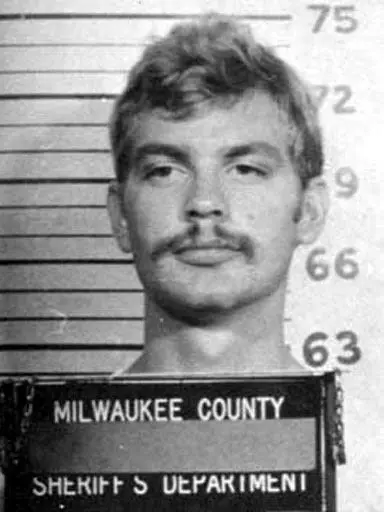
Milwaukee, Wisconsin.
July 22, 1991.
Shortly before midnight, two Milwaukee police officers noticed a young man moving quickly along the street.
Something metallic swung from his wrist.
A handcuff.
One side had been locked around him.
The other remained open.
The man was Tracy Edwards.
He was twenty-two years old.
He looked frightened.
He was trying to get away from an apartment only a short distance behind him.
To the officers, the first few seconds probably looked like the beginning of an unusual but ordinary police call.
A fight.
A domestic argument.
An assault.
Maybe something involving alcohol.
Edwards told them that a man had placed the handcuff on him.
He said the man had threatened him with a knife.
The address was 924 North 25th Street.
Apartment 213.
The tenant's name was Jeffrey Lionel Dahmer.
At that moment, the name did not mean what it means today.
There was no national warning attached to it.
No photograph of Dahmer was circulating among police departments.
No detective had identified him as the center of a string of disappearances.
He was thirty-one years old.
A white man living alone in a modest Milwaukee apartment.
A former Army medic.
A former employee of the Ambrosia Chocolate Company.
A convicted sex offender.
A man currently under probation supervision.
Those facts existed in different records.
None of them yet said:
There are multiple murder victims inside Apartment 213.
Edwards led the officers back.
Dahmer opened the door.
He did not run.
He did not immediately confess.
He attempted to explain.
That calmness had protected him before.
Eight weeks earlier, he had stood outside the same apartment with another victim and persuaded police that nothing seriously criminal was happening.
On this night, he tried again.
The officers wanted the key to the handcuff.
Dahmer indicated it was inside.
Officer Rolf Mueller moved through the apartment.
He entered the bedroom.
He opened a drawer.
Inside were Polaroid photographs.
At first, they were simply photographs.
Then Mueller looked closely.
The images showed people who were clearly not merely asleep.
Some appeared to document bodies after death.
Others showed stages of dismemberment.
Then came the realization that changed the entire encounter.
The room in the photographs looked familiar.
The surroundings.
The furniture.
The walls.
The officer was standing in the same apartment in which the photographs appeared to have been taken.
This was not a collection of disturbing images Dahmer had acquired somewhere else.
It was documentation.
Dahmer understood what had happened.
The officers moved to restrain him.
He resisted.
They subdued him.
Then they began to search further.
The refrigerator.
The freezer.
Containers.
Drawers.
The bedroom.
The apartment that had been a routine police call minutes earlier became a multiple-homicide scene.
The FBI later recorded that the remains of eleven victims were recovered from Dahmer's Milwaukee apartment. Investigators sent physical remains, tools, photographs, chemical evidence and other material to the FBI Laboratory for DNA, biological, chemical, photographic, computer and tool-mark examination. Dahmer eventually confessed to killing seventeen men and boys between 1978 and 1991.
But the officers who opened Apartment 213 had not discovered the beginning of the story.
They had discovered the end.
The first known murder had happened thirteen years earlier.
In Ohio.
In a suburban house.
When Jeffrey Dahmer was eighteen years old.
And as detectives began reconstructing those thirteen years, a disturbing pattern emerged.
Dahmer had not remained completely invisible.
Police had encountered him.
A child had survived him.
He had been arrested.
He had been convicted of a serious sexual offense.
He had been jailed.
He was on probation.
Neighbors had complained.
Men had reported becoming unconscious around him.
A fourteen-year-old boy had escaped Apartment 213 and reached the street.
Police had physically returned that boy to Dahmer.
So the central question was no longer only:
How did Jeffrey Dahmer kill seventeen people?
It became:
How could so many pieces of the truth exist without anyone assembling them until July 22, 1991?
Before the Name Became Infamous
Jeffrey Lionel Dahmer was born in Milwaukee on May 21, 1960.
His childhood has been dissected endlessly in books, documentaries, interviews and psychiatric speculation.
His parents' marriage was difficult.
His mother struggled with health and emotional problems.
His father spent long periods occupied with work and study.
Dahmer later described himself as increasingly isolated during adolescence.
He developed an interest in animal remains and decomposition.
He drank heavily while still young.
All of these details have been repeatedly offered as pieces of an explanation.
None is an explanation by itself.
Millions of children experience family conflict.
Millions suffer loneliness.
Millions develop substance problems.
Millions are interested in unusual subjects.
They do not become serial killers.
There is no single childhood event that mathematically produces murder.
That matters because Dahmer's later fame created a powerful temptation to read his entire childhood backward.
Once people know what someone becomes, everything earlier starts looking prophetic.
A strange hobby becomes "the first sign."
Social isolation becomes "the beginning."
Alcohol becomes destiny.
Real lives rarely work that cleanly.
The first point at which the Dahmer story stops being psychological speculation and becomes a homicide investigation is the summer of 1978.
Steven Hicks
June 1978.
Bath Township, Ohio.
Dahmer had just graduated from Revere High School.
His parents were separating.
For a period, he had the family home largely to himself.
One day he was driving when he saw an eighteen-year-old hitchhiker named Steven Hicks.
Hicks was trying to reach a rock concert.
Dahmer stopped.
He offered him a ride.
Then he suggested they go back to the house first.
There was beer.
They could spend some time there.
For Steven Hicks, there was no known reason to interpret the invitation as a death sentence.
They were two young men.
Close in age.
A summer afternoon.
Alcohol.
Music.
Eventually Hicks said he wanted to leave.
Dahmer did not want him to.
According to Dahmer's later confession, the prospect of Hicks leaving triggered the confrontation that ended in murder.
Dahmer attacked him.
Steven Hicks died.
Dahmer was now eighteen years old with a human body inside his family home.
The killing created the practical problem that would shape nearly every later crime.
How do you make the victim disappear?
Dahmer attempted to conceal Hicks' remains on the property.
Later, he returned to them and destroyed them further.
The effort worked well enough that investigators did not discover what had happened in 1978.
Hicks simply became missing.
His family searched for him.
There was no body.
No eyewitness to the killing.
No obvious link to Jeffrey Dahmer.
The hitchhiker had entered a private house.
Then vanished from the visible world.
Thirteen years later, Dahmer's Milwaukee confession finally led investigators back to Ohio.
Physical evidence recovered from the old property supported his account.
In May 1992, Dahmer pleaded guilty in Ohio to aggravated murder and received another life sentence for killing Hicks.
But in 1978, the crime appeared to have disappeared with the victim.
The Strange Nine-Year Gap
Then the confirmed killings stopped.
For nearly nine years.
That gap complicates the popular image of Dahmer.
People often imagine a serial killer discovering murder and immediately repeating it again and again.
Dahmer did not.
After Steven Hicks, there is no verified murder until 1987.