The little girl had played the same lullaby for as long as anyone could remember.
Her adoptive mother said she had hummed it before she could speak.
Her piano teacher called that impossible.
Children did not simply arrive in the world carrying melodies. They heard them somewhere. Someone sang to them. Someone played them. Someone placed those notes into memory before memory had learned how to explain itself.
But the girl could never say where the melody came from.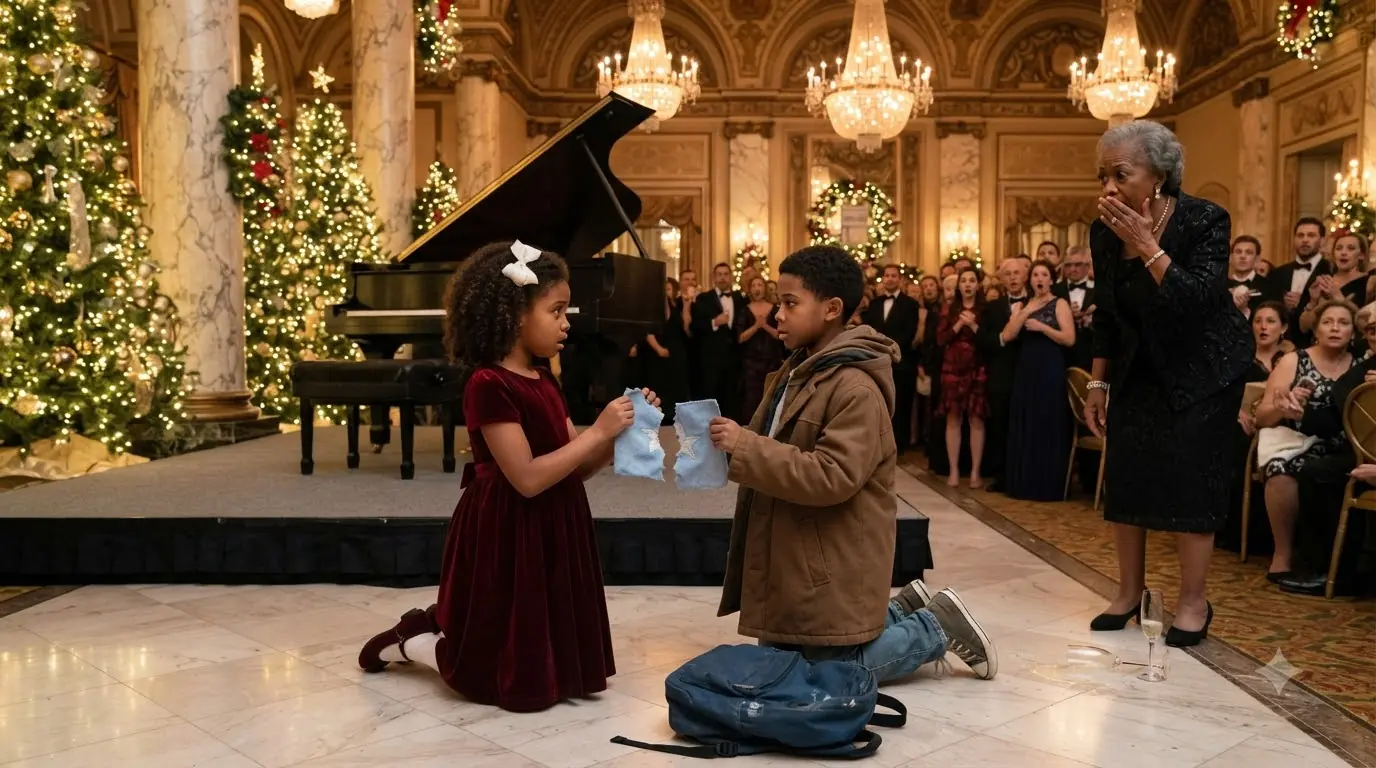
At nine years old, she knew only that it lived somewhere deeper than the songs she practiced from sheet music.
She could play Mozart because her teacher showed her the notes.
She could play Christmas standards because she practiced them every December.
But the lullaby was different.
Nobody taught it to her.
She would sometimes sit at the grand piano in her parents’ Chicago home after everyone had gone upstairs and play the first twelve notes from memory.
Then she always stopped.
There should have been another phrase.
She knew that with absolute certainty.
She could almost hear it.
Yet whenever her fingers reached that point, the melody vanished.
Her adoptive father liked to joke that perhaps she would finish it when she grew older.
Her adoptive mother never joked.
Every time the girl played those notes, something complicated crossed the woman’s face.
Love first.
Then worry.
Then an old unanswered question.
Because when the girl had entered their lives as an infant, she had come with almost nothing.
No family photographs.
No complete medical history.
No confirmed biological relatives.
Only a temporary hospital identification number, several emergency-placement documents, and a torn square of faded blue baby blanket tucked beneath her swaddle.
Half a silver star had been stitched into one corner.
Her adoptive mother kept that blanket inside a cedar box.
She had never thrown it away.
She did not know why.
Maybe mothers understood instinctively that some objects were not theirs to discard.
On a snowy Saturday in December, nine years after the girl entered their home, that half-star would finally find the other half.
And nothing inside either child’s life would ever fit together the same way again.
The charity concert took place inside one of Chicago’s oldest luxury hotels.
The ballroom occupied nearly the entire second floor, with polished marble columns, dark carved wood, enormous chandeliers, and windows overlooking streets covered in fresh snow.
Three Christmas trees stood along the far wall, each nearly fifteen feet tall.
White lights covered every branch.
Children from private schools, foster programs, community centers, and youth orchestras had been invited to perform during an annual fundraiser supporting winter housing and educational programs.
The event was deliberately designed to place wealthy donors and families in the same room as the children whose programs they funded.
The girl’s parents had attended for years.
This year, their daughter was performing.
She had been practicing for nearly two months.
Her adoptive mother adjusted the small white bow in her daughter’s curls for perhaps the sixth time.
“Mom.”
“What?”
“It’s fine.”
“It’s crooked.”
“It was fine four times ago.”
Her father laughed from the hotel suite doorway.
“She’s got you there.”
The mother gave him a look.
He immediately became interested in checking his cuff links.
The girl wore a deep red velvet Christmas dress with a simple white collar, white tights, and polished black shoes.
Her mother stepped back.
“You look beautiful.”
“I look nervous.”
“You can look both.”
The girl glanced toward the piano music resting on the table.
“I don’t want to play the last song.”
Her mother knew exactly which one.
The lullaby.
“You asked to include it.”
“I know.”
“What changed?”
The girl shrugged.
“I don’t know how it ends.”
“You never have.”
“That’s the problem.”
Her mother sat beside her.
“You don’t need to know the ending for something to matter.”
The girl frowned.
“That sounds like one of Dad’s weird sayings.”
Her father called from across the room.
“I heard that.”
The girl smiled.
Her mother touched her hand.
“If you reach the part where you normally stop, then stop.”
“In front of everybody?”
“Yes.”
“That’ll look stupid.”
“It’ll look like the song ended.”
“But it didn’t.”
Her mother studied her.
The conviction in those words seemed strange.
“How do you know?”