The brake lights glowed red against the rain-blackened pavement of Route 9, and Daniel Hayes knew he had already made his choice.
He had driven forty feet past the bus shelter before his foot slammed onto the brake.
The gray Chevrolet Silverado shuddered beneath him.
For a second, Daniel stayed exactly where he was, both hands locked around the steering wheel while the windshield wipers slapped furiously from side to side.
Rain had been falling since before sunset.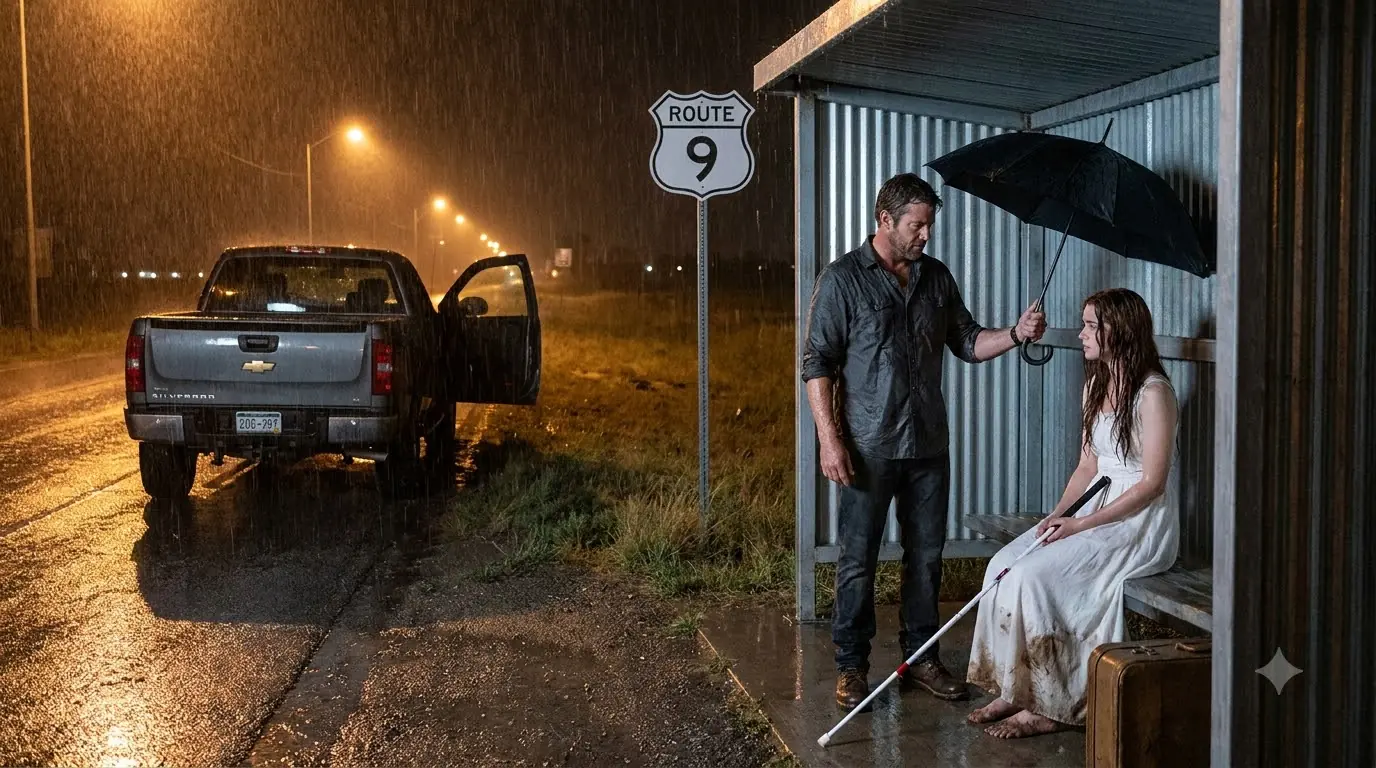
Not ordinary rain.
A hard Colorado mountain storm that blurred lane markings, filled drainage ditches in minutes, and turned every passing headlight into a streak of white fire.
Daniel stared through the windshield.
“Keep driving,” he muttered.
He had reasons.
Good ones.
His nine-year-old daughter was waiting at home.
A frozen pizza sat on the kitchen counter with instructions Chloe had probably already ignored.
His phone had buzzed three times in twenty minutes.
The first message had read:
Dad, where are you?
The second:
I fed Pepper.
Pepper was not a dog.
Pepper was a goldfish.
How exactly Chloe had turned dropping six flakes into a bowl into a significant household achievement remained unclear.
The third message had arrived two minutes earlier.
If you die at work can I eat the ice cream?
Daniel had almost laughed.
Almost.
He was forty-three years old, divorced, exhausted, and seven months into learning that single fatherhood was less about being prepared and more about realizing several times a day that preparation had been a fantasy.
His life worked because it stayed predictable.
Work.
School pickup.
Dinner.
Homework.
Laundry on Wednesday.
Grocery store Saturday morning.
Chloe with her mother every second weekend, except when her mother canceled, which happened often enough that Daniel no longer told Chloe about plans until Laura actually arrived.
There was no space in the system for a stranger at a bus stop.
Daniel glanced into the rearview mirror.
She had not moved.
That was what bothered him.
The shelter stood beneath a dying streetlamp on the opposite shoulder.
A young woman sat on the metal bench.
A battered brown suitcase stood beside her.
A white mobility cane rested diagonally across her lap.
She wore a long white dress soaked nearly transparent at the sleeves and muddy around the hem, though the fabric itself remained modest and heavy enough to hide her shape.
Her dark-blond hair hung wet against her face.
Bare feet rested in an inch of water.
She was not checking the road.
Not holding a phone.
Not looking up every time another car passed.
She simply sat there.
Daniel had seen people waiting before.
This woman was not waiting.
Something about the difference settled deep inside him.
He put the truck into reverse.
“Damn it.”
Forty feet disappeared beneath the tires.
He stopped beside the shelter and lowered the passenger window.
Cold rain blew across the center console.
“Hey.”
The woman turned.
Not toward his face.
Toward his voice.
Daniel saw immediately that her gaze remained slightly unfocused, fixed somewhere beside him.
Blind.
He already knew because of the cane.
Seeing it was different.
“Are you waiting for somebody?”
Her lips moved.
“No.”
Daniel waited.
She added quietly, “I’m not waiting for anyone.”
Six words.
Nothing dramatic.
Yet they chilled him more than the storm.
He looked at the suitcase.
Then her bare feet.
“What happened to your shoes?”
A tiny crease appeared between her eyebrows.
“I took them off.”
“Why?”
“They were hurting.”
Daniel almost asked why she had not put them inside the suitcase.
Then he realized that was not the important question.
“How long have you been here?”
She tilted her head, listening to something beyond him.
“About forty minutes.”
“There's no scheduled bus through here this late.”
“I know.”
Daniel felt his stomach tighten.
He looked up Route 9.
Nothing except rain.
“Did somebody drop you off?”
Silence.
That was answer enough.
Daniel pulled the truck into the gravel turnout and turned on the hazard lights.