An “Ugly” Dog Has Been Overlooked for Months—While Everyone Chooses the Prettier Dogs Around Him
Visitors rarely stop at Otis’s kennel.
They may glance at him for a second, but their eyes usually move toward the smaller dogs, the fluffy puppies or the friendly faces pressing eagerly against the neighboring gates.
Otis watches them continue down the hallway.
Then he returns to the back of his kennel and lies alone on his bed.
He has repeated that routine for months.
Otis arrived at the municipal shelter after animal control found him wandering behind a strip mall. He was severely underweight, much of his fur was missing and thick patches of damaged skin covered his face and back.
One ear was permanently folded from an old injury.
His lower jaw sat slightly crooked, causing one tooth to remain visible even when his mouth was closed. Scars crossed the bridge of his nose, and the skin around his eyes had darkened after months of untreated inflammation.
Nothing about him matched the round, soft image most people imagine when they picture an adoptable dog.
During intake, staff estimated that Otis was approximately seven years old.
He had no collar and no microchip.
Blood tests revealed anemia, a heavy flea infestation and a skin infection associated with prolonged neglect. His paws were swollen, and his nails had grown so long that walking appeared painful.
The shelter began treating him immediately.
Medication controlled the infection, and therapeutic baths helped soothe his damaged skin. His nails were trimmed carefully, and regular meals allowed him to regain some of the weight he had lost.
Within several weeks, Otis was physically stronger.
Small patches of fur began growing across his shoulders. The open sores healed, and the swelling around his paws decreased.
But his appearance did not transform completely.
The scars remained.
His ear stayed folded, his jaw was still crooked and his coat grew back unevenly. Even after treatment, Otis looked older and rougher than many of the dogs around him.
That seemed to be all most visitors noticed.
On busy adoption days, families crowded around the puppy kennels.
Children pointed toward dogs with bright eyes and soft coats. Adults took photographs of the breeds they recognized from social media.
Otis usually stood when the first visitors entered.
He walked to the front of his kennel, lowered his head and waited.
Sometimes he gently pressed his nose between the bars.
Few people touched him.
One visitor looked at the scars on his face and asked whether he had been used for fighting. There was no evidence that he had. His wounds could have come from untreated skin disease, life outdoors or encounters with other animals.
The answer did not matter.
The visitor had already stepped away.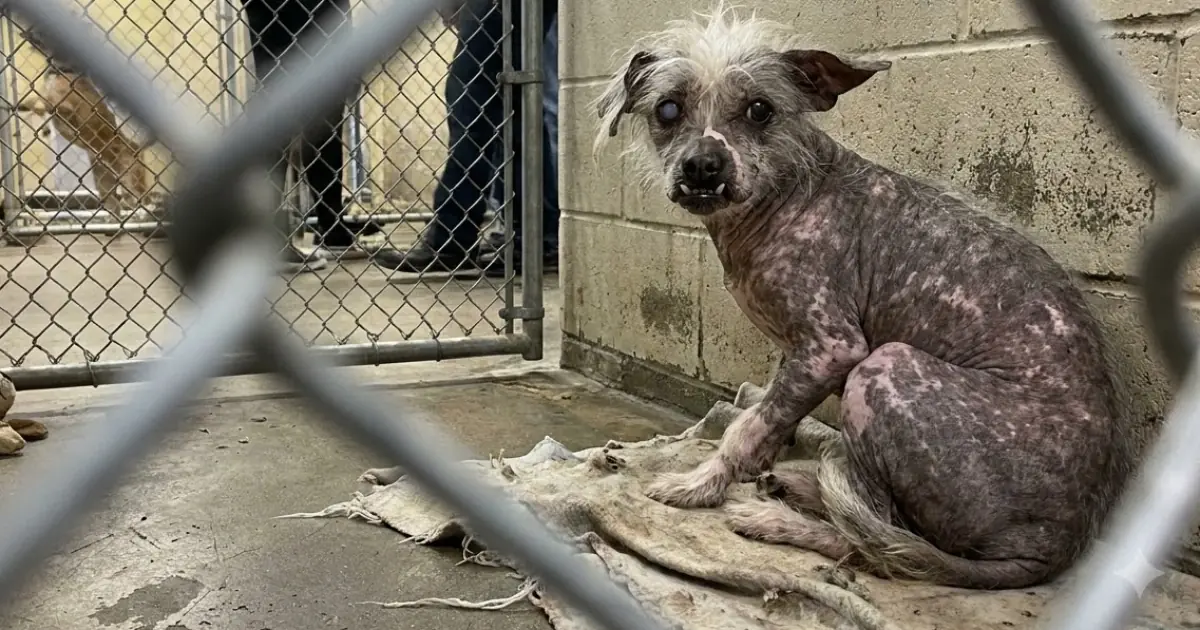
Another family asked whether his crooked jaw meant he was aggressive. A staff member explained that it was likely the result of an old injury and did not affect his temperament.
They chose not to meet him.
Several people openly called him ugly.
Otis did not understand the word, but he understood what happened afterward.
They walked away.
Outside his kennel, he behaved differently from the withdrawn dog visitors usually saw.
With familiar shelter employees, Otis was calm and gentle. He leaned against their legs while they attached his leash and waited patiently before walking through doors.
In the exercise yard, he did not run wildly or demand attention. He explored the fence line, sniffed the grass and eventually returned to sit beside whoever had brought him outside.
If that person stopped petting him, Otis placed one paw lightly against their shoe.
He loved soft treats because the old damage to his jaw made hard biscuits difficult to chew. He also enjoyed lying in sunlight and watching birds land along the shelter fence.
He was house-trained and rarely damaged his bedding.
None of those qualities were visible in a photograph.
Potential adopters saw the missing fur, the scars and the tooth protruding from his mouth.
They did not stay long enough to discover anything else.
The shelter posted new photographs after his skin improved.
A volunteer bathed him, placed a clean blue bandanna around his neck and took him outside in natural light. The post described him as quiet, affectionate and happiest when sitting beside someone.
It received several sympathetic comments.
People wrote that he deserved love.
They shared sad-face emojis and wished him luck.
No one scheduled a meeting.
Days became weeks.
New dogs arrived in the surrounding kennels and left with families before Otis. Some were adopted within hours of becoming available.
Otis watched the kennel doors open for them.
Whenever a dog was led through the hallway, he stood at his own gate with his ears lifted. His tail moved as the family passed.
Then the front door closed, and Otis was left behind again.
His behavior slowly changed.
During his first month, he approached nearly everyone. By the third month, he stopped getting up for visitors unless they spoke directly to him.
He began spending more time curled against the rear wall.
Staff placed his bed near the front of the kennel to help him feel involved in the activity around him. Otis dragged it back into the corner.
The noisy shelter environment also wore on him.
When dogs barked around him, he lowered his head and squeezed his eyes shut. During the busiest hours, he turned his face toward the wall.
People sometimes interpreted that behavior as disinterest.
“He doesn’t even look at us,” one visitor said.
The staff member tried to explain that Otis was overwhelmed, not unfriendly.
The visitor moved on anyway.
A volunteer later sat quietly inside his kennel.
She did not call his name repeatedly or reach toward him. She simply sat on the floor with a soft treat resting in her open hand.
For several minutes, Otis remained on his bed.
Then he stood and slowly crossed the kennel.
He accepted the treat before lowering himself beside her. After a while, he rested his scarred face against her knee.
The volunteer took a short video.
It showed the side of Otis that almost no visitor waited long enough to see: a tired dog cautiously leaning into a gentle hand.
The video brought more attention to his story.
Several people contacted the shelter, but most lived far away or already had animals that would not be compatible with him. One person arranged a meeting and spent nearly an hour with Otis.
Otis sat beside her and allowed her to touch his folded ear.
Staff believed he had finally been chosen.
The next day, the woman called and canceled.
Her family wanted a dog that looked younger.
Otis remained in his kennel.
As more time passed, the shelter’s medical team noticed that he was losing weight again. Tests found no new disease. He was eating, but only when the kennel area became quiet.
Stress was beginning to affect him physically.
Employees started feeding him in a small room away from the barking dogs. His appetite improved there, and he began waiting near the door when he recognized the person who brought his meals.
Still, he had to return to the kennel afterward.
The shelter was crowded, and every quiet room was needed for medical cases, nursing mothers or animals recovering from surgery.
Otis was healthy enough for the adoption floor.
That meant remaining in the place where no one seemed to notice him.
One afternoon, a family stopped directly in front of his kennel.
Otis was sleeping with his back toward the hallway. Their young daughter looked through the gate and asked why his face looked different.
Her father said he was probably old and sick.
Otis was neither contagious nor critically ill. His skin infection had been treated, and his unusual appearance was mostly permanent.
Before a staff member could explain, the family continued toward a younger dog.
Otis opened his eyes after they were gone.
He did not stand.
The shelter employees began referring to him as invisible.
He was not literally unseen. Hundreds of people had looked at him.
But looking at a dog is not the same as seeing him.
Visitors noticed every physical imperfection while missing the way he waited calmly for his leash. They noticed his crooked tooth but not how gently he accepted treats.
They noticed his scars but never asked how he had survived long enough to receive them.
Otis carried the evidence of a difficult life directly on his body.
Those marks should have shown how much he had endured.
Instead, they became the reason people avoided him.
After nearly six months, Otis knew the shelter schedule perfectly.
He knew when breakfast would arrive, when the floors would be cleaned and when visitors usually entered. He recognized the sound of the leash cabinet and the footsteps of his favorite volunteer.
He no longer rose for everyone.
But whenever that volunteer approached, Otis pushed himself from the bed and walked to the gate. His tail moved slowly before the latch was even opened.
During their walks, he stayed close to her leg.
If she sat on a bench, he leaned his full weight against her knees and watched the parking lot. Cars arrived and departed while Otis remained beside her.
On one of those afternoons, the volunteer noticed him watching a newly adopted dog climb into the back seat of a vehicle.
The younger dog’s family placed a blanket across the seat and helped him inside. Before the door closed, the dog looked back toward the shelter.
Otis stared until the car disappeared.
Then he rested his head against the volunteer’s leg.
Otis had watched that moment happen many times.
He had never experienced it himself.
The shelter continued sharing his story without disguising his appearance. Staff did not want to photograph him from angles that hid his scars or crooked jaw.
Those features were part of him.
They also emphasized that appearance said nothing about his ability to trust, connect with people or enjoy an ordinary life.
Gradually, Otis began spending more time near the front of his kennel again.
He still retreated when the hallway became loud, but he approached familiar employees and occasionally accepted treats from patient visitors.
His progress remained fragile.
A person laughing at his appearance could send him back to the rear wall. A calm voice and a few quiet minutes could bring him forward again.
Otis does not know why fluffy puppies receive so much attention.
He does not know that people compare his face with photographs of younger, healthier-looking dogs. He cannot understand why scars make some visitors assume he is dangerous or damaged beyond repair.
He only knows that the hallway fills with people and then becomes empty again.
At the end of each day, staff turn down the lights.
Otis circles his bed, lowers his uneven body onto the blanket and rests his scarred face between his paws.
He is not waiting because he lacks affection to give.
He is not alone because he has behaved badly.
He is waiting because too many people decide what he is worth before they ever open his kennel.
Cute puppies often find families quickly.
Dogs like Otis are asked to wait until someone can look past every reason others rejected them.
For now, he remains in the same kennel, quietly lifting his head whenever footsteps pause outside.
Most continue walking.
Otis still watches to see if one of them will finally stop.