This Apple Fritter Donut Loaf brings together everything that makes a warm apple fritter irresistible—soft cinnamon apples, brown butter, warm nutmeg, and a thick vanilla glaze—but in an easy sliceable loaf.
Honeycrisp or Granny Smith apples are briefly cooked with butter, brown sugar, cinnamon, and lemon before being layered through a tender sour cream batter. Browning the butter adds a warm, nutty depth that makes the loaf taste especially bakery-worthy, while cornstarch helps keep the crumb soft.
Once completely cool, the loaf gets a generous donut-style vanilla glaze that settles into the apple-studded top and sets into a sweet finish.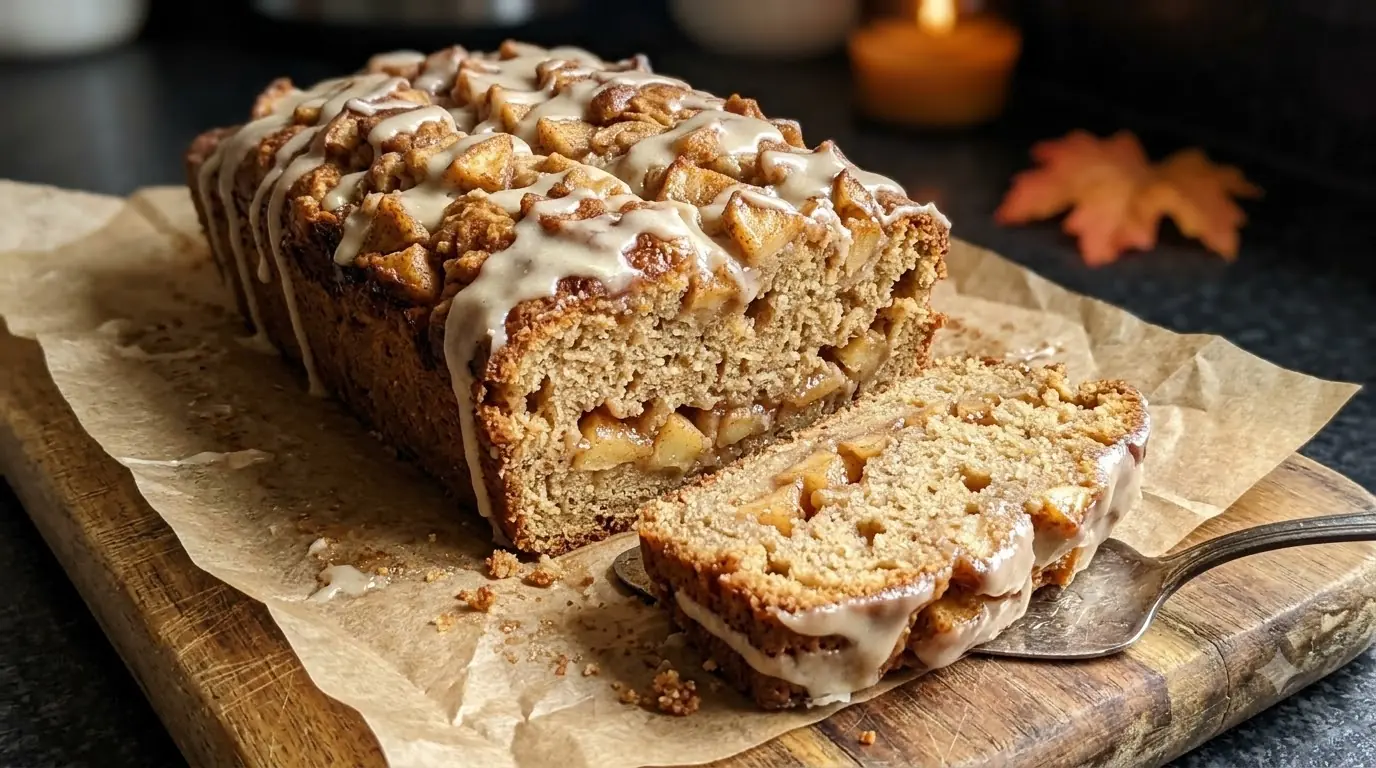
Ingredients
Cinnamon Apple Filling
- 1½ cups peeled and finely diced Honeycrisp or Granny Smith apples
- 2 tablespoons (28g) unsalted butter
- 1 tablespoon packed light brown sugar
- 1 teaspoon ground cinnamon
- Pinch of salt
- 1 teaspoon fresh lemon juice
For the Donut Loaf
- 2 cups (250g) all-purpose flour
- 2 tablespoons (16g) cornstarch
- 1½ teaspoons baking powder
- ¼ teaspoon baking soda
- ¾ teaspoon fine salt
- ½ teaspoon ground nutmeg
- ½ teaspoon ground cinnamon
- ½ cup (113g) unsalted butter
- ¾ cup (150g) granulated sugar
- ¼ cup (50g) packed light brown sugar
- 2 large eggs, room temperature
- ½ cup (120g) full-fat sour cream, room temperature
- ½ cup (120ml) whole milk, room temperature
- 1 tablespoon pure vanilla extract
For the Donut Glaze
- 1 cup (120g) powdered sugar
- 1–2 tablespoons (15–30ml) whole milk or heavy cream
- 1 teaspoon pure vanilla extract
- Pinch of salt
Step 1 – Prepare the Pan
Preheat the oven to 350°F (175°C).
Grease a 9x5-inch loaf pan and line it with parchment paper, leaving enough overhang on the long sides to lift the loaf out easily.
Make the Cinnamon Apple Filling
Step 2 – Cook the Apples
Melt 2 tablespoons butter in a skillet over medium heat.
Add the diced apples, brown sugar, cinnamon, salt, and lemon juice.
Cook for approximately 4–5 minutes, stirring occasionally.
The apples should become slightly tender while still retaining their shape. The butter and brown sugar should form a light cinnamon syrup around them.
Don't cook the apples until they're completely soft.
Transfer them to a bowl and let them cool.
If there's a significant amount of liquid at the bottom, leave that excess syrup behind when assembling the loaf.
Brown the Butter
Step 3 – Toast the Butter
Place the ½ cup butter in a light-colored saucepan over medium heat.
Allow it to melt, then continue cooking while stirring or swirling frequently.
The butter will foam and sputter before the milk solids begin turning golden.
Once you see deep golden-brown specks on the bottom and smell a distinctly nutty aroma, immediately remove the pan from the heat.
Pour the browned butter—including those flavorful toasted milk solids—into a mixing bowl.
Let it cool for approximately 10–15 minutes.
It can remain liquid, but it shouldn't be piping hot when mixed with the eggs.
Make the Donut Loaf Batter
Step 4 – Combine the Dry Ingredients
In a medium bowl, whisk together:
- Flour
- Cornstarch
- Baking powder
- Baking soda
- Salt
- Nutmeg
- Cinnamon
Set aside.
Step 5 – Mix the Brown Butter & Sugars
In a large bowl, combine the cooled brown butter, granulated sugar, and brown sugar.
Whisk thoroughly.
Because you're using melted brown butter, the mixture won't become fluffy like traditionally creamed butter and sugar. That's expected.
Step 6 – Add the Eggs
Add the eggs one at a time, whisking well after each addition.
Whisk in the sour cream and vanilla until smooth.
Step 7 – Add the Milk
Whisk in the whole milk.
The mixture should be smooth and creamy.
Step 8 – Add the Dry Ingredients
Add the dry ingredients to the wet ingredients.
Switch to a rubber spatula and gently fold until just combined.
Stop as soon as the major flour streaks disappear.
Don't try to make the batter perfectly smooth through vigorous mixing.
Assemble the Apple Fritter Loaf
Spread approximately half of the batter into the prepared loaf pan.
Spoon about two-thirds of the cinnamon apples over the batter.
Keep excessive cooking liquid out of the loaf.
Gently distribute the apples without pressing them all the way down.
Cover with the remaining batter and carefully spread it to the edges.
Scatter the remaining apples across the top.
Gently press them just slightly into the surface so they stay attached as the loaf rises.
Bake
Bake at 350°F (175°C) for approximately 55–65 minutes.
Begin checking around 50–55 minutes.
The loaf is ready when:
- the top is deeply golden,
- the center feels set,
- the loaf springs back slightly when touched,
- and a toothpick inserted into an area away from the apple filling comes out clean or with a few moist crumbs.
Be careful when testing. A toothpick pushed directly through an apple pocket may look wet even when the cake itself is fully baked.
If the top becomes too dark before the center is done, loosely cover it with aluminum foil and continue baking.
Cool
Let the loaf cool in the pan for approximately 15 minutes.
Use the parchment overhang to carefully lift it from the pan.
Transfer to a wire rack and allow it to cool completely before glazing.
This matters because glaze poured over a warm loaf will melt, become translucent, and run off instead of forming that thick donut-style coating.
Make the Donut Glaze
Place the powdered sugar, vanilla, salt, and 1 tablespoon milk or cream in a bowl.
Whisk until smooth.
Add additional milk 1 teaspoon at a time until you reach a thick but pourable consistency.
The glaze should slowly ribbon from the whisk rather than pour like milk.
Glaze the Loaf
Place the completely cooled loaf on a wire rack with parchment or a baking sheet underneath.
Pour the glaze generously over the top.
Allow some to naturally run down the sides.
Let the glaze set for approximately 20–30 minutes before slicing.
Chef's Tips for the Best Apple Fritter Donut Loaf
- Choose firm apples. Honeycrisp gives you a sweeter result; Granny Smith provides more tartness.
- Dice the apples relatively small so you get fruit throughout every slice.
- Don't completely soften the apples in the skillet—they'll continue cooking inside the loaf.
- Brown the butter until genuinely nutty and golden, but don't burn the milk solids.
- Let the brown butter cool before adding eggs.
- Use full-fat sour cream for the richest, softest crumb.
- Room-temperature eggs, milk, and sour cream combine more evenly.
- Don't overmix once the flour is added.
- Leave excess apple syrup behind. Too much liquid can create gummy areas around the fruit.
- Use a 9x5-inch pan rather than an undersized loaf pan.
- Test doneness through the cake portion rather than an apple pocket.
- Cool completely before glazing.
- Keep the glaze thick for the best donut-like finish.
The Secret to Apple Fritter Flavor
A regular apple loaf can be made by simply folding raw apples into cake batter.
This recipe goes one step further.
Briefly cooking the apples in butter, brown sugar, cinnamon, salt, and lemon juice gives them the concentrated flavor of apple-fritter filling before they ever enter the oven.
The lemon isn't there to make the loaf taste lemony. Its acidity brightens the apples and balances the sweetness.
Layering the apples rather than completely stirring them into the batter also creates concentrated cinnamon-apple pockets throughout each slice.
The Secret to the Brown Butter Donut Flavor
Brown butter is especially effective here because its toasted milk solids bring flavors reminiscent of caramel, toasted nuts, and freshly fried pastry.
That deeper flavor helps give a baked loaf some of the richness you'd associate with an actual apple fritter.
The important part is saving every browned speck in the pan.
Those toasted milk solids contain much of the flavor, so scrape them all into the mixing bowl.
Why Add Cornstarch?
The 2 tablespoons of cornstarch slightly alter the structure of the flour mixture, helping create a softer, more tender crumb.
That's especially useful in a loaf containing apples, sour cream, and a relatively long baking time.
You want enough structure to support the apple layers without ending up with a tough, bread-like texture.
How to Get That Thick Donut Glaze
Start with less liquid than you think you need.
You can always add another teaspoon.
If you pour too much milk into powdered sugar at once, the glaze becomes thin and translucent and runs straight off the loaf.
For that classic apple-fritter appearance, the glaze should be thick enough to remain visibly white after it sets.
Heavy cream produces a slightly richer, more opaque glaze, while whole milk gives a classic simple finish.
Delicious Variations
Caramel Apple Fritter Loaf
Drizzle thick salted caramel over the set vanilla glaze.
Pecan Apple Fritter
Add ½ cup chopped toasted pecans to the apple filling.
Maple Apple Fritter
Replace some of the milk in the glaze with pure maple syrup.
Extra Cinnamon Swirl
Mix ¼ cup brown sugar with 1 teaspoon cinnamon and sprinkle a thin layer over the apples in the center.
Apple Cinnamon Crunch
Sprinkle coarse turbinado sugar over the apples before baking for a lightly crunchy top underneath the glaze.
Pear Fritter Loaf
Replace the apples with firm diced pears and keep the cinnamon and nutmeg.
What to Serve With Apple Fritter Donut Loaf
This loaf is especially good with:
- Hot coffee
- Cold brew
- Chai
- Black tea
- Hot apple cider
- Cold milk
- Vanilla ice cream
- Fresh whipped cream
- Salted caramel sauce
For a fall brunch, serve thick slices alongside coffee, fresh fruit, and warm breakfast dishes.
Make-Ahead Tips
The apple filling can be prepared one day ahead and refrigerated.
Let it return closer to room temperature before assembling the loaf.
The complete loaf can also be baked one day ahead. Cool it completely and keep it tightly covered.
For the freshest-looking finish, add the glaze on the day you plan to serve it.
Storage
Room Temperature
Store the glazed loaf tightly covered for up to 2 days in a cool kitchen.
Refrigerator
For longer storage, refrigerate in an airtight container for up to 4–5 days.
Let individual slices come closer to room temperature before serving for the softest texture.
Freezer
For best results, freeze the loaf before glazing.
Wrap the completely cooled loaf—or individual slices—tightly and freeze for up to 2 months.
Thaw before adding fresh glaze.
How to Reheat
For a warm apple-fritter experience, microwave an unglazed or lightly glazed slice for approximately 10–15 seconds.
You can also warm unglazed slices in a 300°F (150°C) oven for 5–8 minutes.
If you want the glaze to remain fully set and opaque, serve the loaf at room temperature rather than reheating it.
Notes
- Makes 1 standard 9x5-inch loaf, approximately 10–12 slices.
- Honeycrisp creates a sweeter apple filling, while Granny Smith gives stronger tart contrast.
- A combination of the two is also excellent.
- Don't pour excess apple cooking liquid into the batter.
- Brown butter loses some water during cooking; that's intentional in this recipe and contributes to its rich flavor.
- If the top browns early, tent it with foil rather than reducing the baking time.
- Let the loaf cool completely before glazing and give the glaze time to set before slicing.
- For the classic apple-fritter look, leave plenty of golden cinnamon apple pieces visible across the craggy top and pour the thick vanilla glaze unevenly over them so it settles into the little ridges and runs naturally down the sides.