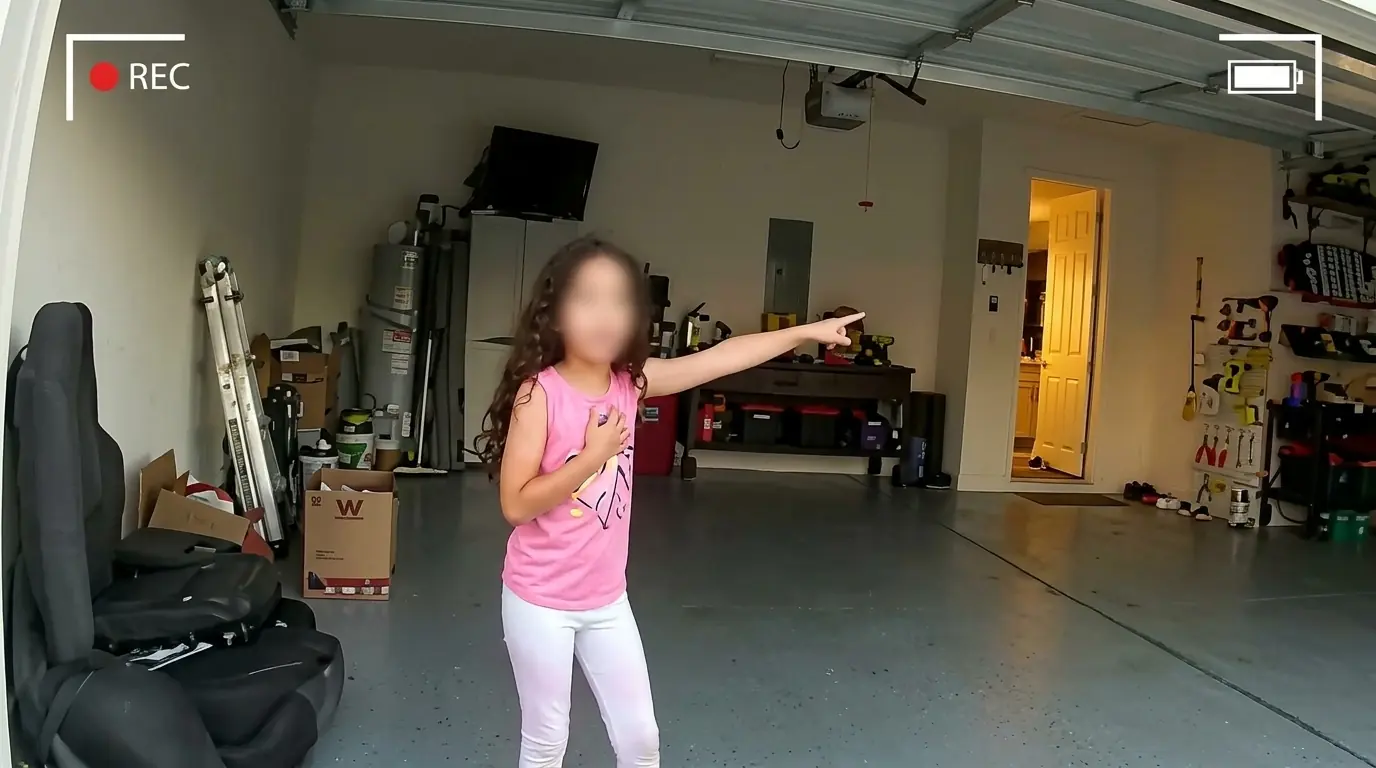
The first person to tell police what had happened was not a neighbor.
Not an adult witness.
Not somebody passing the house.
It was one of the shooter's own children.
"My dad is upstairs with the gun."
The voice on the emergency call was frightened and confused.
The dispatcher tried to understand.
Where was the mother?
Then came the sentence that transformed the call into an emergency no officer could treat casually.
"He just shot her."
Inside an expensive lakefront home in St. Cloud, Florida, a family argument had suddenly become a shooting.
A husband had allegedly shot his wife.
Their children were still somewhere near the house.
The wounded mother was believed to be inside.
And the man holding the gun had not surrendered.
Within minutes, approximately twenty police vehicles would converge on the neighborhood.
A rookie officer with only months on the job would be placed behind the house.
A police drone would be shot out of the air.
An officer approaching the front would nearly be hit by a bullet.
SWAT officers would surround the property.
Neighbors would gather on the street.
Friends of the wounded woman would scream at police to go inside before she bled to death.
Negotiators would discover that the gunman did not speak English.
And as the standoff approached two hours, the person who would finally convince him to give up would not be a tactical officer.
Not a sniper.
Not a negotiator.
Not the sergeant coordinating the scene.
It would be his ten-year-old son.
But by the time Jose walked outside with his hands raised, the question everyone on the street feared most remained unanswered.
Was Lizette still alive?
Police would not know until they finally entered the house.
By then, it was too late.
Saturday Evening in St. Cloud
It was approximately six o'clock on a Saturday evening.
The neighborhood did not look like the setting of an armed standoff.
Large homes sat near the water.
Families lived nearby.
A park was within reach of the property.
People were home beginning an ordinary evening.
Inside one house, however, tension had been building between Jose, 48, and his wife Lizette.
According to the account later given by their daughter, this was not the first argument.
Jose had become increasingly suspicious that Lizette was having an affair.
His suspicions had apparently existed for weeks.
Lizette was preparing for a work trip to California the following day.
Her 24-year-old daughter was spending time with her and helping her prepare.
They were talking.
The daughter was doing her mother's nails.
It was the kind of small family moment nobody would expect to become part of a homicide investigation.
Then the argument intensified.
The daughter later told police that her father had repeatedly accused her mother of cheating.
It had become a recurring issue.
And according to her, his suspicion had gone far beyond ordinary jealousy.
Jose had allegedly begun following or monitoring Lizette.
He had reportedly placed recording equipment in the home because he wanted evidence.
He believed another man had been speaking with his wife.
Whatever had happened in the weeks before that Saturday, the conflict had reached a breaking point.
The daughter saw her mother running.
She heard her mother telling Jose to stop.
Jose was behind her.
He had a gun.
The daughter initially struggled to understand what she was seeing.
For a moment, she thought the weapon might not even be real.
Then she saw blood.
The possibility disappeared.
Her father had shot her mother.
In front of their children.
The 911 Call
Emergency dispatchers are trained to convert panic into information.
Address.
Weapon.
Shooter.
Victim.
Location.
Number of shots.
Who is still inside?
Is anyone injured?
Every answer changes how officers respond.
But frightened children do not narrate emergencies like police reports.
Their information arrives in pieces.
"My dad is upstairs with the gun."
"I don't know."
"He went back to the room."
Then:
"He just shot her."
The dispatcher tried to determine how many shots had been fired.
The call disconnected.
For police, that silence was dangerous.
They now knew enough to understand the threat.
A man had allegedly shot his wife.
Children were present.
A firearm was inside.
But they did not know exactly what was happening in that moment.
Was Jose still shooting?
Had he turned the gun toward his children?
Was Lizette conscious?
Could she move?
Was she bleeding heavily?
Had the children escaped?
Police could not wait for perfect information.
Units were sent immediately.
Approximately twenty patrol vehicles would ultimately respond.
The first officers approached a situation that remained largely invisible from outside.
Somewhere inside that home was a man with a gun.
Possibly a wounded woman.
Possibly children.
There were windows facing the street.
Other houses nearby.
Open areas around the property.
And nobody yet knew whether Jose intended to surrender.
The Rookie Officer
One of the first officers to arrive had only around six months of experience.
His career had barely begun.
Now he was approaching an active shooting at a home where the suspect might fire from almost any window.
Officers began ordering nearby residents away.
"Get inside your house."
"Get out of the way."
The instructions may sound aggressive when heard without context.
But during an active shooter response, a neighbor standing outside becomes another person police may have to protect.
A bullet does not care whether someone is part of the original family dispute.
Officers positioned themselves roughly seventy feet from the residence.
More units arrived.
A K9 team joined the response.
Police began forming a perimeter.
The immediate plan reflected the information they had.
A woman might be critically wounded.
Two children might still be in danger.
Every minute mattered.
Waiting outside could mean allowing someone to bleed to death.
But rushing blindly through the door could expose officers to an armed man who knew the house better than they did.
The sergeant coordinating the scene initially considered an aggressive rescue.
Approach quickly.
Take the shooter by surprise.
Reach the children.
Reach Lizette.
Remove anyone who could be saved.
It sounded direct.
It was also extraordinarily dangerous.
Jose had the advantage of position.
He was inside.
Police were outside.
He could hear them approaching.
He could watch doors or windows.
An officer entering through a doorway has to expose himself before seeing every angle inside.
Jose could simply wait.
And when police moved toward the home, they discovered exactly how dangerous that was.
The First Shot at Police
Officers moved closer.
They called toward the residence.
St. Cloud Police Department.
Make yourself known.
Then gunfire.
The team pulled back.
One round struck near the doorway.
According to the source narration, it missed the sergeant by less than an inch.
He immediately checked himself.
Had he been hit?
Sometimes officers involved in shootings do not immediately feel an injury because adrenaline overwhelms pain.
He asked another officer to make sure there was no blood on him.
There was not.
The bullet had missed.
That single shot changed the tactical situation.
Until that moment, police knew Jose had allegedly shot his wife.