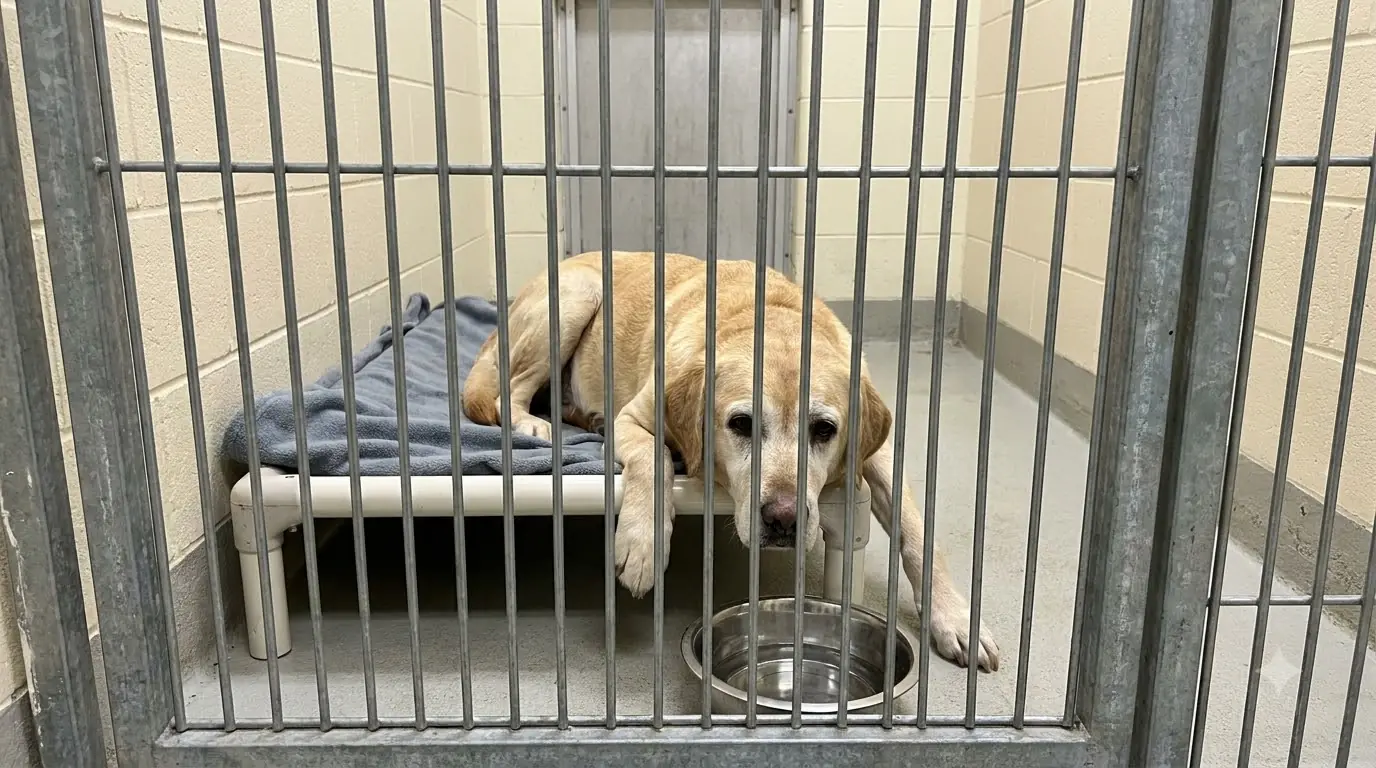
The water bowl did not start beside the bed.
At first, it sat where shelter bowls usually sat.
A few feet away.
Close enough for a healthy dog to reach without thinking about it.
For the senior Labrador Retriever, those few feet had become a problem.
She had chronic kidney disease.
That meant water mattered more than ever.
She drank often.
Sometimes several times during a rest period.
The veterinary team wanted constant access to clean water.
The problem was not willingness.
It was the act of getting there.
Her arthritis was severe.
Each time she needed a drink, she first had to get off the orthopedic bed.
That meant bringing her front legs underneath her.
Pushing her chest up.
Pausing.
Then gathering enough strength through the hindquarters to stand.
Some mornings she managed on the first attempt.
Other times, she tried once.
Stopped.
Repositioned.
Tried again.
Even after she was upright, the first steps were stiff.
Short.
Careful.
The water bowl was not far away.
But the trip was repeated many times a day.
That added up.
Then staff noticed something different.
The bowl had moved.
Only a few inches.
They assumed someone had kicked it during cleaning.
They put it back.
Later, it had moved again.
Closer to the bed.
The next day, a caregiver finally saw how.
The Labrador was lying with most of her body on the orthopedic mattress.
Her front paws were near the edge.
The stainless-steel bowl sat on the floor just beyond them.
She stretched her neck.
Pressed her nose against the rim.
Pushed.
The bowl scraped across the kennel floor.
Maybe two inches.
She rested.
Then pushed again.
A little closer.
Then again.
Until the bowl sat directly beside the bed.
The Labrador remained lying down.
She shifted her front half to the edge of the mattress.
Lowered her head.
And drank.
No standing.
No stiff walk.
No painful rise.
For the first time, staff understood what she had been doing.
She was changing the room around her because her body could no longer handle the room the way it had been arranged.
The Behavior Was Easy to Miss at First
Shelter bowls move.
Dogs nose them.
People pick them up.
Cleaning changes everything.
So no one immediately interpreted a shifted water dish as meaningful.
What changed the picture was repetition.
The bowl kept ending up near the bed.
Sometimes only halfway.
Sometimes close enough that her whiskers nearly touched it while she slept.
Once staff saw her actively push it, the pattern became obvious.
She was not randomly playing with the dish.
She was reducing the distance.
Her Kidney Disease Made Water Access Non-Negotiable
Chronic kidney disease changes how a dog's body manages water and waste products.
Depending on the stage and the individual dog, increased thirst and urination can become part of daily life.
The veterinary team monitored her closely.
Hydration.
Appetite.
Body weight.
Urination.
Bloodwork.
Kidney values.
Electrolytes.
Blood pressure when appropriate.
Any change in nausea, energy, or food intake.
The goal was not to restrict drinking.
Quite the opposite.
She needed easy access to water at all times.
Her Arthritis Turned That Need Into a Mobility Problem
The Labrador's joints were a separate chronic issue.
Hips.
Knees.
Elbows.
Possibly spine depending on the exam.
Age had reduced muscle mass too.
Standing from a low position required far more effort than it once had.
The orthopedic bed helped once she was down.
Getting up from it remained hard.
That created a conflict.
Her kidneys pushed her to drink frequently.
Her joints discouraged her from standing frequently.
The water bowl became the point where those two diseases met.
Staff Had Been Watching Her Rise for Weeks
The pattern was consistent.
Front end first.
Pause.
Rear legs under.
Another pause.
Then up.
Sometimes her hind paws slid slightly before catching.
Sometimes she stood but remained still for several seconds before taking the first step.
That waiting period was not stubbornness.
It was mechanics.
Her body needed time.
She Still Wanted Water Enough to Make the Trip
That mattered.
The Labrador never stopped drinking just because standing was difficult.
She would get up.
Walk.
Drink.
Then make the return journey.
By the time she reached the bed again, her legs often looked more tired than they had before.
Staff began wondering how much of her daily energy was being spent on nothing more than getting to the bowl.
The First Solution Was Obvious
Move the bowl closer.
Once the team understood what she was doing, they stopped resetting it to the original location.
The water dish was placed beside the bed intentionally.
Close enough that the Labrador could drink while remaining mostly supported.
That reduced repeated standing immediately.
The Change Was Small but Important
The dog no longer had to rise every time thirst returned.
She could stay chest-down.
Shift toward the edge.
Lower her muzzle.
Drink.
Then rest again.
For a senior dog with two chronic diseases, removing even one unnecessary physical demand can matter enormously.
Staff Had to Make Sure the New Position Was Safe
A bowl directly beside bedding can create other problems.
Spills.
Wet blankets.
Slippery flooring.
Skin remaining damp.
So the setup was adjusted carefully.
A stable, nonslip base went under the bowl.
The edge of the bed was protected from constant moisture.
Fresh water was checked frequently.
The Labrador got the access she wanted without creating a new hazard.
She Stopped Pushing the Bowl Once It Stayed There
Mostly.
That was one of the clearest signs the behavior had been functional.
When the bowl remained within reach, the repeated nose-pushing decreased.
She still nudged it occasionally.
Maybe to change the angle.
Maybe because the water level had shifted.
Maybe simply out of habit.
But the long scraping movement across the kennel floor largely disappeared.
The environment had answered the problem.
The Shelter Did Not Call Her “Ingenious” as a Medical Explanation
It was tempting.
The behavior certainly looked adaptive.
But staff stayed grounded.
The dog had found a way to reduce the effort required to access water.
That was enough.
There was no need to turn it into a human-style problem-solving story about understanding her diagnoses.
She did not need to know the words kidney disease or arthritis.
Her body gave her information.
Standing hurt.
Thirst returned.
The bowl could move.
She moved it.
Her Water Intake Was Still Monitored
Easy access did not mean ignoring quantity.
In chronic kidney disease, changes in drinking can be clinically useful.
A sudden major increase.
A sudden decrease.
Refusing water.
Vomiting after drinking.
All could matter.
The team watched trends.
No one treated frequent drinking as merely a quirky senior habit.
Her Urination Needed Equal Attention
More water often means more urine.
That can make shelter care harder.
The Labrador needed frequent bathroom opportunities.
Long delays would be unfair and uncomfortable.
Her arthritis complicated those trips too.
The team shortened routes where possible.
Used traction.
Allowed extra time to stand.
Supported the rear if needed.
The same principle kept appearing.
Do not make her spend energy unnecessarily.
Her Kidney Diet Became Part of the Routine
If a veterinary renal diet was appropriate for her stage, it was introduced carefully.
Appetite mattered.
Kidney patients can become nauseated or food-averse.
The shelter watched whether she ate consistently.
Whether body weight stayed stable.
Whether hydration remained adequate.
A perfect diet is not useful if the dog refuses it.
The treatment plan had to fit the whole patient.
Her Arthritis Was Managed Separately
Kidney disease can affect which pain medications are appropriate.
That made her case more complicated.
The veterinary team had to balance comfort with renal safety.
Medication choices, doses, and monitoring were made cautiously.
The shelter did not simply give a standard arthritis protocol without considering the kidneys.
That Is One Reason Environmental Changes Mattered So Much
If medication options are limited or need extra caution, reducing physical strain becomes even more valuable.
Orthopedic bed.
Nonslip surfaces.
Short routes.
Raised or accessible bowls depending on comfort.
Stable layout.
Those changes carry no renal side effects.
They make daily life easier mechanically.
The Bed Was Already Helping
The orthopedic mattress reduced pressure on her joints.
It supported hips and elbows.
It made long rest periods more comfortable.
But at first, the bed and the water had been treated as separate pieces of kennel equipment.
The Labrador's behavior showed staff they needed to be designed together.
Her Front-Paw Position Became Distinctive
Once the bowl stayed close, she developed a comfortable routine.
Body on the bed.
Front legs near the edge.
Head over the side.
Drink.
Sometimes she did not even lift the chest fully.