DOCTORS WARN: IF YOU OFTEN IGNORE GARLIC...
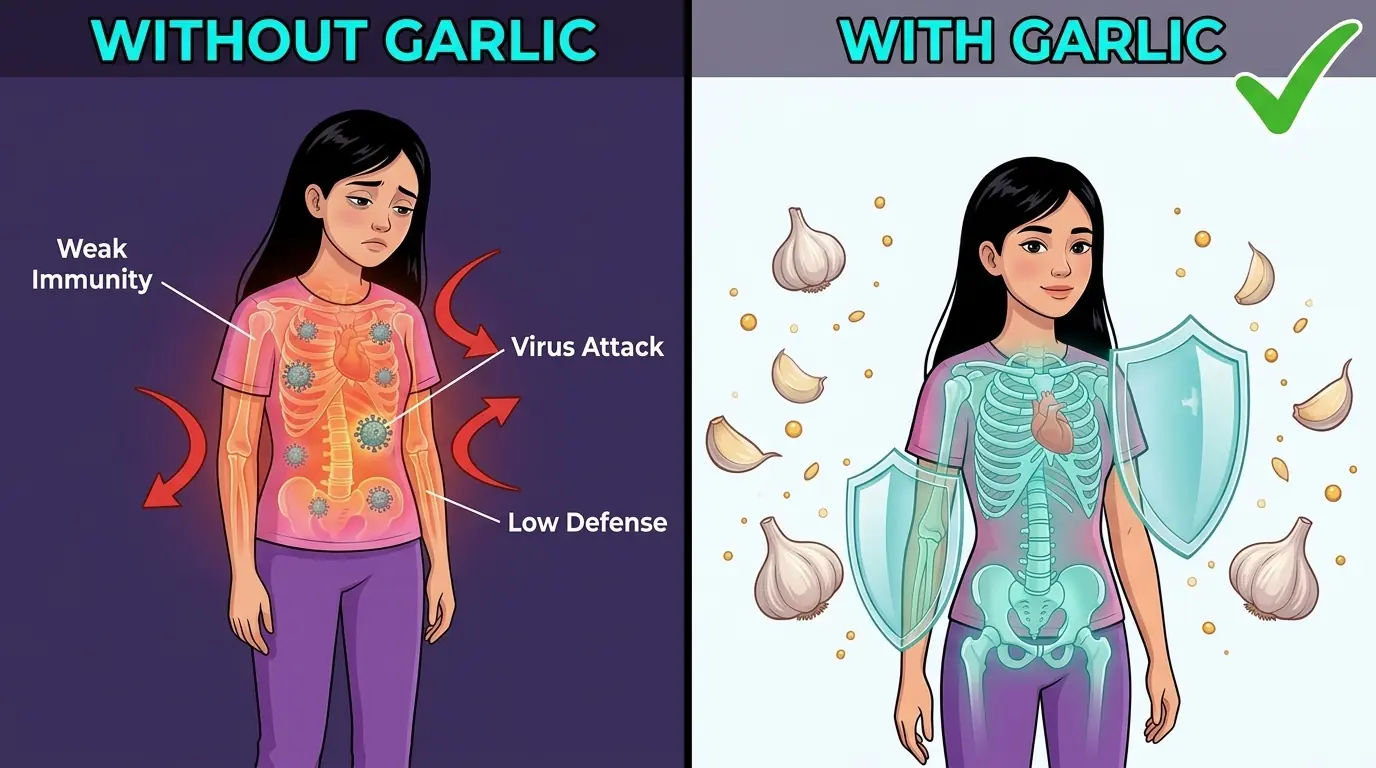
Most people think of garlic as nothing more than a strong-smelling ingredient.
You chop it.
Cook it.
Add it to soup, pasta, meat, vegetables or sauces.
And if you don't like the smell, you simply leave it out.
No big deal.
But garlic has attracted scientific attention for decades because inside every clove is a collection of sulfur-containing compounds that behave very differently once the garlic is crushed, chopped or chewed.
One of the best-known compounds associated with fresh garlic is allicin.
And this is where garlic becomes much more interesting than an ordinary seasoning.
Laboratory studies have found that compounds produced by garlic can interact with microbes, inflammatory pathways, blood vessels and several biological systems involved in health.
That has led to claims that garlic can “boost immunity,” kill viruses, prevent colds, lower blood pressure, clean the arteries and even protect against serious disease.
Some of those claims have a kernel of truth.
Others go far beyond what human research can actually prove.
So if you rarely eat garlic, are you weakening your immune system?
No.
There is no evidence that avoiding garlic automatically gives you “low immunity.”
But garlic does contain biologically active compounds worth understanding.
And the real science behind them is much more interesting than simply calling garlic a natural antibiotic.
Garlic Changes the Moment You Cut It
A whole garlic clove doesn't contain large amounts of freely available allicin just sitting there waiting.
Instead, garlic keeps certain chemical components separated inside its cells.
When the clove is crushed or chopped, those cellular compartments are damaged.
An enzyme called alliinase interacts with a sulfur-containing compound called alliin.
That reaction rapidly generates allicin.
In other words, crushing garlic is not merely making it smaller.
You are triggering chemistry.
Allicin itself is unstable and can break down into other sulfur-containing compounds.
These molecules are partly responsible for garlic's distinctive aroma.
They are also a major reason scientists became interested in garlic biologically.
But here's the important part:
Finding antimicrobial effects in a laboratory dish does not automatically mean eating garlic will kill viruses inside the human body.
That leap is where a lot of health misinformation begins.
Does Garlic Really “Kill Viruses”?
In laboratory experiments, garlic-derived compounds have demonstrated antimicrobial activity against various microorganisms.
That sounds impressive.
But the concentration used in a laboratory may be very different from anything achieved by eating a clove of garlic.
A virus growing in a controlled dish is also very different from a respiratory virus replicating inside the cells of a human being.
The digestive system transforms compounds.
The liver metabolizes them.
Blood concentrations change.
Different tissues receive different amounts.
So while lab findings help scientists understand possible mechanisms, they don't prove that garlic functions as an antiviral medicine in real life.
This is why major health agencies remain cautious.
The U.S. National Center for Complementary and Integrative Health notes that garlic supplements are often promoted for immune function, but very little research has actually tested this claim in people.
That distinction is crucial.
Garlic is biologically interesting.
Garlic is not a replacement for antiviral treatment, vaccination or medical care.
What Happened When Researchers Actually Tested Garlic Against Colds?
This is where the story gets interesting.
A randomized trial followed 146 adults over 12 weeks during cold season.
Participants received either a garlic supplement containing allicin or a placebo.
The garlic group reported fewer colds than the placebo group.
There were 24 reported cold episodes in the garlic group compared with 65 in the placebo group.
That sounds dramatic.
And unsurprisingly, the study became widely cited by people claiming garlic prevents infections.
But science does not stop after one positive trial.
When Cochrane researchers reviewed the evidence, they found that only one trial met their criteria well enough to include.
Their conclusion was cautious:
There was not enough clinical-trial evidence to determine whether garlic reliably prevents or treats the common cold.
That means the study was interesting.
It was not definitive.
Another Trial Found Something Different
A later trial studied aged garlic extract in healthy adults during cold and flu season.
Researchers looked at certain immune cells, including natural killer cells and gamma-delta T cells.
Some laboratory measures of immune-cell activity changed in people taking the garlic extract.
But the actual number of illnesses was not significantly different between the garlic and placebo groups.
People taking garlic extract did report fewer total symptoms during the study.
NIH's Office of Dietary Supplements therefore describes the evidence as inconclusive.
That's a very useful example of how immune research can be misunderstood.
A supplement can change an immune marker without necessarily preventing infection.
The immune system is not a simple meter where “higher activity” automatically equals “better immunity.”
You Do Not Want Your Immune System Maximally Activated All the Time
This is another reason the phrase “boost immunity” is misleading.
Your immune system is supposed to activate when needed and calm down afterward.
Too little immune activity can be a problem.
But excessive or misdirected immune activity can also be harmful.
Autoimmune diseases occur when immune responses target the body's own tissues.
Allergic disease involves inappropriate immune reactions.
Severe inflammatory responses can damage healthy tissue.
So when a food advertisement says:
“Boosts your immune system!”
That sounds automatically beneficial.
Biologically, what you really want is appropriate immune regulation.
Not maximum activation.
Garlic may influence certain immune pathways.
That is very different from giving you an invisible shield against viruses.
Your Immune System Depends on Much More Than One Food
Think about everything required for normal immune function.
Protein.
Zinc.
Iron.
Copper.
Selenium.
Vitamins A, C, D, E and several B vitamins.
Adequate energy intake.
Healthy bone marrow.
Normal sleep.
Healthy skin and mucous membranes.
A functioning gut.
Appropriate hormone signaling.
Thousands of proteins and immune cells constantly communicating.
Now imagine claiming that one vegetable determines whether that entire system is “strong” or “weak.”
It simply doesn't make sense.
Someone can eat garlic every day and still develop influenza.
Someone can dislike garlic completely and have normal immune function.
The immune system depends on the overall nutritional and medical condition of the body.
Garlic is one ingredient.
Not the control center.
So Why Is Garlic Still Worth Eating?
Because a food does not have to be a miracle medicine to be useful.
Garlic can contribute flavor to meals without requiring much added sugar or saturated fat.
It contains sulfur-containing phytochemicals.
And some areas of garlic research have stronger human evidence than its supposed antiviral effects.
One of the most interesting is cardiovascular health.
Garlic and Blood Pressure
Several clinical trials and meta-analyses have examined garlic preparations in people with elevated blood pressure.
Results vary according to preparation, dose, study design and population.
But pooled research has found modest reductions in blood pressure in some people with hypertension.
For example, a meta-analysis of 17 trials found an average reduction of roughly 3.75 mm Hg in systolic blood pressure across studies compared with controls, with subgroup analyses suggesting effects were more apparent in people who already had hypertension.
Earlier analyses also reported reductions among hypertensive participants.
NCCIH summarizes the evidence more cautiously, saying garlic supplements may reduce blood pressure to a small extent in people who have high blood pressure.
Notice the wording:
Small extent.
May.
In people with high blood pressure.
Not:
“Garlic cures hypertension.”
Why Even a Small Blood Pressure Change Can Be Interesting
Blood pressure works over decades.
Persistently elevated pressure increases stress on arteries and contributes to cardiovascular risk.
That means even modest reductions can be biologically meaningful at the population level.
But that doesn't mean you should replace prescribed antihypertensive medication with garlic.
Prescription treatments have much stronger and more standardized evidence.
A garlic supplement may also interact with other medications.
So someone whose blood pressure is 170/100 should not respond by eating three cloves of garlic and hoping for the best.
Measure it.
Treat it appropriately.
Use diet as part of the strategy, not as a substitute for medical treatment.
Garlic May Also Affect Cholesterol
This is another area where research exists.
NCCIH reports that garlic supplements may reduce total cholesterol and LDL cholesterol to a small degree in people with elevated cholesterol.
Again, the effect is generally modest.
And garlic does not replace statins or other evidence-based lipid-lowering therapies when those are medically indicated.
But this is a far more defensible health claim than:
“Garlic kills every virus.”
The Important Word Is “Supplement”
Many studies testing garlic don't simply hand participants a random clove from a grocery store.
Researchers often use standardized garlic powders, aged garlic extracts or other preparations.
That matters.
Different products contain different amounts and forms of sulfur compounds.
Fresh chopped garlic isn't chemically identical to aged garlic extract.
Cooked garlic isn't identical to raw garlic.
A capsule labeled “garlic” isn't necessarily comparable with another capsule.
So you cannot always take the result of a supplement trial and assume that eating one clove in pasta produces the same biological exposure.
Food research is complicated like that.
Raw Garlic Is Not Automatically “Better”
Another common claim is:
“Raw garlic is medicine. Cooked garlic is useless.”
That is too extreme.
Heat and preparation can change garlic chemistry.
For example, the enzyme involved in producing allicin can be affected by heat.
So crushing garlic and allowing it to sit briefly before cooking may result in different sulfur chemistry than immediately heating an intact clove.
But cooked garlic still remains food containing multiple compounds.
You do not need to chew raw cloves every morning to “activate” your immune system.
In fact, eating large amounts of raw garlic can cause significant gastrointestinal discomfort in some people.
Why Garlic Burns
Anyone who has bitten into raw garlic knows how intense it can be.
The same reactive chemistry that makes garlic biologically interesting can make it irritating.
Raw garlic can cause:
Burning in the mouth.
Stomach discomfort.
Nausea.
Gas.
Reflux.
Strong breath.
And in concentrated contact with skin, raw garlic can cause severe irritation or even chemical burns.
NCCIH specifically warns that fresh raw garlic applied directly to skin may cause serious irritation and burns.
So “natural” does not mean “gentle.”
Please Don't Put Garlic in Your Nose
This became a social-media trend.
People inserted cloves of garlic into their nostrils claiming it cleared congestion or removed mucus.
What often happened next was dramatic nasal discharge.
But irritating the nasal lining can itself stimulate mucus production.
That does not mean garlic extracted an infection.
And putting foreign material into the nose carries obvious risks.
Garlic belongs in food.
Not inside your nostrils.
Don't Put Raw Garlic on Infections Either
Another folk remedy is placing crushed garlic directly on the skin for fungal infections, warts or other problems.
Laboratory antimicrobial activity is sometimes used to justify this.
But concentrated raw garlic can injure skin.
A chemical burn on top of an existing skin condition is not treatment.
If an infection requires medication, use appropriate therapy.
Do not assume burning means the garlic is “killing the germs.”
Sometimes burning simply means you're damaging your own tissue.
What About Garlic and the Gut?
Garlic contains fermentable carbohydrates known as fructans.
These can act as substrates for gut bacteria.
For many people, that's not a major issue.
But people with irritable bowel syndrome who are sensitive to FODMAPs may experience bloating, gas, abdominal pain or diarrhea after eating garlic.
So here's another example where “healthy food” does not mean “ideal food for everybody.”
Someone with IBS may feel dramatically worse after garlic.
That doesn't mean garlic is unhealthy.
It means individual tolerance matters.
Garlic Breath Is Chemistry, Not “Detox”
Garlic's famous smell comes from sulfur-containing compounds.
Some are absorbed, metabolized and eventually released through the lungs and skin.
That's why brushing your teeth may not completely eliminate garlic breath.
Part of the odor can be systemic.
It isn't necessarily food stuck between your teeth.
And it definitely isn't “toxins leaving your body.”
It's chemistry.
Garlic Can Affect Bleeding
This is one of the most important safety points, especially for older adults.
Garlic supplements may affect platelet function and can increase bleeding risk.
NCCIH specifically advises people taking anticoagulants or aspirin to tell healthcare professionals before using garlic supplements.
That matters if you're taking drugs such as anticoagulants.
It also matters before surgery.
A concentrated supplement is not always equivalent to using normal culinary quantities of garlic in food.
The supplement may provide much greater exposure.
More Garlic Is Not More Protection
Suppose one clove is healthy.
Does that mean ten cloves are ten times healthier?
No.
Nutrition rarely scales linearly like that.
More garlic can mean:
More GI irritation.
More reflux.
More odor.
Potential interactions.
Greater exposure to compounds affecting bleeding.
There is no scientifically established threshold where eating huge quantities suddenly creates “super immunity.”
Use garlic as food.
Don't turn dinner into a pharmacological experiment.
Can Garlic Prevent Flu?
There is not enough evidence to recommend garlic as a reliable preventive treatment for influenza.
The same applies to using garlic as a substitute for vaccination.
Influenza vaccines are designed to stimulate adaptive immune responses against influenza strains.
Eating garlic is not equivalent.
You can eat garlic as part of your diet and still get vaccinated.
Those two actions are not in competition.
Can Garlic Prevent COVID-19?
No credible evidence supports using garlic as a treatment or prevention strategy for COVID-19 in place of established medical measures.
The same pattern occurred during the pandemic:
Laboratory evidence about antimicrobial compounds was transformed into claims that specific foods “kill the virus.”
That reasoning is flawed.
The fact that a chemical damages a virus under certain laboratory conditions does not mean consuming a food produces antiviral concentrations in respiratory tissues.
Dosage and delivery matter.
Garlic Does Not Replace Antibiotics
Garlic has shown antibacterial effects in laboratory experiments.
But bacterial pneumonia, kidney infections, sepsis and many other serious bacterial illnesses require proper medical diagnosis and treatment.
Garlic cannot substitute for an antibiotic when an antibiotic is indicated.
Delaying treatment because you are relying on garlic can allow an infection to worsen.
This is especially important in older adults and people with weakened immune systems.
What Does “Weak Immunity” Actually Mean?
The term gets used casually online.
Feeling tired?
Weak immunity.
Caught two colds?
Weak immunity.
Skin broke out?
Weak immunity.
That isn't medically precise.
True immune dysfunction can occur because of conditions such as:
Certain cancers.
HIV.
Immune-suppressing medications.
Organ transplantation.
Congenital immune disorders.
Severe malnutrition.
Certain chronic diseases.
But getting an occasional respiratory infection does not automatically mean your immune system is defective.
Healthy adults can catch colds.
That's normal biology.
Frequent Infection Can Still Matter
On the other hand, truly unusual patterns deserve medical attention.
Repeated severe infections.
Unusual organisms.
Pneumonia occurring repeatedly.
Infections that are difficult to clear.
Persistent unexplained fever.
Major unexplained weight loss.
Those are not situations where you simply add more garlic.
They deserve evaluation.
The point of nutrition is to support normal physiology.
It isn't to hide medical warning signs.
Sleep May Matter More to Your Immune System Than Garlic
This is one of the most overlooked facts in “immune boosting” culture.
Chronic poor sleep can alter immune function.
Sleep and immune signaling interact extensively.
Someone obsessing over garlic supplements while routinely sleeping five hours per night may be focusing on the much smaller variable.
You do not need a glamorous health hack.
Basic physiology matters.
Adequate sleep.
Adequate nutrition.
Exercise.
Vaccination when appropriate.
Management of chronic disease.
Those are the foundations.
Protein Matters Too
Antibodies are proteins.
Many signaling molecules and receptors involved in immunity are proteins.
Immune cells require amino acids and adequate nutrition to function.
Someone who is severely malnourished cannot fix immune dysfunction by adding a teaspoon of garlic.
The body needs adequate energy and nutrients overall.
Again:
One food does not run the immune system.
Vitamin Deficiencies Can Matter
Certain deficiencies can impair immune function.
But the correct response is not to swallow random megadoses of every immune-related vitamin.
If someone has a deficiency, correcting it matters.
If they are already adequate, consuming enormous supplemental doses may not provide additional benefit and can sometimes create harm.
Balanced nutrition wins again.
Garlic can fit inside that pattern.
It doesn't replace it.
Older Adults Need to Think About This Differently
As people age, the immune system changes.
The process is sometimes called immunosenescence.
Certain immune responses become less robust.
Inflammatory regulation also changes.
Older adults may therefore have greater susceptibility to some infections and may respond differently to vaccination.
Does eating garlic reverse immune aging?
There is no good evidence for that.
But older adults still benefit from adequate nutrition.
And garlic can certainly be one flavorful component of healthy meals.
The key is not confusing supportive nutrition with treatment.
Why Garlic Could Still Be Particularly Useful in an Older Adult's Diet
There is a practical reason unrelated to miracle compounds.
As taste and smell change with age, food can become less appealing.
People may compensate by adding large amounts of salt.
Garlic can add significant flavor without relying exclusively on sodium.
For someone managing high blood pressure, replacing some salt-heavy flavoring with herbs, spices and garlic can be useful.
That is a very real benefit.
And it's far less sensational than “natural immunity shield.”
Garlic and Blood Sugar
NCCIH reports some evidence that garlic supplements may produce small reductions in blood glucose in people with diabetes.
But once again:
Small.
Potential.
Not a substitute for diabetes treatment.
If someone has diabetes, blood sugar management involves much more than garlic.
Medication when needed.
Dietary pattern.
Physical activity.
Weight management where appropriate.
Monitoring.
Medical follow-up.
Garlic isn't insulin.
Why Food Research Produces Confusing Headlines
One study examines garlic extract.
Another studies aged garlic.
Another studies raw cloves.
Another uses a powdered supplement.
One lasts four weeks.
Another lasts six months.
Some include healthy people.
Others include people with hypertension.
Then headlines collapse everything into:
“GARLIC DOES THIS.”
But the preparation matters.
Dose matters.
Population matters.
Outcome matters.
That is why you can find apparently contradictory headlines online.
They may not actually be testing the same thing.
“Natural Antibiotic” Is a Dangerous Phrase
People love this phrase because it sounds powerful.
But antibiotics are medicines with defined pharmacology, doses, indications and safety data.
Calling garlic a “natural antibiotic” can tempt people to use it in situations where real treatment is necessary.
A better description is:
Garlic contains compounds with antimicrobial activity in experimental systems.
That statement is accurate.
It doesn't imply that spaghetti with garlic sauce treats pneumonia.
What If You Eat Garlic Every Day?
For most people, normal culinary amounts of garlic can fit comfortably into a healthy diet.
You might add crushed garlic to:
Vegetables.
Soups.
Bean dishes.
Fish.
Chicken.
Whole-grain meals.
Sauces.
Salads.
The goal is not a precise “medicinal dose.”
It's simply using garlic as part of varied food intake.
If it causes reflux or digestive symptoms, reduce it.
There is no reason to force yourself to eat food that consistently makes you feel sick.
What If You Hate Garlic?
Then don't panic.
You are not destroying your immune system.
There are many other vegetables and plant foods containing useful phytochemicals.
Onions.
Leeks.
Scallions.
Cruciferous vegetables.
Berries.
Citrus fruits.
Leafy greens.
Legumes.
Whole grains.
Nuts.
Seeds.
Health is built from an overall pattern.
Not compulsory garlic.
What About Black Garlic?
Black garlic is produced by aging garlic under controlled heat and humidity.
The process changes the chemistry, flavor and texture.
It becomes darker, sweeter and softer.
Different antioxidant compounds may be present in different amounts after processing.
But black garlic is not a magical stronger medicine.
Claims that it cures disease should be treated with the same caution as claims about raw garlic.
Interesting food chemistry does not equal clinical treatment.
Garlic Supplements Are Not Automatically Better Than Garlic Food
People sometimes assume a capsule is simply “concentrated nutrition.”
But supplements can behave differently from foods.
The dose may be higher.
Standardization may vary.
Drug interactions become more relevant.
Bleeding risk matters.
And you lose the broader benefits of eating an actual meal containing vegetables and other foods.
Supplements can have legitimate uses.
But don't assume “more concentrated” means “healthier.”
A Very Important Rule Before Surgery
If you regularly take high-dose garlic supplements, tell the medical team before surgery.
Do not hide herbal products because you think they are “just natural.”
Doctors and anesthesiologists need to know about substances that may affect bleeding or interact with medications.
NCCIH specifically highlights the bleeding concern with garlic supplements.
This is especially important for older adults taking several medications.
Garlic Doesn't Need to Be Medicine to Be Valuable
This may be the biggest lesson.
We have developed a strange habit of treating healthy foods as disappointing unless they cure something.
Broccoli must prevent cancer.
Blueberries must prevent dementia.
Garlic must kill viruses.
Turmeric must eliminate inflammation.
But food can be valuable without being medicine.
Garlic contributes flavor.
It provides plant compounds.
It may have modest effects on certain cardiovascular risk markers.
It can help make healthier meals taste better.
Those are meaningful benefits.
They do not need exaggeration.
So What Would Actually Happen If You “Ignore Garlic”?
Probably nothing dramatic.
Your immune defenses will not suddenly collapse.
Viruses will not automatically overwhelm your body.
You will not suddenly become deficient in “garlic.”
Garlic is not an essential nutrient.
There is no medically recognized garlic-deficiency disease.
But if ignoring garlic means your diet is generally low in vegetables, low in variety and heavily dependent on highly processed foods, that's a different issue.
The dietary pattern matters.
Not the missing clove itself.
The Better Way to Think About Immunity
Instead of asking:
“What food boosts immunity?”
Ask:
“What does the immune system need to function normally?”
Adequate energy.
Protein.
Micronutrients.
Sleep.
Physical activity.
Healthy metabolic function.
Vaccination against preventable infections.
Appropriate management of chronic disease.
Avoidance of smoking.
Medical care when infections become serious.
Then use foods like garlic as part of that foundation.
That's far more powerful than chasing an immune superfood.
What About the People Who Swear They Never Get Sick Since Eating Garlic?
Personal experience can be convincing.
But it has limitations.
Suppose someone starts eating garlic every day in January.
That year, they get one cold instead of three.
Was it garlic?
Maybe.
Or maybe they had less exposure.
Worked from home.
Slept better.
Had different circulating viruses.
Changed several other habits.
Randomized controlled trials exist precisely because individual experience can't isolate those variables.
This doesn't mean personal stories are fake.
It means they cannot prove cause and effect.
Why the Common-Cold Trial Is Still Worth Knowing
Remember that one trial with 146 participants?
It produced striking results.
That is scientifically interesting.
But Cochrane researchers still concluded that there wasn't enough evidence because replication matters.
One study asks a question.
Repeated high-quality studies build confidence.
That's how evidence matures.
So the scientifically accurate statement is:
Garlic might influence cold incidence or symptoms, but clinical evidence remains insufficient.
Not:
“Garlic prevents colds.”
Your Immune System Has No “Garlic Switch”
Imagine your immune system as a huge security network.
Skin and mucus form physical barriers.
Innate immune cells respond rapidly.
Adaptive immune cells recognize specific threats.
Antibodies target particular molecules.
Memory cells remember previous infections.
Bone marrow constantly generates new cells.
Lymph nodes coordinate immune responses.
The spleen filters blood and participates in immune surveillance.
All of this is operating whether or not you ate garlic at lunch.
Garlic compounds may influence some signaling pathways.
They do not switch the system on.
When Garlic Should Be Food, Not Treatment
If you have:
A high fever that persists.
Difficulty breathing.
Chest pain.
Confusion.
Signs of dehydration.
Symptoms of a serious infection.
A wound that is becoming rapidly red, swollen or painful.
Do not treat yourself with garlic.
Seek appropriate medical care.
The biggest danger of a folk remedy isn't always the remedy itself.
Sometimes it's the delay it creates.
The Bottom Line
Garlic deserves a place in the conversation about healthy food.
It contains unusual sulfur-containing compounds.
Crushing it triggers the formation of allicin and related molecules.
Laboratory research shows interesting antimicrobial and biological activity.
Human studies suggest garlic preparations may produce modest reductions in blood pressure and cholesterol in some people.
There is also limited research suggesting possible effects on immune-cell activity and cold symptoms.
But the evidence is not strong enough to say garlic prevents viral infections or that people who don't eat garlic have weak immunity.
So if you enjoy garlic, use it.
Crush it.
Cook with it.
Add it to vegetables and other nutrient-rich meals.
Let it make healthy food taste better.
Just don't expect an invisible shield to appear around your body afterward.
Because your immune system does not depend on one clove.
And garlic does not need to be a miracle cure to be worth eating.
The real benefit may be simpler:
A small food with unusually interesting chemistry, used as part of a much bigger pattern of health.