DOCTORS WARN: IF YOU OFTEN IGNORE LEMON...
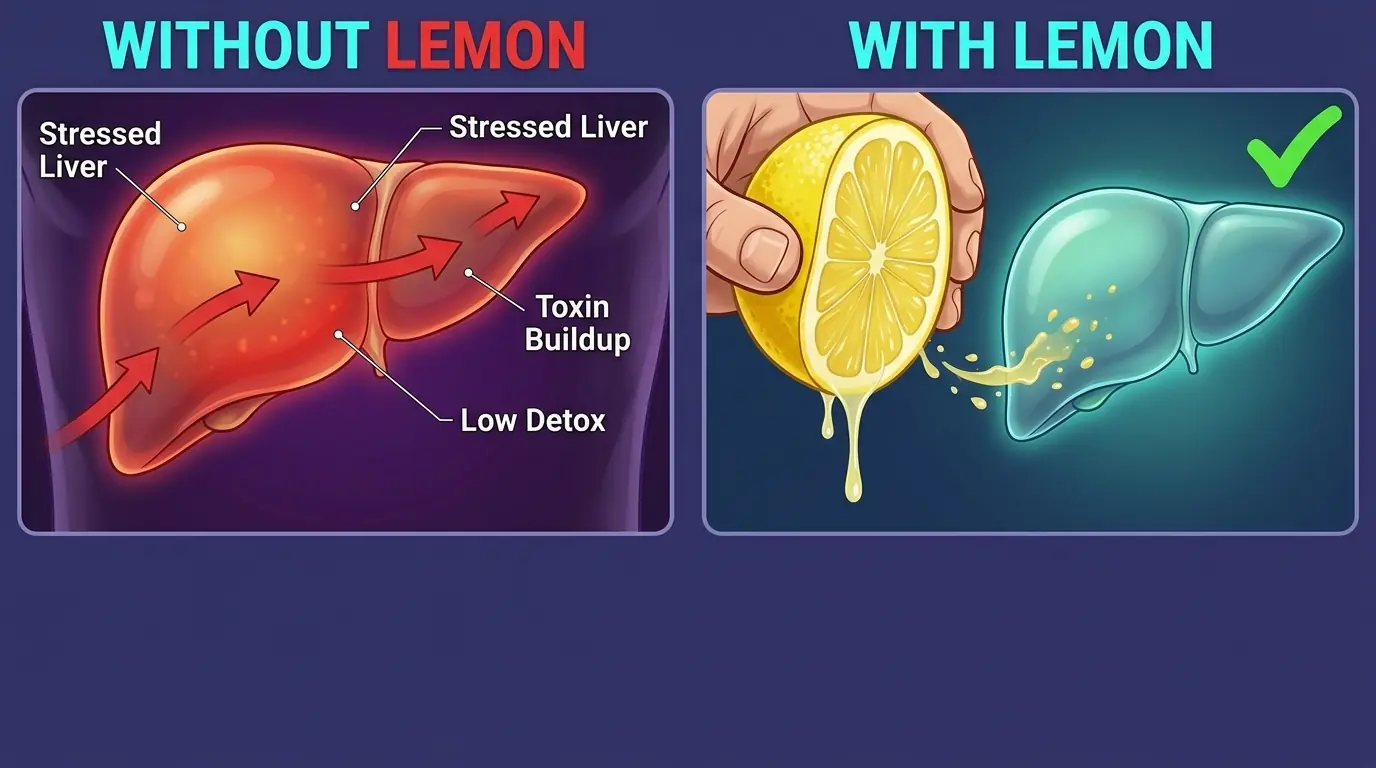
Most people think they know exactly what lemon does to the liver.
Squeeze half a lemon into warm water.
Drink it first thing in the morning.
And supposedly, while you're getting dressed for work, the lemon begins “flushing toxins” out of your liver.
Fat disappears.
The liver gets cleaner.
Your body “detoxes.”
And somehow a glass of sour water has performed a job that normally requires one of the most metabolically complex organs in the human body.
It sounds convincing.
There's just one problem.
That isn't how your liver works.
Lemon water has not been shown to wash toxins out of the liver.
It doesn't scrub fat from liver cells.
It doesn't reset your liver after a weekend of drinking.
And there is no clinically established “low detox” state caused by not eating lemons.
In fact, the truth is almost the opposite of the popular story.
You don't use lemon to detox your liver. Your liver is already part of the system doing the detoxifying.
Johns Hopkins hepatologists specifically warn that commercial liver cleanses aren't recommended, lack adequate clinical evidence, and have not been proven to reverse damage caused by excessive food or alcohol intake.
But that doesn't make lemon useless.
Far from it.
Lemon contains vitamin C, citric acid and a collection of plant compounds found throughout the citrus family.
Scientists are actively studying citrus intake and citrus-derived compounds in relation to metabolic health, oxidative stress, inflammation and fatty liver disease.
Some of those findings are genuinely interesting.
They're just very different from the idea of lemon “washing” your liver clean.
And if you're over 40, 50 or 60, understanding that difference may be much more valuable than another detox recipe.
Your Liver Is Already Working While You Sleep
Right now, whether you've eaten a lemon or not, your liver is performing hundreds of biochemical functions.
Blood arriving from your digestive tract carries nutrients, medications and other compounds.
The liver processes many of them.
It helps regulate blood glucose.
It stores glycogen.
It participates in fat metabolism.
It produces bile.
It makes important proteins.
It modifies and helps eliminate numerous drugs and metabolic byproducts.
It plays a major role in cholesterol metabolism.
It processes bilirubin.
And it chemically transforms many substances so they can eventually be eliminated from the body.
Johns Hopkins describes the liver as the body's primary filtration system, transforming toxins into waste products, cleansing blood and metabolizing nutrients and medications.
So when someone says:
“Drink this to make your liver detox…”
There's an obvious question.
Detox what, exactly?
Which chemical?
Through which enzyme?
At what dose?
How was its elimination measured?
Those questions usually make the marketing language fall apart very quickly.
“Toxin Buildup” Is Often a Marketing Phrase, Not a Diagnosis
The word toxin is extremely powerful.
It's also frequently used without meaning anything specific.
A real toxin is an identifiable substance capable of causing harm.
Medicine deals with actual toxic exposures all the time.
Alcohol.
Certain medications in excessive doses.
Industrial chemicals.
Poisonous substances.
Heavy metals under specific circumstances.
Those are measurable.
They have known biological effects.
They may require specific treatments.
But wellness marketing often uses “toxins” differently.
Headache?
Toxins.
Bloated?
Toxins.
Tired?
Toxins.
Skin looks dull?
Toxins.
Overate yesterday?
Toxins.
Then conveniently, the same person telling you that unidentified toxins are accumulating in your body sells the drink that supposedly removes them.
That's not a useful medical model.
If Your Liver Truly Couldn't Process Waste Properly, Lemon Water Would Not Be the Treatment
This is worth understanding.
Serious liver dysfunction is a medical problem.
When advanced liver disease develops, people can experience complications such as jaundice, fluid accumulation, bleeding problems, confusion and other serious abnormalities.
Those problems aren't corrected by adding lemon to water.
They require diagnosis and management of the underlying liver disease.
So the image of a “sluggish liver” sitting inside an otherwise healthy person waiting for citrus juice to restart it is misleading.
Your liver doesn't need a morning alarm clock.
But There Is a Liver Problem Millions of People Really Should Care About
And this one has very little to do with mysterious toxins.
It's excessive fat accumulating inside the liver.
Today, this is commonly discussed under the term metabolic dysfunction-associated steatotic liver disease, or MASLD, previously widely called nonalcoholic fatty liver disease.
This is a much more relevant liver-health conversation for many adults.
Fat begins accumulating in liver cells.
For some people, the condition remains relatively stable.
For others, inflammation and liver injury can develop.
Over time, some people progress toward fibrosis and more advanced disease.
And here's what makes fatty liver especially dangerous:
You may feel completely normal while it's developing.
Your Liver Can Accumulate Fat Without Hurting
People often assume liver disease should cause pain.
But early fatty liver frequently causes no obvious symptoms.
You can go to work.
Eat normally.
Sleep normally.
And have no idea that excess fat is accumulating in the liver.
Sometimes the first clue comes from abnormal liver enzymes on routine blood work.
Sometimes fatty liver is noticed incidentally on an ultrasound or another scan performed for a completely different reason.
That's why the visual in the original claim gets something important backwards.
The danger isn't usually that someone skipped lemon.
It's that major metabolic risk factors can quietly damage the liver for years.
The Bigger Risk Factors Are Far Less Exotic
Johns Hopkins identifies obesity as a major driver of fatty liver disease and emphasizes maintaining a healthy weight and limiting alcohol as meaningful ways to protect liver health.
Other important factors include metabolic dysfunction such as insulin resistance and type 2 diabetes.
This matters because someone can obsess over lemon water while ignoring the much bigger picture.
Imagine someone drinks lemon water every morning.
Then spends the rest of the day consuming excessive calories, rarely exercises, has poorly controlled diabetes and drinks heavily.
That lemon is not cancelling the rest of the day.
There is no biological reset button in the glass.
So Why Is Lemon Interesting at All?
Because lemons are citrus fruits.
And citrus fruits contain a surprisingly complex collection of compounds.
Vitamin C is the obvious one.
But citrus also contains flavonoids and other phytochemicals.
Researchers have investigated citrus compounds such as naringenin and limonoids because experimental studies suggest they can influence pathways related to oxidative stress, inflammation and lipid metabolism.
For example, experimental research on the citrus compound limonin has reported effects on lipid accumulation, inflammatory signaling and oxidative stress in liver-related laboratory models.
But here's the crucial detail:
That particular research involved zebrafish and human liver cells, not people drinking lemon water and reversing fatty liver disease.
That distinction changes everything.
This Is How a Laboratory Study Becomes a Fake Miracle Cure
Imagine researchers take a citrus-derived molecule.
They expose cells to it.
The cells show less oxidative stress.
The paper says:
“This compound may have hepatoprotective properties.”
Then a website publishes:
“Citrus protects the liver.”
Then social media shortens it:
“Lemon cleans your liver.”
Then someone makes a video showing yellow lemon particles flying through the bloodstream and physically washing fat off a liver.
The original science has now disappeared.
This happens constantly in nutrition content.
A possible mechanism becomes a treatment.
A treatment hypothesis becomes a cure.
And an experimental compound becomes an entire food.
Those are not equivalent.
Human Research on Citrus Is More Interesting, but Still Not a Lemon Cure
A recent analysis of U.S. adults using NHANES data examined citrus fruit consumption and hepatic steatosis.
Researchers analyzed 7,568 adults.
People consuming at least 0.86 cup-equivalents of citrus fruit daily had lower odds of hepatic steatosis after statistical adjustment.
The reported adjusted odds ratio was 0.82.
That is interesting.
But the researchers themselves emphasized that additional longitudinal research is needed to understand the relationship and establish causality.
Why?
Because the study was observational and cross-sectional.
It can identify an association.
It cannot prove:
“Citrus prevented fatty liver.”
And it certainly cannot prove:
“Lemon detoxes the liver.”
Association Is Not the Same as Cause
Suppose people who eat more citrus also:
Eat more vegetables.
Exercise more.
Smoke less.
Consume fewer highly processed foods.
Maintain lower body weight.
Drink less alcohol.
Have higher income.
See doctors more frequently.
Any of those differences could affect liver health.
Researchers attempt to statistically adjust for confounding factors.
But observational research cannot perfectly reconstruct a randomized experiment.
That's why one association should generate more research, not a miracle headline.
Researchers Have Even Found Conflicting Results With Fruit
This is another reason simple “eat X for your liver” claims should make you cautious.
Different studies have produced different findings.
A randomized trial involving 80 adults with fatty liver compared a diet containing at least four daily fruit servings with a lower-fruit group.
After six months, the high-fruit group had worse measures across several metabolic and liver-related outcomes, including greater steatosis and higher liver enzymes in that particular study.
Does that mean fruit destroys your liver?
No.
Just as one favorable citrus study doesn't prove lemons cure fatty liver, one unfavorable fruit trial doesn't prove fruit causes liver disease.
The type of fruit, total calories, baseline health, quantity and overall dietary pattern matter.
Nutrition is rarely as simple as a viral graphic.
Whole Fruit and Sugary Juice Aren't Necessarily the Same Thing
This distinction is particularly useful.
Eating a whole piece of fruit provides water, fiber and intact food structure.
Drinking a large sweetened beverage is different.
Even 100% fruit juice removes much of the intact structure of whole fruit and can be consumed quickly.
And a “lemon drink” can mean almost anything.
Water with lemon?
Very little sugar.
Homemade lemonade containing several spoonfuls of sugar?
Completely different drink.
Bottled lemon beverage?
Could contain substantial added sugar.
Lemon-flavored soda?
That's not a liver-health intervention just because the label has a lemon on it.
The entire food matters.
Lemon Water's Most Realistic Benefit May Be Surprisingly Simple
Suppose every afternoon you normally drink a 150-calorie sugary beverage.
Then you replace it with cold water containing lemon slices.
You enjoy the flavor.
You do this every day.
That's roughly 1,050 fewer calories per week if nothing else changes.
The lemon didn't “burn liver fat.”
It didn't chemically scrub your liver.
It simply made water more appealing and helped you replace a higher-calorie drink.
Over time, substitutions like that can matter.
Especially if they contribute to improved energy balance and body weight.
Sometimes the health benefit comes from what a food replaces, not from a magical molecule inside it.
This Is Why Lemon Water Can Be Useful Without Being a Detox
If adding lemon helps you drink water instead of:
Regular soda.
Sweet tea.
Sugary coffee drinks.
High-calorie juice beverages.
Then that's a meaningful dietary change.
Hydration matters.
Calorie intake matters.
Added sugar intake matters.
Weight management matters for metabolic liver disease.
None of that requires the word “detox.”
Drinking Lemon Water After Alcohol Doesn't Erase the Alcohol
This myth deserves special attention.
You drink heavily Saturday night.
Sunday morning, you squeeze a lemon into warm water.
It tastes refreshing.
Maybe it helps you drink some fluid.
But the lemon does not undo the liver's exposure to alcohol.
Johns Hopkins explicitly notes that liver cleanses have not been proven to eliminate damage from excessive alcohol or food consumption.
Your liver must metabolize the alcohol.
No citrus shortcut changes that fundamental fact.
The Same Is True After Overeating
You cannot “cleanse” yesterday's meal.
If you overeat one evening, you don't need punishment the next morning.
You don't need starvation.
You don't need cayenne pepper.
You don't need lemon-maple detox drinks.
You simply return to your normal healthy pattern.
Your body doesn't require a dramatic ritual every time your diet isn't perfect.
Consistency matters far more than compensation.
Lemon Contains Vitamin C, but That Doesn't Mean More Is Always Better
Lemons are a source of vitamin C.
Vitamin C functions as an antioxidant and is involved in numerous biological processes.
But once again, we need to separate normal nutrition from pharmacology.
Eating vitamin-C-containing foods supports adequate nutrient intake.
That doesn't mean megadosing vitamin C cleans the liver.
And it doesn't mean the liver becomes “toxic” if you don't eat lemons.
Vitamin C is found in many foods.
Citrus fruits.
Bell peppers.
Strawberries.
Kiwi.
Broccoli.
Tomatoes.
And others.
You do not need lemon specifically to obtain it.
Lemon Also Contains Citric Acid
This is one area where lemon juice has a much clearer physiological role, although it has more to do with the urinary system than the liver.
Citrus juices can provide citrate.
Urinary citrate can help reduce the formation of certain kidney stones by binding calcium and affecting crystal formation.
That's why citrus and citrate sometimes appear in kidney-stone prevention discussions.
But notice what just happened.
A real mechanism.
A specific chemical.
A specific organ.
A specific health outcome.
That's how health claims should work.
Not:
“Lemon removes toxins.”
Specificity matters.
The Liver Doesn't Need to Be “Alkalized”
Another common lemon claim sounds almost paradoxical.
Lemon tastes acidic.
But some wellness content claims it becomes alkaline inside the body and “alkalizes” your blood.
Your blood pH is tightly regulated.
If your blood pH changed dramatically because of breakfast, you'd have a medical emergency.
Your lungs and kidneys participate in acid-base regulation.
Foods can influence urinary chemistry.
They do not freely shift blood pH into a healthier “alkaline” state.
So lemon water isn't protecting your liver by alkalizing your bloodstream.
What About Lemon and Liver Enzymes?
People sometimes search for foods that “lower ALT” or “lower AST.”
ALT and AST are enzymes clinicians use as part of evaluating liver injury.
If they are elevated, the goal should not simply be to force the laboratory number down.
The important question is:
Why are they elevated?
Fatty liver?
Alcohol?
Medication?
Viral hepatitis?
Another liver condition?
Muscle injury can even influence AST.
Treating a laboratory result without understanding its cause is like disconnecting a smoke detector because you don't like the sound.
The number is information.
Find the source.
A Normal Liver Enzyme Test Doesn't Guarantee a Perfectly Healthy Liver Either
This surprises people.
Someone can have fatty liver disease while routine liver enzymes remain within the laboratory reference range.
So don't use one normal blood test as permission to ignore metabolic risk factors.
Likewise, don't assume an abnormal test means your liver is full of “toxins.”
Interpretation depends on the pattern, magnitude, history and other findings.
That's why actual medical evaluation matters.
Fatty Liver Is Closely Connected to the Rest of Your Metabolic Health
This is perhaps the most important concept in the entire discussion.
The liver isn't isolated.
It communicates metabolically with adipose tissue, skeletal muscle, the pancreas and the gut.
Insulin resistance can promote increased delivery and production of fatty acids in the liver.
Excess energy can contribute to fat storage.
Inflammatory and metabolic pathways interact.
That's why improving fatty liver often means improving overall metabolic health.
Not targeting the liver with one special ingredient.
Weight Loss Can Make a Real Difference
For people with overweight or obesity and metabolic fatty liver disease, clinically meaningful weight loss can reduce liver fat and improve metabolic health.
This is a fundamentally different level of evidence from “drink lemon water.”
If lemon water helps someone replace high-calorie beverages and makes an overall weight-management strategy easier, great.
But then the benefit comes from the broader behavioral change.
The lemon is helping the strategy.
It isn't acting like a liver drug.
Exercise Helps Even When the Scale Doesn't Dramatically Change
Physical activity can improve insulin sensitivity and metabolic health.
That matters for fatty liver.
You don't need to become a marathon runner.
Regular movement matters.
Aerobic exercise.
Resistance training.
Walking.
Activities you can sustain.
The best plan isn't the one that burns the most calories on Monday.
It's the one you're still doing months later.
Again, consistency beats detox rituals.
Alcohol Deserves More Attention Than Lemon
If liver health is your goal, alcohol intake is far more important than whether you remembered to squeeze lemon into your water.
The liver is central to alcohol metabolism.
Repeated excessive exposure can cause fat accumulation, inflammation and progressively more serious liver damage.
Johns Hopkins emphasizes moderation and, for people with alcohol-related liver disease, stopping alcohol to give the liver the best opportunity to recover.
You cannot drink heavily and then “balance” it with lemon.
Biology doesn't keep score that way.
Some “Liver Supplements” Can Actually Injure the Liver
This is the irony of detox culture.
People take supplements because they want to protect their liver.
But some dietary supplements and herbal products can themselves cause drug-induced liver injury.
Johns Hopkins specifically cautions that some supplements marketed for detoxification can harm the liver.
So a person can end up injuring the organ they're trying to “clean.”
Natural does not automatically mean liver-safe.
Lemon Itself Isn't a Liver Treatment, but Citrus Chemistry Is Genuinely Interesting
Researchers continue studying citrus-derived flavonoids and limonoids.
For example, naringenin has been investigated for possible effects on:
Lipid metabolism.
Glucose metabolism.
Inflammatory pathways.
Oxidative stress.
Energy balance.
A systematic review found encouraging experimental evidence involving these pathways, but also emphasized the shortage of robust human clinical trials and the need for better pharmacokinetic and safety research before treating naringenin as a therapy for fatty liver disease.
That's exactly the sort of nuance social media usually removes.
Promising?
Yes.
Proven treatment?
No.
And Lemon Isn't the Same as Purified Naringenin
This is another critical distinction.
Suppose researchers give animals a precisely measured dose of a purified citrus compound.
You cannot convert that result into:
“Drink half a lemon every morning.”
The dose may be completely different.
Absorption may differ.
Metabolism may differ.
The compound may be concentrated far beyond what you'd consume from food.
The biological model may not even be human.
A lemon is a food.
A purified phytochemical used in an experiment is an intervention.
They're related.
They're not interchangeable.
What About Lemon Peel?
Citrus peel contains many phytochemicals and has attracted experimental research as well.
Animal studies have investigated citrus peel extracts in models of fatty liver and metabolic disease.
Some have found favorable effects on pathways related to lipid accumulation and oxidative stress.
Interesting?
Absolutely.
Proof that adding lemon peel to water treats human fatty liver?
No.
Animal models help researchers decide what to study next.
They don't automatically become dietary prescriptions.
This Is the Rule That Keeps Nutrition Content Honest
Whenever you see:
“Mice given compound X had 40% less liver fat…”
Ask:
Was the same effect demonstrated in humans?
At a realistic dietary dose?
Using the actual food?
In a randomized controlled trial?
For long enough to matter clinically?
Those four questions eliminate an enormous amount of misleading health content.
What Should You Actually Eat for Liver Health?
There isn't one liver food.
A healthy dietary pattern generally emphasizes foods such as:
Vegetables.
Whole fruits.
Legumes.
Whole grains.
Nuts and seeds.
Appropriate sources of protein.
Unsaturated fats.
And fewer highly processed foods rich in excess calories, refined carbohydrates and added sugars.
Lemon can fit beautifully into that pattern.
Squeeze it over vegetables.
Use it with fish.
Add it to salads.
Flavor water with it.
Combine it with herbs instead of relying on heavy sauces.
That's a far more sensible way to think about lemon.
Lemon Can Help Healthy Food Taste Better
This sounds trivial.
It isn't.
One of the hardest parts of healthy eating is sustainability.
People often abandon bland diets.
Acidity changes flavor dramatically.
A squeeze of lemon can brighten vegetables, beans, fish, soups and salads.
That can reduce the need for certain calorie-dense sauces or excessive salt in some meals.
If lemon helps you genuinely enjoy healthier foods, that's a practical health benefit.
No detox animation required.
What About Drinking Lemon Water First Thing in the Morning?
You can.
There is nothing magical about the clock.
If you enjoy lemon water at 7 a.m., drink it.
If you prefer it at lunch, drink it then.
If you hate it, don't drink it.
Your liver does not open a special detoxification window before breakfast.
There is no known metabolic portal that activates because lemon hits an empty stomach.
The morning ritual may help establish a hydration habit.
That's useful.
But the timing itself isn't liver medicine.
Warm Water Isn't Required Either
Cold lemon water.
Warm lemon water.
Room-temperature lemon water.
Your digestive tract quickly changes the temperature of what you consume.
Warm water may feel soothing.
Cold water may be more refreshing.
Choose what helps you drink it.
The liver isn't measuring the temperature and deciding whether to detox.
What About Drinking It Before Bed?
Again, no special liver advantage has been established.
And for some people, acidic drinks close to bedtime may aggravate reflux symptoms.
So if lemon water gives you heartburn, forcing yourself to drink it because someone promised a liver cleanse makes no sense.
Health advice should improve your life.
Not make you miserable.
Lemon Water Has a Downside People Rarely Mention: Your Teeth
Lemon juice is acidic.
Frequent exposure to acidic drinks can contribute to dental enamel erosion.
This doesn't mean you should fear lemons.
It means frequency and exposure matter.
Constantly sipping highly acidic lemon water throughout the entire day can expose teeth repeatedly to acid.
A simple strategy is to avoid holding acidic drinks in the mouth for prolonged periods and maintain good dental habits.
Again, even healthy foods have context.
Don't Brush Immediately After Repeated Acid Exposure
Acid temporarily softens the mineral surface of enamel.
Aggressive brushing immediately afterward may increase mechanical wear.
Rinsing with plain water and allowing some time before brushing can be a gentler approach after acidic drinks.
The point isn't to turn lemon into something dangerous.
It's to stop pretending any food is purely beneficial under every circumstance.
Lemon Can Also Trigger Reflux in Some People
Acidic foods and beverages can worsen symptoms for certain people with gastroesophageal reflux.
Not everyone reacts the same way.
If lemon consistently causes:
Heartburn.
Sour taste.
Chest burning.
Throat irritation.
Then “but it's healthy” isn't a reason to keep forcing it.
Individual tolerance matters.
Citrus Can Interact With Medications, but Lemon Isn't Grapefruit
People often hear that citrus interacts with medications and assume all citrus fruits behave identically.
They don't.
Grapefruit is famous for clinically important interactions involving intestinal enzymes and transporters that can alter blood levels of certain medications.
Lemon is not simply miniature grapefruit.
However, if you take medications with specific food-interaction warnings, follow the instructions from your pharmacist or clinician rather than relying on general internet advice.
Specific drug.
Specific interaction.
Specific recommendation.
That's the safer approach.
What If You Already Have Fatty Liver?
Don't panic.
And don't start a detox.
Ask what is driving it.
Body weight?
Insulin resistance?
Type 2 diabetes?
Alcohol?
Medication?
Another condition?
Then target the driver.
Lifestyle changes can produce meaningful improvement, particularly early in the disease process.
Your clinician may monitor:
Liver enzymes.
Metabolic markers.
Imaging.
Fibrosis risk.
And other factors depending on your situation.
That's much more valuable than measuring how many lemons you drank this week.
Liver Fat and Liver Scarring Are Not the Same Thing
Another important distinction.
Steatosis means fat accumulation.
Fibrosis means scar tissue is developing.
Cirrhosis represents advanced architectural distortion and scarring of the liver.
Those stages are not interchangeable.
Someone can have fatty liver without advanced fibrosis.
Someone else can progress.
That's why risk assessment matters.
A social-media image of a “dirty liver” cannot tell you which stage someone has.
You Cannot Feel Your Liver “Detoxing”
People sometimes drink lemon water and report:
“I could feel my liver detoxing.”
What they're feeling may be:
Warm liquid in the stomach.
Increased urination from drinking more fluid.
Bowel movement changes.
Acidity.
Placebo effects.
Or simply the psychological satisfaction of completing a healthy ritual.
None of those sensations demonstrates increased hepatic detoxification.
Your liver performs most of its biochemical work silently.
That's probably a good thing.
More Urine Does Not Mean More Liver Toxins Are Leaving
This misconception appears constantly in detox marketing.
Drink a large amount of fluid.
You urinate more.
Therefore:
“Look at all the toxins leaving!”
No.
You drank more water.
Your kidneys adjusted water excretion.
Urine volume alone tells you nothing about whether a specific harmful compound is being removed faster.
To demonstrate detoxification scientifically, you'd need to identify the substance and measure its metabolism or excretion.
Otherwise, you're just watching hydration physiology.
Lemon Doesn't Melt Liver Fat
Imagine liver fat as stored triglyceride inside hepatocytes.
Now imagine lemon juice entering your stomach.
There isn't a tube connecting the stomach to the liver that pours lemon juice over those fat droplets.
The lemon is digested.
Its components are absorbed.
They enter metabolic pathways.
Liver fat changes according to complex relationships involving:
Energy balance.
Fatty-acid delivery.
De novo lipogenesis.
Fat oxidation.
Lipoprotein export.
Hormonal signaling.
Insulin sensitivity.
No acidic “melting” occurs.
Sour Does Not Mean Fat-Burning
This sounds obvious when stated directly.
But many detox claims rely on sensory intuition.
Lemon tastes sharp.
Therefore it “cuts through fat.”
That's useful in cooking.
Acid can cut through the sensory richness of fatty foods.
But your liver isn't a greasy frying pan.
A culinary property is not automatically a physiological mechanism.
One of the Best Things You Can Do for Your Liver Is Know Your Risk
Ask yourself:
Do I have type 2 diabetes?
High triglycerides?
High blood pressure?
Abdominal obesity?
A history of heavy alcohol use?
Abnormal liver enzymes?
Sleep apnea?
A family history of liver disease?
Those questions tell you far more about liver risk than:
“Did I drink lemon water today?”
And Don't Forget Viral Hepatitis
Not all liver disease is metabolic.
Hepatitis viruses can cause liver inflammation and chronic disease.
Hepatitis B and C are particularly important globally.
Some people can live with chronic viral hepatitis without obvious symptoms for years.
There are effective prevention and treatment strategies depending on the virus.
Johns Hopkins notes vaccination against hepatitis A and B for appropriate individuals and highly effective oral treatment for chronic hepatitis B.
Hepatitis C can also be treated effectively with modern antiviral therapy.
Lemon doesn't treat viral hepatitis.
The Liver Is Remarkably Resilient, but It Isn't Invincible
One reason detox myths thrive is that the liver can recover from certain types of injury.
Remove an insult early enough and the organ may improve substantially.
People then attribute that recovery to whatever remedy they started at the same time.
But suppose someone:
Stops drinking.
Loses 20 pounds.
Begins exercising.
Improves diabetes control.
And starts drinking lemon water.
Six months later, liver enzymes improve.
What caused the improvement?
The lemon?
Or the massive changes in the known drivers of liver disease?
This is why personal testimonials cannot establish causality.
You Can Still Keep the Lemon Ritual
There's no need to throw away your lemons.
If you enjoy the ritual, keep it.
A glass of water with fresh lemon can be:
Refreshing.
Low in calories if unsweetened.
A source of some vitamin C and citrus phytochemicals.
A useful replacement for sugary drinks.
A pleasant way to increase fluid intake.
Those are legitimate reasons.
We don't need to invent “toxin flushing” to make lemon worthwhile.
If You Want a Better Morning Liver Routine, Try This Instead
Wake up.
Drink water if you're thirsty.
Eat a balanced breakfast if breakfast fits your routine.
Take prescribed medication as directed.
Move your body.
Avoid smoking.
Keep alcohol intake within appropriate limits or avoid it when medically necessary.
Manage blood pressure.
Manage blood glucose.
Maintain a healthy weight.
And if you enjoy lemon in your water?
Add it.
Notice the order.
Lemon is the optional part.
The fundamentals are doing the heavy lifting.
So What Happens If You “Ignore Lemon”?
Nothing dramatic.
Your liver does not become clogged.
“Toxins” do not suddenly accumulate because you skipped citrus.
Your detoxification system does not shut down.
There is no lemon-deficiency liver disease.
But if ignoring lemon is part of a larger pattern where you rarely eat fruits and vegetables, consume lots of sugary drinks, carry excess metabolic risk and don't pay attention to your overall diet, then the broader pattern matters.
That's the real story.
The Most Interesting Evidence Isn't About Detox at All
Emerging research suggests citrus consumption and citrus-derived compounds may interact with metabolic pathways relevant to liver fat.
A U.S. observational analysis found higher citrus-fruit consumption associated with lower odds of hepatic steatosis, although the authors explicitly said more research is required to determine causality.
Experimental research on compounds such as limonin and naringenin also suggests potentially interesting effects involving lipid metabolism, inflammation and oxidative stress, but much of this evidence remains preclinical or lacks sufficient robust human trials.
That's exciting science.
But it is not permission to say:
“Lemon cleans your liver.”
The Difference Between Supporting Health and Treating Disease
This distinction applies to almost every nutrition topic.
A food can contribute to a healthy dietary pattern.
That does not make it a treatment.
A compound can influence a biological pathway.
That does not make the food containing it a drug.
An observational study can identify an association.
That does not prove causality.
An animal study can reveal a mechanism.
That does not establish a human therapy.
And a healthy person enjoying lemon water is very different from someone trying to treat established liver disease.
Keep those categories separate and nutrition suddenly becomes much easier to understand.
If Your Liver Could Talk, It Probably Wouldn't Ask for Lemon
It would probably ask for something much less exciting.
Less excessive alcohol.
Better metabolic health.
Less unnecessary exposure to potentially hepatotoxic substances.
Appropriate body weight.
Better diabetes control.
Regular physical activity.
Medical evaluation when something is abnormal.
Vaccination against preventable hepatitis where appropriate.
And a balanced diet you can maintain for years.
Not three days.
Not seven days.
Years.
Because Liver Health Is Built Slowly
Most chronic liver disease doesn't appear because of one meal.
And it doesn't disappear because of one drink.
It's shaped by repeated exposures.
Day after day.
Month after month.
Year after year.
That's why boring habits often outperform dramatic remedies.
A 10-minute walk repeated hundreds of times.
A sugary drink replaced repeatedly.
Alcohol reduced consistently.
Weight gradually improved.
Diabetes managed every day.
Those changes aren't visually dramatic enough for a detox advertisement.
But biologically, they're far more meaningful.
So Should You Drink Lemon Water?
If you like it, yes.
Just understand what you're drinking.
It's flavored water containing components from lemon.
Not a liver cleanse.
Not a fat-melting solution.
Not an antidote to alcohol.
Not a treatment for hepatitis.
Not a cure for fatty liver.
And not a substance your liver requires in order to detoxify your body.
Use lemon because you enjoy it.
Use it to flavor healthy meals.
Use it as an alternative to sugary drinks.
Use it as one small part of a varied diet.
But don't ask a lemon to do the job of your liver.
The Bottom Line
The original idea sounds powerful:
WITHOUT LEMON: stressed liver, toxin buildup, low detox.
WITH LEMON: clean, healthy liver.
Biology isn't that simple.
There is no good evidence that avoiding lemon causes toxin accumulation in the liver.
And there is no good evidence that lemon juice flushes toxins from the liver or reverses existing liver damage.
Johns Hopkins specifically states that liver cleanses lack adequate clinical evidence and have not been shown to undo damage from excess food or alcohol.
But lemon is still an interesting food.
It provides vitamin C and citrus phytochemicals.
Citrus compounds are being studied for their effects on oxidative stress, inflammation and lipid metabolism.
Recent observational human research has even found an association between citrus consumption and lower odds of hepatic steatosis, although that finding does not establish that citrus caused the difference.
So don't think:
“Lemon detoxes my liver.”
Think:
“Lemon can be one useful part of the dietary pattern that supports my overall metabolic health.”
That's less sensational.
But it's much closer to what the evidence actually tells us.
And perhaps the strangest part is this:
Your liver never needed lemon to start detoxing in the first place.
It was already doing that before you woke up this morning.