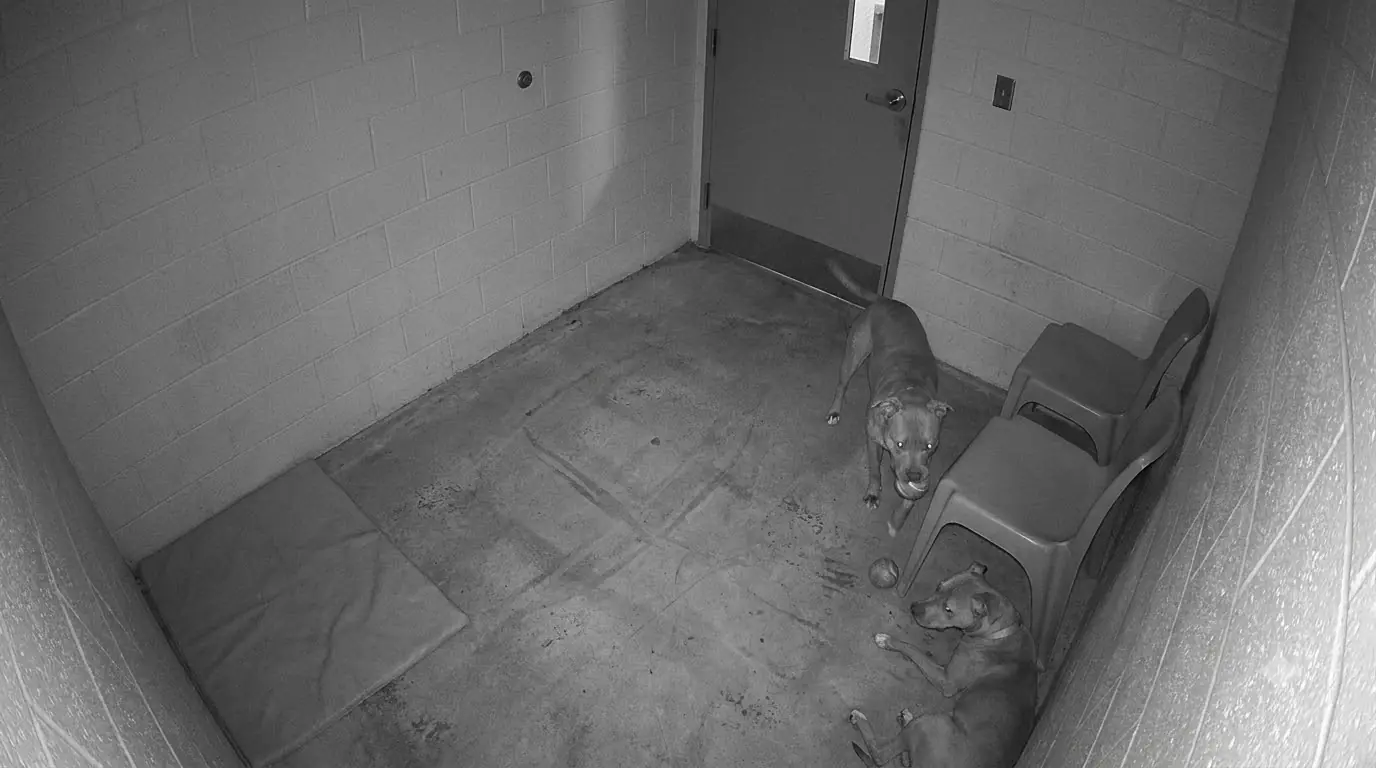
Rosie knows exactly where she wants to go when her kennel door opens.
The 7-year-old American Pit Bull Terrier doesn't immediately head toward the busiest part of the shelter.
She doesn't leave her favorite toy behind either.
Instead, Rosie picks up the rubber ball she keeps in her kennel.
Then she walks toward the meet-and-greet room.
It is the same room where, over the past several months, Rosie has been introduced to potential adopters.
Some days, however, nobody is waiting inside.
Rosie goes in anyway.
She carries the ball to the chair normally used by visitors.
Drops it beside the chair.
Then she lies down facing the doorway.
And waits.
Staff can call her.
They can walk past.
Rosie often remains exactly where she is until someone finally comes inside to lead her back.
It Wasn't Something Rosie Had Always Done
Rosie had already spent months in the shelter.
During that time, the meet-and-greet room had become part of her routine.
When someone was interested in getting to know her, staff could bring Rosie out of the kennel and into the quieter space.
There, she could interact away from the noise and barriers of the kennel area.
Rosie had been through that process more than once.
She met people.
Then the meeting ended.
Rosie returned to her kennel.
No adoption followed.
Staff could not know what Rosie understood about any of those encounters.
There was no reason to assume she understood the concept of adoption or knew why one visitor came and another disappeared.
But after several meetings, caregivers noticed that Rosie's behavior around the room had changed.
She had begun going there on her own whenever she had the opportunity.
The Ball Always Came With Her
That was the detail that made the pattern difficult to dismiss as simple exploration.
Rosie had access to other areas outside her kennel.
Yet when she headed toward the meet-and-greet room, she frequently took her favorite rubber ball with her.
She carried it carefully in her mouth.
Once inside, she didn't immediately begin playing.
Instead, she approached the visitor chair.
Her head lowered.
The ball dropped onto the floor beside it.
Then Rosie positioned herself a short distance away and faced the door.
The ball stayed by the empty chair.
Rosie stayed in the room.
Sometimes for several minutes.
Staff Couldn't Say Rosie Was “Waiting for a Family”
It was tempting.
The scene looked almost designed to produce that interpretation.
An empty adoption room.
A dog who had already met several potential families there.
Her favorite toy placed beside the chair where visitors usually sat.
Rosie facing the doorway.
But shelter staff could not know what Rosie believed would happen next.
Dogs learn places and routines through associations.
The room may have become associated with people, attention, play, novelty or simply a break from kennel life.
The visitor chair may have become a familiar landmark.
Her ball may have been something Rosie preferred to carry when moving through the shelter.
Those explanations were all possible.
None could be proven from the behavior alone.
What staff did know was that Rosie repeatedly chose the same room.
And once she was there, she was reluctant to leave.
Months in a Shelter Can Create Powerful Routines
For Rosie, the kennel had become the place where most days began and ended.
The meet-and-greet room was different.
It was quieter.
People spent focused time with her there.
There were fewer dogs barking nearby.
Someone might sit down at her level.
Rosie could sniff, explore, carry her toy or settle near a person without metal bars between them.
Whatever Rosie understood about those visits, the room had repeatedly predicted something different from ordinary kennel life.
That made her attraction to it less mysterious.
But it did not explain why she started visiting when the room was empty.
One Afternoon, Staff Followed Without Interrupting Her
Rosie's kennel opened.
She immediately picked up the rubber ball.
A caregiver expected her to move toward another activity.
Instead, Rosie took the familiar route.
She reached the meet-and-greet room.
The door was open.
Nobody was inside.
Rosie entered.
She walked directly to the visitor chair.
Dropped the ball.
Then turned around and lay facing the entrance.
The caregiver stayed outside for a moment.
Rosie did not retrieve the ball.
She did not investigate the rest of the room.
She simply watched the doorway.
Several people passed farther down the hall.
Rosie's ears reacted to the sounds.
But she stayed down.
Eventually the caregiver entered.
Only then did Rosie get up.
The Same Thing Happened Again
That was when the behavior became a recognizable pattern.
If Rosie had access to the room, she wanted to check it.
Sometimes she entered and stayed only briefly.
Other times she settled down.
The rubber ball frequently ended up beside the chair.
When staff tried encouraging her toward another activity, Rosie might look toward them without immediately moving.
Eventually, someone would approach, pick up the ball or gently guide her out.
Rosie returned to the kennel.
Later, given another opportunity, she might head toward the room again.
Staff Began Wondering What Rosie Was Actually Seeking
Perhaps it wasn't the room itself.
Perhaps it was what usually happened there.
Focused interaction.
A person sitting nearby.
Time away from the kennel.
A quieter environment.
Those were things the shelter could provide without requiring Rosie to sit in an empty room.
So caregivers began trying to expand Rosie's routine.
She received meaningful interaction in other spaces.
Her favorite ball came along.
People sat with her in places that had nothing to do with adoption meetings.
She was given opportunities to settle outside her kennel without the visitor chair being present.
The goal was not to make Rosie forget the meet-and-greet room.
It was to make sure it wasn't the only place where she expected something good to happen.
Her Ball Became Part of Those New Routines
Rosie loved carrying it.
That preference could be used without turning the toy into a symbol staff could not verify.
Sometimes a caregiver brought Rosie into another quiet area with the ball.
They played briefly.
Then the person sat down.
Rosie could keep the toy, lie nearby or explore.
Other times she carried it during transitions out of the kennel.
Gradually, the rubber ball began appearing in more places.
Not just beside the empty visitor chair.
But Rosie Still Checked the Room
A new routine did not erase the old one.
If the meet-and-greet door was open, Rosie often noticed.
She might stop.
Look inside.
Then enter.
Sometimes the ball still went directly beside the chair.
Rosie still lay facing the doorway.
But staff began noticing a subtle difference.
She did not always stay as long.
A familiar caregiver could call from outside.
Rosie might hesitate.
Then pick up her ball and follow.
Previously, someone often had to come into the room to lead her away.
Now, occasionally, Rosie chose to leave on her own.
Then Came Another Meet-and-Greet
The room wasn't empty this time.
Someone was sitting in the chair.
Rosie entered with staff.
She had her rubber ball.
Her reaction was familiar.
She approached.
Dropped the ball near the chair.
Then remained nearby.
The shelter treated the meeting like any other introduction.
There were no promises.
One good interaction could not guarantee an adoption.
Staff had learned not to build Rosie's story around an outcome that had not happened yet.
Eventually, the meeting ended.
The visitor left.
And Rosie returned to her kennel.
She was still a shelter dog.
The Next Time She Went Back, the Chair Was Empty Again
Rosie carried the ball inside.
She put it down.
Then she lay facing the door.
Nothing about the previous meeting had magically changed the behavior.
Staff did not expect it to.
Whatever association Rosie had formed with the room had developed over months.
It could take time for her daily world to become larger than that one space.
So caregivers continued giving her alternatives.
More places to rest.
More opportunities for one-on-one attention.
More predictable interactions with people she already knew.
More reasons to walk out of her kennel without immediately heading toward that chair.
Long Shelter Stays Can Be About More Than Time
A dog can remain physically safe while still experiencing a very limited routine.
The same kennel.
The same hallway.
The same doors.
The same sequence of sounds every day.
That is why enrichment, movement, social interaction and opportunities for choice matter.
For Rosie, caregivers paid attention not only to whether she was eating and physically healthy.
They also watched how she used her environment.
Was she interested in play?
Could she settle outside the kennel?
Did she engage with familiar staff?
Could she leave the meet-and-greet room willingly?
Was her world expanding?
Those questions became especially important as the months passed.
Rosie Began Making a Different Choice
One day her kennel opened.
Rosie grabbed the rubber ball.
The meet-and-greet room was accessible.
She started in that direction.
Then a familiar caregiver called her from somewhere else.
Rosie stopped.
She looked toward the room.
Then toward the person.
For several seconds, she stood with the ball in her mouth.
Finally, Rosie turned.
She followed the caregiver.
The meet-and-greet room remained empty behind her.
It was a tiny decision.
But it was different.
She Still Hasn't Forgotten the Chair
Rosie continues to check the room.
Sometimes she still enters.
Sometimes she still puts the ball beside the same chair and settles facing the door.
Staff allow her a moment when circumstances permit.
They do not drag her away simply because the scene makes people uncomfortable.
Nor do they encourage her to sit there for hours.
Eventually, someone calls.
Or comes inside.
Rosie gets up.
Her ball comes with her.
Life continues outside that room.
What Happens Next Is Still Open
Rosie has already spent months in shelter care.
She has already met people who did not ultimately take her home.
That history does not guarantee what the next meeting will bring.
Staff cannot promise that the next person in the chair will be the one who changes Rosie's situation.
Until an appropriate placement actually happens, Rosie needs a good life where she is now.
That means not treating every day as nothing more than waiting for adoption.
She needs walks.
Play.
Rest.
Familiar people.
New experiences.
And places where something good can happen even when nobody is sitting in the meet-and-greet chair.
But Some Days, Rosie Still Goes Straight There
Her kennel door opens.
Rosie reaches for the rubber ball.
She carries it down the familiar route.
The meet-and-greet room is empty.
Rosie walks inside anyway.
She approaches the chair.
The ball drops beside one of its legs.
Then Rosie turns and lies down facing the doorway.
For a while, she watches.
Nobody comes.
Eventually, a caregiver appears.
Rosie's tail moves.
The person calls her.
These days, she sometimes gets up without making them enter the room.
She picks up her ball and walks out beside them.
Staff still cannot say exactly what Rosie expects when she places that toy next to an empty chair.
Maybe they will never know.
They only know that the room became important during the months she spent meeting people who eventually walked back out its door.
So until the day Rosie's own circumstances truly change, the shelter is working on something smaller.
Teaching her, one ordinary day at a time, that she doesn't have to sit beside an empty chair for someone to come spend time with her.