The cast-iron stove had been burning since four in the morning.
By the time pale winter light began leaking through the frost-covered kitchen window, the woman beside the stove had already kneaded three loaves of bread, peeled two baskets of potatoes, cleaned a mound of carrots, trimmed a venison roast nearly as wide as the black roasting pan beneath it, and carried enough split wood from the kitchen bin to keep the fire alive until evening.
She weighed close to three hundred fifty kilograms.
Every task required thought.
Every movement had a cost.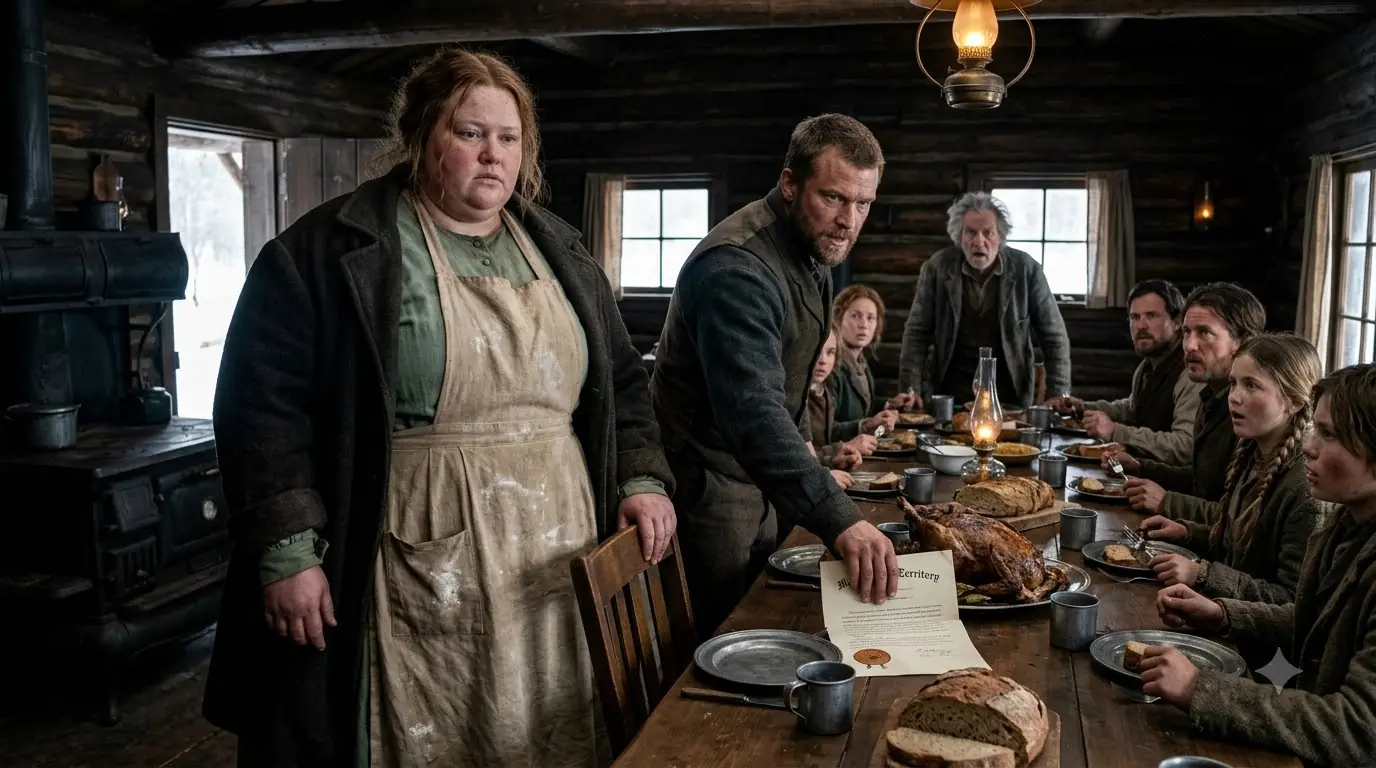
The old log house had been built for smaller bodies, narrower hips, lighter steps. Doorways were tight. Chairs were fragile. The pantry aisle was barely wide enough for her. The rough floorboards groaned when she crossed from the stove to the worktable, although several had been reinforced years earlier by the woman who once owned the ranch.
The cook had learned to move through the house intelligently.
She kept a heavy stool near the stove so she could sit while stirring long-cooking pots. She positioned flour, salt, dried herbs, and cooking fat on lower shelves so she did not need to reach repeatedly. When lifting a heavy pot, she braced one hand against the table before shifting her weight. When walking from the kitchen to the dining room, she planned the route first so she would not need to turn sharply while carrying something hot.
None of that made her helpless.
It made her experienced.
She had been running that kitchen for twelve years.
She knew exactly how long the stove took to come alive on a cold morning. She knew the north window leaked when the wind came down from the ridge. She knew the black iron skillet heated faster on the left side of the cooktop. She knew which pantry shelf sagged and which cellar step had to be avoided after spring thaw.
She knew the ranch too.
She knew how much flour remained before the next supply wagon.
She knew which cattle would need extra grain if snow came early.
She knew which hired hand lied about how much coffee he drank.
She knew the mare in the east stable hated men wearing red scarves.
She knew the lower creek froze two weeks before the spring did.
She knew the owner of the house had preferred her coffee dark, her biscuits too brown, and her accounts checked twice.
But the owner had been dead for eight weeks.
Since then, everything had changed.