The Black single father realized something was wrong before he saw the woman standing in his driveway.
He heard his Audi unlock.
One soft electronic chirp.
Then another.
He stopped halfway through the kitchen with a coffee mug still in his hand.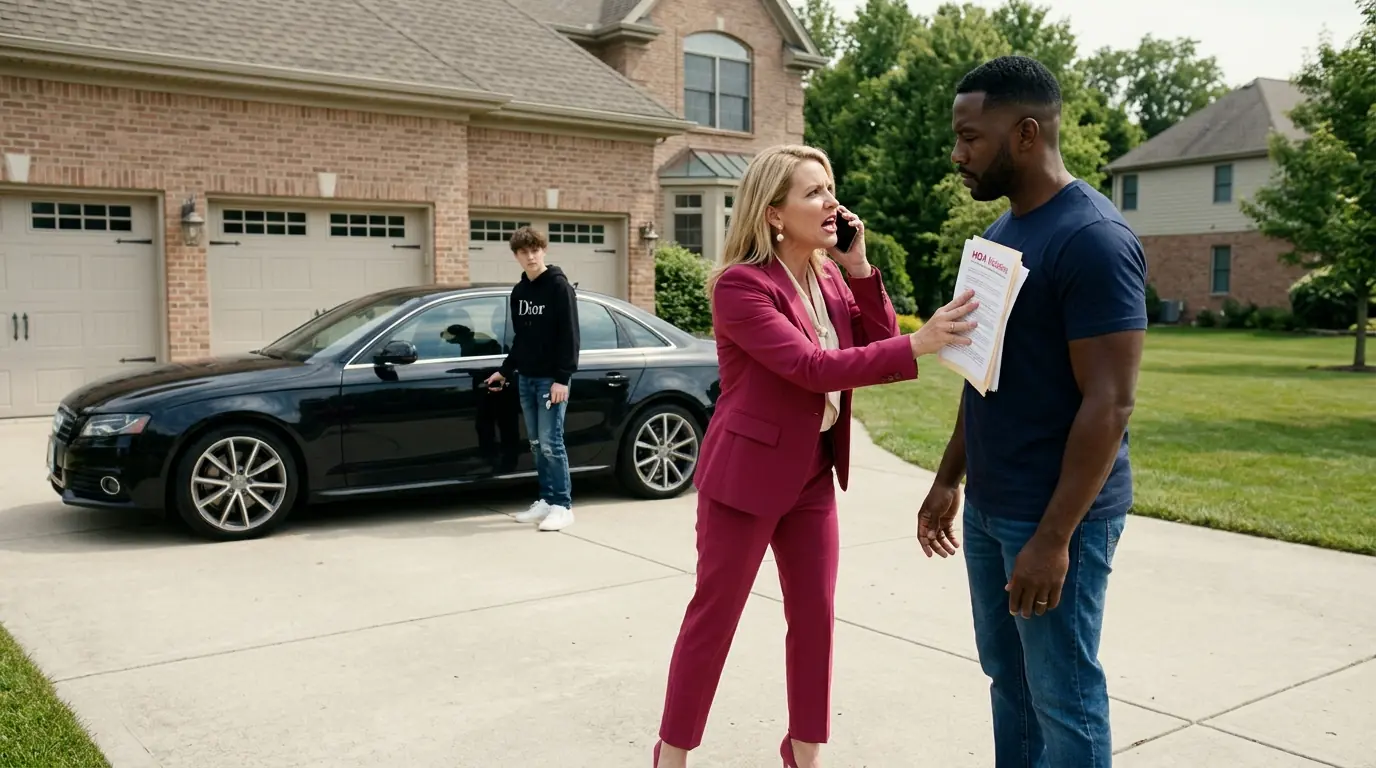
The black sedan had been sitting outside beneath the clear late-morning sun for almost an hour. He had washed it after breakfast, dried the wheels, checked the tire pressure, then gone inside to answer two work calls he had promised himself he would ignore on his first real day off in nearly three weeks.
Nobody should have had the key.
His teenage daughter was spending the weekend with her grandmother.
His spare key fob remained where he always kept it—inside the small combination lockbox mounted to the interior wall of the garage.
At least, that was where it was supposed to be.
Another chirp.
The father set down the coffee.
He crossed the living room and looked through the front window.
A white teenage boy in an expensive black designer hoodie stood beside the driver-side door of the Audi.
One hand gripped the handle.
The other held the father’s spare key fob.
For a moment, the homeowner simply stared.
The teenager pressed the button again.
The headlights flashed.
Then a woman stepped into view.
White.
Mid-forties.
Blonde hair styled carefully around her shoulders.
Pearl earrings.
A deep-pink tailored pantsuit bright enough to stand out against every neutral-colored house on the street.
The president of the homeowners association.
She carried a thick manila packet under one arm.
The father knew exactly who she was.
Everyone in the neighborhood did.
For two years she had treated the HOA presidency less like a volunteer position and more like a personal administrative monarchy.
Garbage bins visible six minutes too long after collection?
Notice.
Grass half an inch above the preferred height?
Notice.
Basketball hoop temporarily positioned near a driveway?
Notice.
Holiday lights still hanging on January sixth?
Second warning.
She loved paper.
Not necessarily rules.
Paper.
Warnings.
Violation forms.
Certified mail.
Photographs taken from sidewalks.
Documents with bold headings designed to look more governmental than they were.
The father had received plenty.
He usually paid attention only when the complaint was legitimate.
A sprinkler head spraying the sidewalk?
Fixed.
Tree branch hanging too low?
Trimmed.
A garbage container visible from the street because he returned from work late?
He ignored the first letter and moved it when he got home.
He did not dislike neighborhood rules.
He disliked people who interpreted inconvenience as authority.