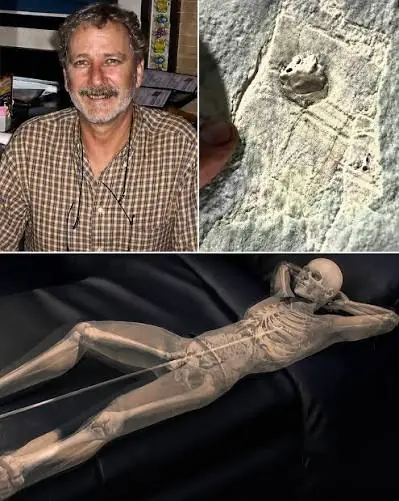
CHAPTER 1: THE LOCKED ROOM
Beaumont, Texas.
September 16, 2010.
Two men stood outside Room 348 of the MCM Eleganté Hotel wondering why their coworker was not answering the door.
Gregory Joseph Fleniken was not the kind of man who simply disappeared.
He was fifty-five years old.
Reliable.
Predictable.
For years, his work had required him to spend weekdays in Beaumont while his wife, Susie, remained at home in Lafayette, Louisiana.
Greg knew the routine.
Monday morning, drive west along Interstate 10.
Work during the week.
Stay at the same hotel.
Go home for the weekend.
He had repeated the schedule so often that the MCM Eleganté had become something close to a second home.
That morning, however, Greg had not arrived at work.
He had not answered his phone.
His pickup was still in the parking lot.
So two coworkers went upstairs to check on him.
They knocked.
Nothing.
They knocked again.
Still nothing.
Hotel staff arrived with a key.
But even after the lock was opened, the door would not swing freely.
The interior security latch had been engaged.
That mattered.
Someone inside had secured Room 348.
Staff manipulated the latch enough to gain entry.
The curtains were closed.
The room was dark.
And on the floor between the bed and the doorway was Greg Fleniken.
Face down.
Motionless.
Cold.
At first glance, almost nothing inside the room suggested violence.
There was no overturned furniture.
No obvious blood.
No shattered glass.
No indication that someone had forced entry.
More than a thousand dollars in cash remained in the room.
His laptop was still there.
His belongings had not been searched.
There was no obvious sign of robbery.
Greg appeared to have been spending the evening exactly the way he usually did when staying in Beaumont.
He had changed into comfortable clothes.
His boots were off.
The television was on.
He had arranged a white towel on the bed beside where he had been sitting.
On it were the ordinary objects he kept close during quiet hotel nights.
Cigarettes.
Ashtray.
Lighter.
BlackBerry.
Remote control.
Candy.
A bottle of root beer.
The movie playing was Iron Man 2.
A cigarette remained near his hand.
Nothing about the scene looked like a murder.
It looked like a man had suddenly collapsed.
A heart attack.
A stroke.
Some unexpected medical emergency.
That was the simplest explanation.
And initially, police had very little reason to reject it.
Greg was removed from the room.
His body went to the medical examiner.
Detectives photographed the hotel room.
They documented the cash.
The bed.
The cigarette.
The door.
The bathroom.
The walls.
Then they waited for the autopsy.
What happened next completely changed the case.
The medical examiner opened Greg's body.
Inside were injuries that did not belong in that quiet hotel room.
Several ribs were damaged.
His chest had sustained catastrophic trauma.
Internal organs had been severely injured.
His heart had been pierced.
The damage looked less like natural death and more like what someone might suffer in a violent automobile collision.
Or after being brutally assaulted.
But there was a problem.
Greg's exterior did not match the inside of his body.
No massive bruising across his chest.
No obvious beating marks.
No defensive wounds.
No smashed furniture.
No blood all over the room.
Nothing.
Dr. Tommy Brown noticed an unusual injury near Greg's groin and initially interpreted it as part of a severe blunt-force assault.
Perhaps Greg had been kicked.
Perhaps someone had attacked him.
The manner of death was changed.
Homicide.
Now Beaumont police had a locked hotel room containing a man whose internal injuries suggested extraordinary violence, while everything surrounding him suggested almost none.
Detective Scott Apple began working the case.
The first theory was straightforward.
Someone had beaten Greg.
But almost immediately, that theory began falling apart.
If Greg had been attacked inside Room 348, where was the evidence of the fight?
If he had been assaulted somewhere else, how had he returned to the room?
Why would someone with catastrophic internal injuries calmly enter his hotel room, change clothes, sit on the bed, arrange his cigarettes and candy, turn on a movie and light another cigarette?
And why was the security latch still locked from inside?
Investigators looked at the money.
Untouched.
The laptop.
Untouched.
His personal property.
Still there.
Robbery made no sense.
Then they considered Greg himself.
Did he have enemies?
Business disputes?
A secret relationship?
Someone who followed him?
Someone he met at the hotel?
Nothing obvious surfaced.
Greg worked in the oil-and-gas land business.
He negotiated mineral rights and land agreements.
Colleagues described him as dependable.
His wife knew his routine.
His coworkers knew his habits.
There was no obvious reason anyone would want him dead.
Investigators began reconstructing Greg's final evening.
Security footage showed him arriving at the hotel after work.
At approximately seven that evening, he exchanged messages with Susie about tax paperwork.
Nothing in the conversation suggested fear.
Nothing suggested that another person was with him.
Nothing suggested conflict.
He seemed to be doing what he always did.
Watching television alone.
There had been one minor problem that evening.
The hotel's electrical system had caused an interruption.
Greg's air conditioner stopped working.
A maintenance worker came to deal with the issue.
That man briefly became interesting to investigators because he had a criminal record.
He was a registered sex offender.
But police checked him carefully.
His timeline did not fit.
No evidence connected him to Greg's death.
He was eliminated.
Police then turned toward other guests.
Room 349 shared a wall with Greg.
Several electrical workers were staying nearby.
Among them were Lance Mueller, Timothy Steinmetz and Trent Pasano.
They had been drinking that evening.
They had been noisy.
Police interviewed them.
They said they knew nothing about Greg.
No confrontation.
No fight.
No reason to kill him.
Without evidence tying them to the death, police moved on.
Weeks passed.
The case remained open.
Susie wanted answers.
The investigators had a homicide but no method.
Then several small details began bothering people.
Greg liked his hotel rooms freezing cold.
When he was found, Room 348 was warm.
If Greg had still been conscious after the electrical interruption, people close to him believed he would almost certainly have turned the air conditioner back on.
He had not.
Then there was the cigarette.
Greg was right-handed.
He normally smoked with his right hand.
When his body was discovered, the cigarette was in his left.
Neither fact proved anything.
But both suggested something had interrupted Greg suddenly while he was still in the room.
He had probably not returned hours later after being attacked somewhere else.
Something had happened while he was sitting on the bed.
Something powerful enough to destroy his body from the inside.
Yet somehow it had left almost no obvious mark on the room around him.
Police were looking for a person who had entered Room 348.
What nobody realized yet was that they were asking the wrong question.
Because the person responsible for Greg Fleniken's death may never have entered Room 348 at all.
And the first physical clue explaining how that was possible was still sitting unnoticed only inches from where police had already searched.