Three successful transplants. Three patients suddenly developed the same mysterious illness. Investigators traced it all back to one overlooked bat bite.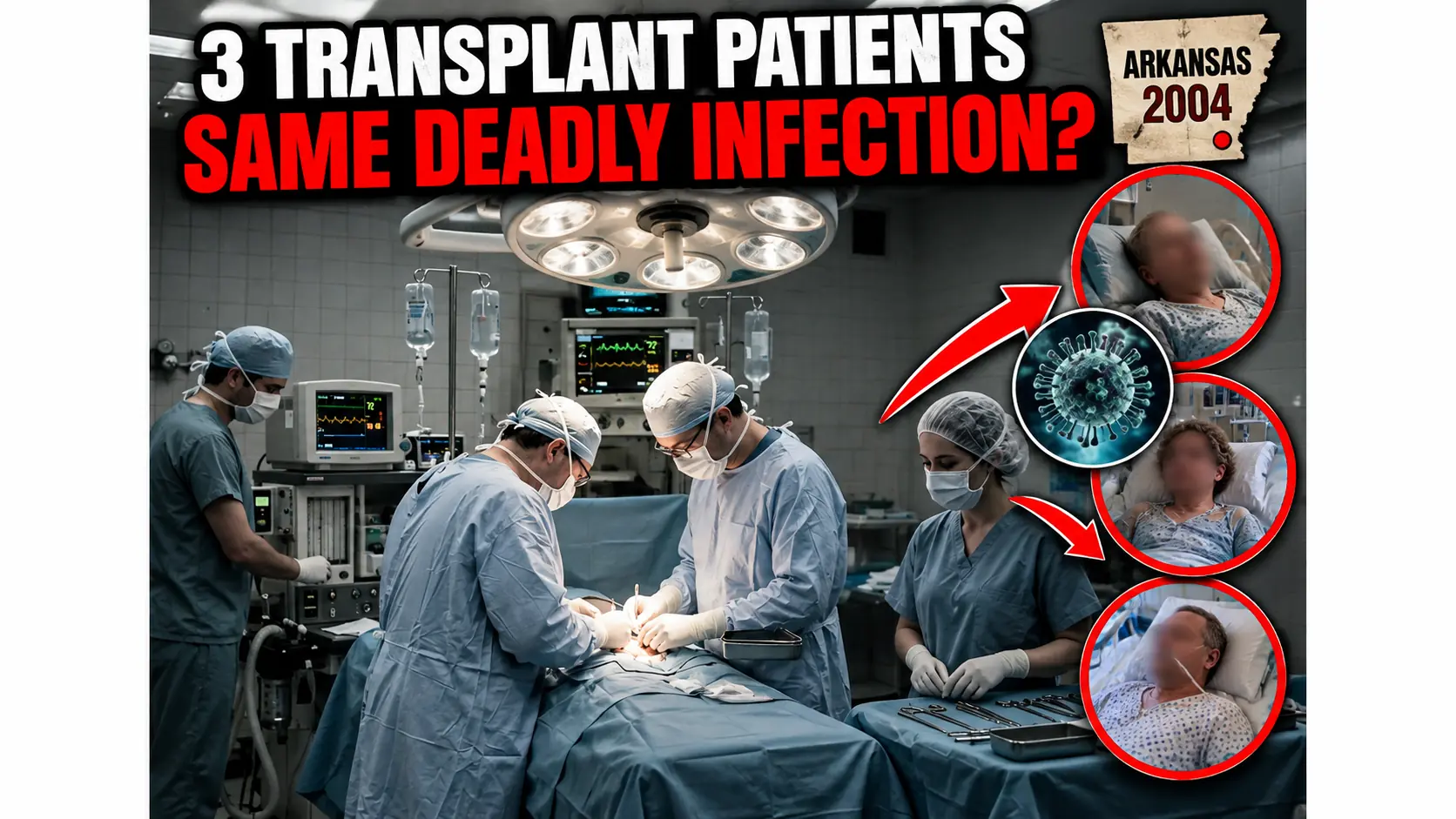
Arkansas, 2004.
A twenty-year-old man became suddenly ill.
At first, nobody looking after him had any reason to believe that his death was about to trigger one of the strangest medical investigations in modern American transplant history.
He developed severe changes in his mental state.
He had a low-grade fever.
His condition worsened.
Doctors examined his brain and saw what appeared to be a devastating hemorrhage.
The findings were consistent with a subarachnoid hemorrhage, bleeding into the space surrounding the brain.
Over the next forty-eight hours, the bleeding appeared to expand.
Pressure inside his skull increased.
His brain herniated.
And he died.
It was tragic.
But it did not initially look mysterious.
It looked like a catastrophic neurological event in a young man.
His family was then asked one of the most difficult questions a family can hear after an unexpected death.
Would they consider organ donation?
They agreed.
In the middle of their loss, his organs might save other people.
His liver.
Both kidneys.
His lungs.
For several critically ill patients waiting for transplants, the young man's death could become their second chance.
The donor underwent the standard screening process available at the time.
Nothing in that screening indicated that his organs should not be used.
There was no known reason to believe he carried an unusual infection capable of killing the people who received them.
Rabies was not part of routine donor laboratory testing.
Why would it be?
Rabies in humans was extraordinarily rare in the United States.
Transmission through solid-organ transplantation had never before been documented.
Doctors believed they were dealing with a donor who had died from a noninfectious neurological catastrophe.
So the organs were recovered.
On May 4, 2004, the liver and both kidneys were transplanted into three different patients at Baylor University Medical Center in Dallas.
The lungs went to another patient in Alabama.
That lung recipient died during the transplant operation from complications unrelated to the infection that investigators had not yet discovered.
For the three people who received the liver and kidneys, however, the surgeries initially appeared to work.
One patient went home.
Then another.
Then another.
For people living with end-stage organ disease, discharge from the hospital after transplantation is not simply the end of a surgery.
It can feel like the beginning of another life.
A failing liver has been replaced.
A kidney that could no longer sustain the body has been replaced.
Years of illness, dialysis, waiting lists and uncertainty may finally have produced the call everyone was hoping for.
A donor had been found.
The operation had succeeded.
The new organ was functioning.
The patient could go home.
And for several weeks, nothing about the three cases suggested that they were connected by anything other than an organ donor.
Then the first patient came back.
And the mystery began.
The First Recipient
The liver recipient was a man with end-stage liver disease.
Immediately after transplantation, he did well.
There were no signs that the organ itself carried a lethal neurological infection.
Five days after surgery, he was discharged.
The transplant appeared successful.
Then, twenty-one days after receiving the liver, he returned to the hospital.
He had tremors.
He was lethargic.
He had lost his appetite.
But there was something odd.
He was not febrile.
No obvious high fever announced a raging infection.
At first, the symptoms could point in several directions.
Transplant patients are medically complicated.
They take powerful immunosuppressive drugs so their bodies will not attack the new organ.
Those medications can themselves create problems.
They can make patients unusually vulnerable to infections that a healthy immune system might control.
Electrolyte abnormalities can produce confusion.
Medication toxicity can affect the nervous system.
Metabolic problems can change mental status.
A newly transplanted organ can malfunction.
A common virus can become dangerous.
A rare virus can become catastrophic.
And at the beginning, doctors do not know which possibility they are facing.
Within twenty-four hours, the man's condition deteriorated dramatically.
He needed intubation.
He needed intensive-care support.
Doctors performed a lumbar puncture.
His cerebrospinal fluid showed signs consistent with inflammation.
An MRI produced abnormalities, but nothing gave doctors an immediate, obvious diagnosis.
His brain was becoming increasingly affected.
Six days after he was readmitted, repeat imaging showed diffuse encephalitis.
Inflammation was spreading through his brain.
Then he died.
A man who had received a liver only weeks earlier, recovered well enough to go home and appeared to have been given another chance at life was suddenly dead from an unexplained neurological disease.
For doctors, it was disturbing.
But one unexplained death in a transplant patient is not automatically an outbreak.
Then a kidney recipient began deteriorating.
The Second Patient
The first kidney recipient was a woman with end-stage renal disease associated with hypertension and diabetes.
Her transplant recovery initially appeared uncomplicated.
Seven days after receiving the kidney, she went home.
Then, twenty-five days after transplantation, she returned to the hospital complaining of pain in her right side.
She underwent an appendectomy.
At that point, nobody looking at the case necessarily had a reason to connect her illness to the man who had received the liver.
Then, two days later, something changed.
She began twitching.
Her movements became abnormal.
She grew increasingly lethargic.
Doctors performed CT and MRI imaging of her brain.
Nothing immediately explained what they were seeing clinically.
Her neurological status worsened.
Within the next twenty-four to forty-eight hours, the situation became critical.
Her mental state deteriorated.
She developed seizures.
Her blood pressure became unstable.
Her breathing failed.
She had to be intubated.
Doctors continued trying to understand what was attacking her nervous system.
Eventually imaging showed severe cerebral edema.
Her brain was swelling.
She died.
Now there were two transplant recipients.
Both had recently received organs.
Both initially recovered.
Both later developed rapidly progressive neurological disease.
Both died.
And both organs had come from the same donor.
That was no longer easy to dismiss as coincidence.
Then the third patient arrived.
The Third Recipient
The second kidney had gone to a man with end-stage renal disease caused by focal segmental glomerulosclerosis.
His early transplant course was not entirely smooth.
He experienced arterial-graft complications that caused damage to part of the transplanted kidney.
But the problem was managed.
Twelve days after transplantation, he was discharged.
Then, twenty-seven days after receiving the kidney, he appeared at an emergency department.
He was having sudden jerking movements.
His mental state was altered.
Like the liver recipient, he was not running a fever.
An MRI of his brain initially appeared normal.
That could have been reassuring.
It was not.
During the next twenty-four hours, his mental status rapidly worsened.
Doctors examined his cerebrospinal fluid.
It showed mild inflammatory changes and elevated protein.
His neurological decline continued.
His respiratory system failed.
He required intubation.
Ten days after admission, another MRI showed diffuse brain swelling.
He died as well.
Three recipients.
One liver.