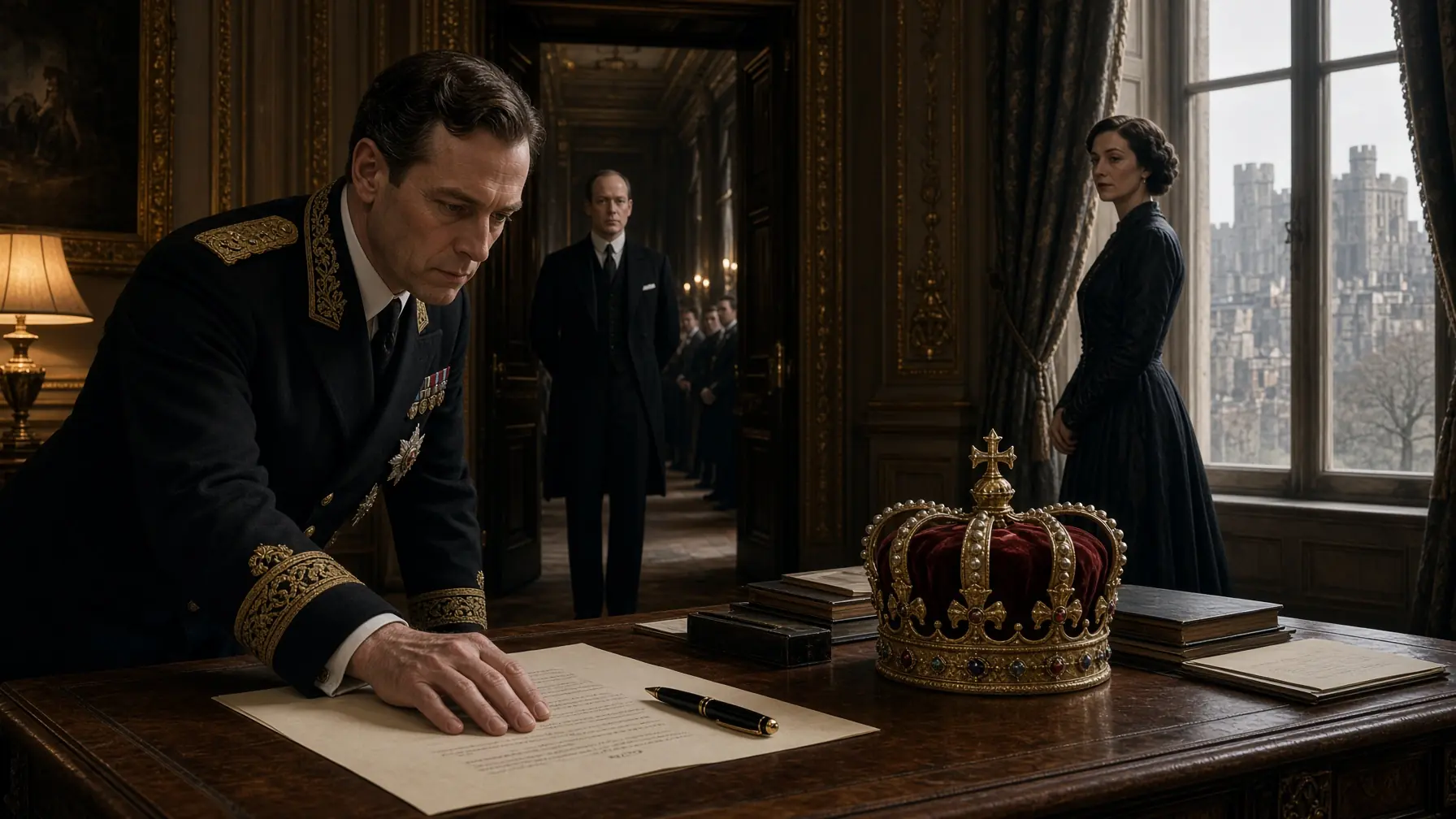
On the evening of December 11, 1936, millions of people listened as a man who had been King of the United Kingdom at the beginning of that day explained why he no longer wore the crown.
Edward VIII had reigned for less than a year.
He had not been defeated in war. He had not been overthrown by revolution. He had no serious illness forcing him from public life.
Instead, his reign had collapsed around his determination to marry Wallis Simpson.
In his famous broadcast from Windsor Castle, Edward told his former subjects that he had found it impossible to carry the responsibilities of kingship without the support of “the woman I love.”
By then, however, the decisive legal act had already begun. Edward had signed his Instrument of Abdication on December 10. Parliament gave it legal effect on December 11, ending his reign and transferring the Crown to his younger brother Albert, Duke of York, who became George VI.
The consequences reached far beyond Edward and Wallis.
George VI had no sons.
His elder daughter was the 10-year-old Princess Elizabeth.
With her father suddenly king, Elizabeth became heir presumptive.
Sixteen years later, she would become Queen Elizabeth II.
It is tempting, therefore, to remember the abdication as a simple royal romance: a king fell in love with an American divorcée and surrendered an empire for her.
But that version hides the real constitutional problem.
Edward did not initially want to choose between Wallis and the throne.
He explored whether he could have both.
And for a few tense weeks in 1936, the British government, the Dominions and the monarchy confronted a question with no politically acceptable answer: Could the king marry Wallis Simpson and remain king?
The Woman at the Center of the Crisis
Wallis Warfield was born in Pennsylvania in 1896 and raised largely in Baltimore.
By the time she became close to Edward, she had already been married once.
Her first husband was Earl Winfield Spencer Jr., a U.S. naval officer. Their marriage ended in divorce in 1927.
In 1928, Wallis married Ernest Simpson, an American-born shipping executive living in Britain.
Through fashionable London society, the Simpsons entered the orbit of the Prince of Wales.
Edward met Wallis while he was still heir to the throne. By the mid-1930s, their relationship had become increasingly intimate, and Wallis occupied an extraordinarily prominent position in his private life.
Then everything changed on January 20, 1936.
George V died.
Edward became King Edward VIII.
The new king was unmarried and had no children.
That made his future marriage more than a private concern. A wife could become queen, and children of a lawful royal marriage could shape the succession for generations.
Wallis, meanwhile, was still married to Ernest Simpson.
During 1936 she began divorce proceedings.
Once it became clear that Edward intended to marry her after her divorce became final, a private royal relationship turned into a constitutional crisis. The Royal Family’s official history notes that concern spread through the Cabinet, opposition parties and the Dominions as Edward’s determination became clear.
The problem was not simply that Wallis was American.
Nor was it merely that members of the establishment disliked her.
Divorce lay at the heart of the controversy.
Why Wallis’s Divorces Mattered So Much
It is easy to look at the crisis through modern expectations and wonder why a divorced woman could destabilize a monarchy.
Britain in 1936 operated in a very different social, religious and constitutional environment.
Edward was not only king.
The monarchy was intimately connected to the Church of England, and the sovereign occupied a constitutional position within that religious settlement.
At the time, the Church took a restrictive view of remarriage after divorce while a former spouse was still living.
Wallis had divorced Earl Spencer, who remained alive. She was now divorcing Ernest Simpson, who would also remain alive.
A king marrying a twice-divorced woman whose former husbands were living therefore presented an acute problem.
But there was an additional constitutional issue.
The British monarch does not govern simply according to personal preference. The king operates within a constitutional system in which ministers are responsible to Parliament.