Emma Martinez had been awake since before sunrise.
At five years old, she had already learned that adults considered early mornings something to complain about, but Emma liked them.
The world was quieter then.
Before trucks rattled along County Road 17.
Before Murphy’s gas station turned on the old speaker above the pumps.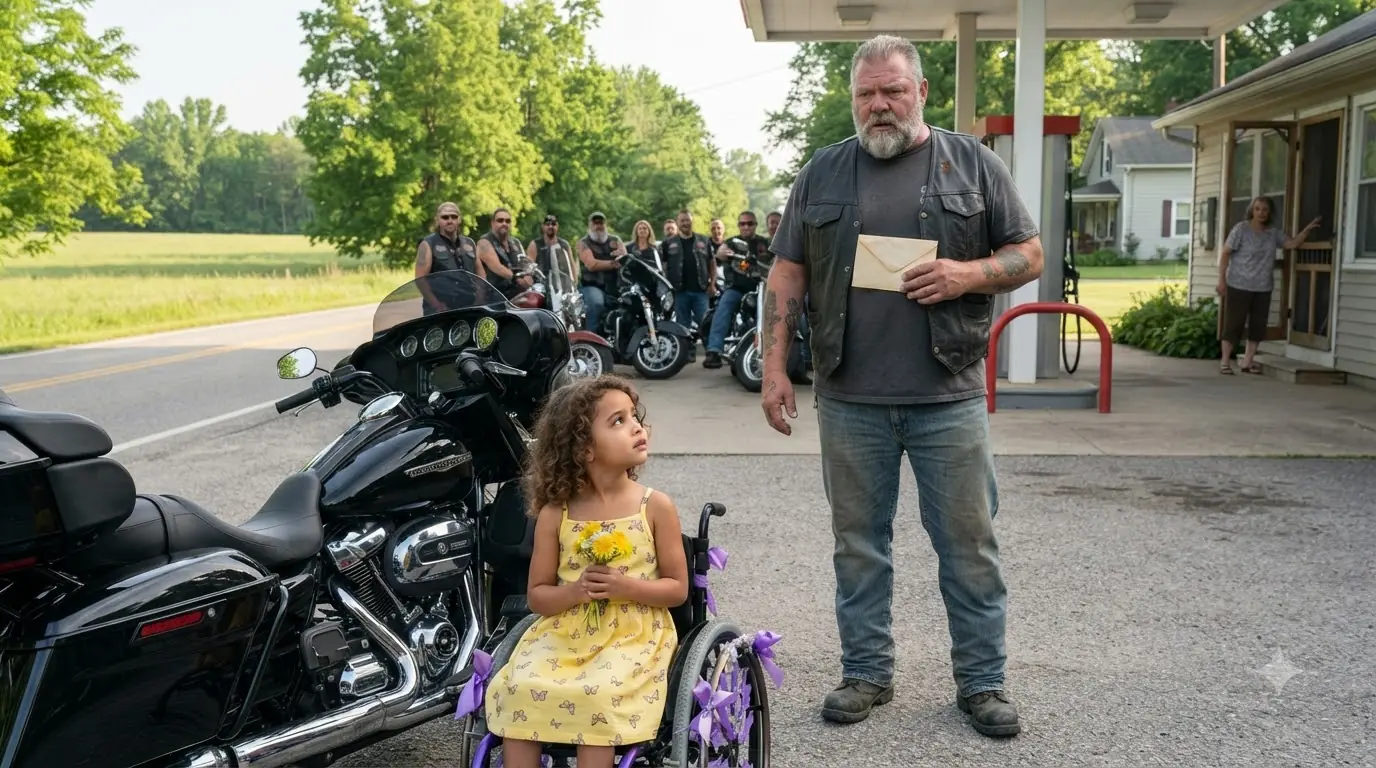
Before Mrs. Reynolds across the road began watering flowers while pretending she wasn’t watching everybody who passed.
Before her grandmother opened every window in the little white house and started a new day by announcing that Oklahoma humidity ought to be illegal.
Early mornings belonged to birds, dew, and Emma.
She sat at the end of the driveway with the purple ribbons on her wheelchair wheels catching the first sunlight.
The ribbons were new.
Her grandmother had tied them on the night before.
Emma had protested because one side was longer than the other.
Her grandmother had told her symmetry was overrated.
Emma did not know what overrated meant, but she suspected it was an adult word used whenever adults made mistakes and wanted children to stop pointing them out.
She rolled slowly along the edge of the yard, searching for dandelions.
Most people called them weeds.
Emma’s father called them stubborn flowers.
That made her like them.
He said anything capable of growing through cracks in hard ground deserved more respect than people gave it.
Emma had remembered that.
She remembered almost everything her father said.
Especially now that his voice came mostly through a tablet screen.
Her yellow sundress had tiny butterflies printed across it.
It was her favorite because he had mailed it to her three months earlier.
The package had taken forever.
At least forever according to Emma.
Her grandmother said twelve days was not forever.
Emma argued that twelve days was nearly two weeks, and two weeks was practically forever if you were waiting for something important.
Her father had called the same evening the package arrived.
He had watched through the screen while Emma spun her wheelchair in a crooked circle to make the skirt move.
“You like it, Bug?”
“I love it.”
“Good.”
“You picked yellow because you know purple is actually my favorite.”
“I picked yellow because butterflies looked weird on camouflage.”
Emma had laughed until the tablet shook in her hands.
Then she had asked when he was coming home.
Her father’s smile had changed.
Not disappeared.
Changed.
Adults did that when they were deciding which truth a child could carry.
“Sooner than forever.”
“That’s not a day.”
“No.”
“How many sleeps?”
“I don't know yet.”
“You always say that.”
“I know.”
Emma had frowned.
Then her father leaned closer to the camera.
“You know what soldiers do when they don't know exactly when something will happen?”
“What?”
“They keep their promises anyway.”
Emma had looked suspicious.
“That doesn't make sense.”
“It will someday.”
She still wasn’t sure it did.
But she remembered it.
That morning, she had collected nine dandelions before she heard the first motorcycle.
It came from the north.
A deep mechanical rumble.
Emma stopped moving.
The sound grew louder.
Then another engine joined it.
Then another.
She wheeled toward the road.
Her grandmother called from inside.
“Emma?”
“I’m here!”
“Breakfast!”
“Not hungry!”
“You said that yesterday and ate four pancakes!”
“I was hungry yesterday!”
Her grandmother appeared briefly behind the screen door.
Rosa Martinez was sixty-two, though Emma believed this number changed depending on whether someone was asking politely.
She wore an old blue robe, slippers, and reading glasses she constantly misplaced while wearing them.
“You have exactly five minutes.”
“Six.”
“Five.”
“Five and a half.”
Rosa pointed toward her.
“Your father gave you that negotiating disease.”
Then she disappeared into the house.
Emma grinned.
The motorcycles turned into Murphy’s.
There were twelve.
Emma counted twice.
The riders entered the gas station lot in a long staggered line.
Sunlight flashed across chrome.
The noise vibrated in Emma’s chest.
She did not dislike motorcycles.
Her grandmother did.
Or rather, Rosa claimed motorcycles were machines designed by people who looked at ordinary danger and decided it needed fewer doors.
Emma thought they looked beautiful.
The lead motorcycle was enormous.
Glossy black.
Chrome handlebars.