The Gulfstream G650 sat beneath the morning sky like something too expensive to hurry.
Its polished white fuselage reflected the private terminal, the service trucks, the hangars, and the pale blue September sky above Teterboro Airport. The boarding stairs were already lowered. Two pilots were completing final checks. A catering van had pulled away ten minutes earlier. The lead flight attendant stood near the aircraft door while another attendant reviewed a tablet containing the passenger manifest and departure instructions.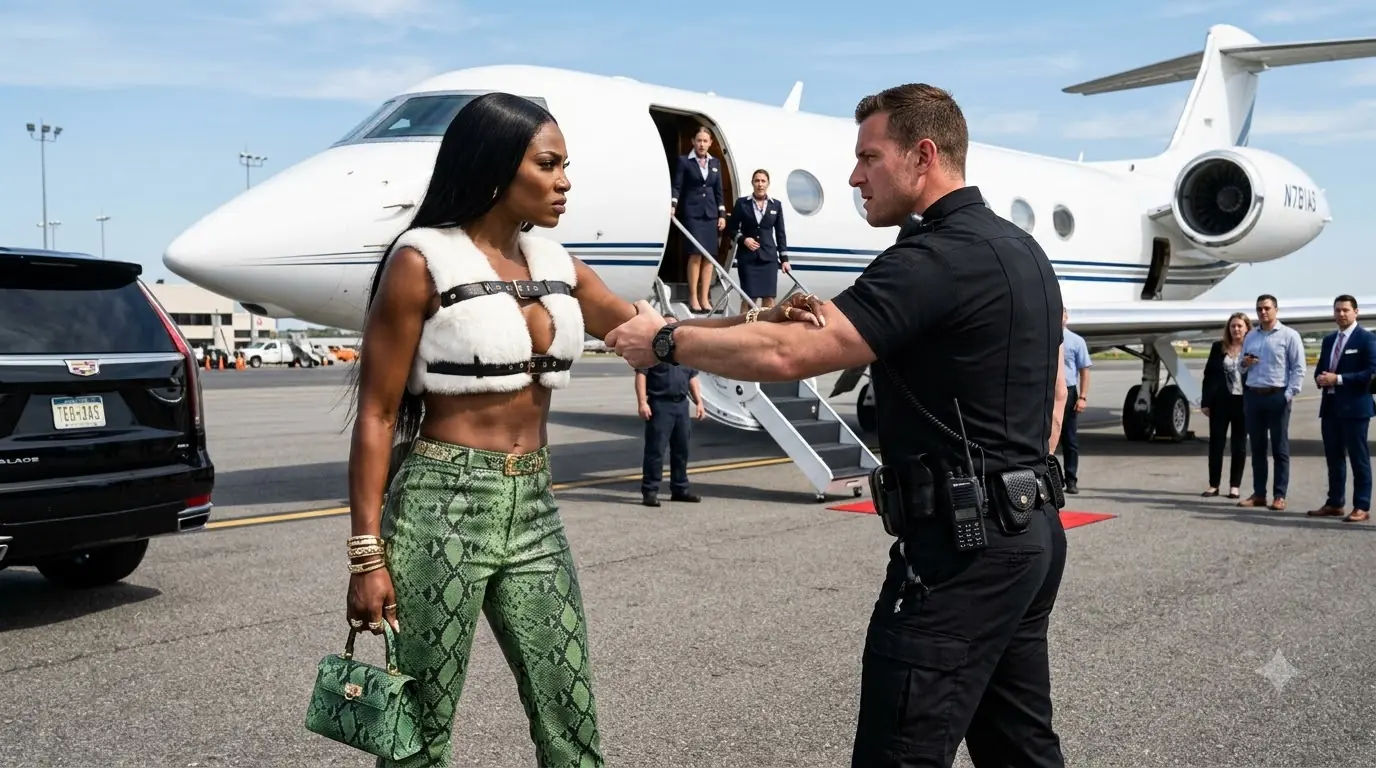
Everything was ready.
Everything except the passenger whose name appeared at the top of every document.
Amara Sterling stepped out of a black SUV fifty yards from the jet and immediately knew she was running seven minutes late.
She hated being late.
Not because seven minutes mattered by itself. The aircraft belonged to her company. The pilots would wait. The meeting waiting at the other end of the flight would wait too if necessary.
That was exactly why she disliked it.
People with power became careless when the consequences of carelessness moved onto everyone else.
Amara had built Sterling Aerospace by noticing consequences.
At thirty-eight, she controlled a privately held aviation and advanced manufacturing company valued well above eight billion dollars. Sterling produced avionics systems, leased corporate aircraft, operated three private terminals, owned minority stakes in two maintenance networks, and had recently entered negotiations to acquire a struggling but strategically valuable aerospace components manufacturer in Arizona.
That negotiation was why she was flying.
The board of the target company had given Sterling Aerospace until noon Mountain Time to deliver final signatures and funding confirmation. Amara could technically sign electronically from New Jersey.
She refused.
The founder was eighty-one years old and selling the company his father had started.
Some transactions deserved a human being in the room.
Her chief operating officer had called the belief sentimental.
Amara called it respect.
She walked across the marked private ramp with a structured green handbag in one hand and her phone in the other.
Her clothing had been the subject of an argument before she left Manhattan.
Not because Amara cared what anyone thought.
Because her communications director did.
“You are meeting a conservative manufacturing board in Arizona.”
“I know.”
“You're wearing snakeskin trousers.”
“I can see them.”
“And that top.”
Amara had looked down.
The white cropped faux-fur garment was fitted across the shoulders and upper chest, fastened in front with several narrow black leather straps. It left her toned midriff visible above high-waisted green snakeskin-pattern trousers. Gold bracelets circled one wrist. Rings decorated both hands. A thin designer belt sat at her waist.
She looked expensive.
Bold.
Modern.
Entirely herself.
Her communications director had sighed.
“Could you at least take a blazer?”
“No.”
“Why?”
“Because if a billion-dollar transaction depends on whether an eighty-one-year-old man approves of my stomach, I would rather know before wiring the money.”
That ended the discussion.
Now her heels clicked against the tarmac while the Gulfstream waited.
She noticed the security officer before he noticed her.
Black uniform.
Utility belt.
Radio at shoulder.
Broad build.
Short brown hair.
Mid-thirties.
His name tag read COLLINS.
He stood between the terminal exit and the aircraft stairs, speaking with a ground employee.
Amara recognized the face.
Derek Collins.
She knew the names of nearly everyone assigned to the Sterling terminal that week because there had been an internal security briefing after an attempted unauthorized access incident at another private facility three days earlier.
Collins was not a Sterling employee.
He worked for Sentinel Executive Security, a contractor Sterling Aerospace had used for just under eighteen months.
He had been assigned to Teterboro two weeks earlier.
Amara approached.
Collins looked toward her.
His eyes moved first to her clothes.
Then to her handbag.
Then behind her, apparently checking whether someone more important was coming.
Amara continued walking.
Collins stepped into her path.
“Ma’am.”
She slowed.
“Yes?”
“This area is restricted.”
“I know.”
“You need to return to the terminal.”
Amara glanced toward the stairs.
“No.”
Collins frowned.
“No?”
“I’m boarding.”
He actually laughed.
Short.
Disbelieving.
Amara looked at him.
“What’s funny?”
He squared his shoulders.
“This aircraft is private property.”
“Yes.”
“You can’t just walk onto the ramp because you see a private jet.”
Amara stared for half a second.
Then looked toward the jet again.
One of the attendants had noticed the delay.
So had a mechanic near the nose gear.
Amara returned her attention to Collins.
“I’m aware that it’s private.”
“Then we understand each other.”
“No.”
His expression tightened.
Amara continued.
“You understand that you want me to leave.”
“I understand that you’re unauthorized.”
“You haven’t asked my name.”
Collins looked irritated.
“I don’t need your name.”
Amara raised one eyebrow.
“That seems like an interesting approach to access control.”
His face changed.
“You have clearance?”
“Yes.”