For most dogs, a shelter is supposed to be temporary.
It is the place between the life they lost and the family they may one day find. Some stay for a few days. Others wait for several weeks or months.
Buddy waited for 12 years.
By the time he died, the shelter was the only home he could still remember.
Buddy arrived as a young adult after animal control found him wandering near an industrial area. He was thin, covered in fleas and wearing a faded collar without an identification tag.
No microchip was found.
The shelter estimated that he was approximately three years old.
During his first days there, Buddy stood at the kennel door whenever anyone entered the building. He pressed his nose between the bars and wagged his entire body at every visitor who stopped.
Staff expected him to be adopted quickly.
He was young, energetic and affectionate with the people he trusted. He loved treats, leaned his body against anyone who scratched his shoulders and carried a worn rubber ball everywhere he went.
But Buddy also struggled in the noisy shelter environment.
When unfamiliar visitors approached his kennel, the barking around him made him nervous. His body became stiff, and he sometimes barked loudly from behind the gate.
People often stepped away before a staff member could explain that Buddy behaved differently outside his kennel.
During walks, he relaxed.
He sniffed through the grass, carried his ball and frequently turned toward the person holding his leash. When someone sat beside him, Buddy would place his head on that person’s knee.
Inside the kennel, however, visitors saw only a large dog barking behind metal bars.
Weeks turned into months.
Several families asked to meet him. Most chose another dog.
One family spent nearly an hour with Buddy in the shelter yard. He brought them his ball and rested beside their teenage son.
The staff thought his wait might finally be over.
But the family decided that his size and energy would be too difficult to manage in their home.
Buddy returned to his kennel.
The next morning, he was waiting at the gate again.
Years passed that way.
The shelter posted his photograph repeatedly and brought him to adoption events. Volunteers wrote descriptions of his personality and shared videos showing how calmly he behaved away from the kennel.
There were inquiries.
There were introductions.
There were promises to think about it.
But no one completed the adoption.
As Buddy grew older, younger dogs arrived and left before him. Puppies drew attention immediately. Small dogs were often chosen quickly, and dogs with quieter kennel behavior appeared easier to understand.
Buddy remained in the same building.
He learned the shelter’s daily routine.
He knew the sound of the food cart and could distinguish it from the cleaning cart. He recognized the footsteps of his favorite employees before they reached his kennel.
When the front doors opened for visitors, Buddy still stood and watched.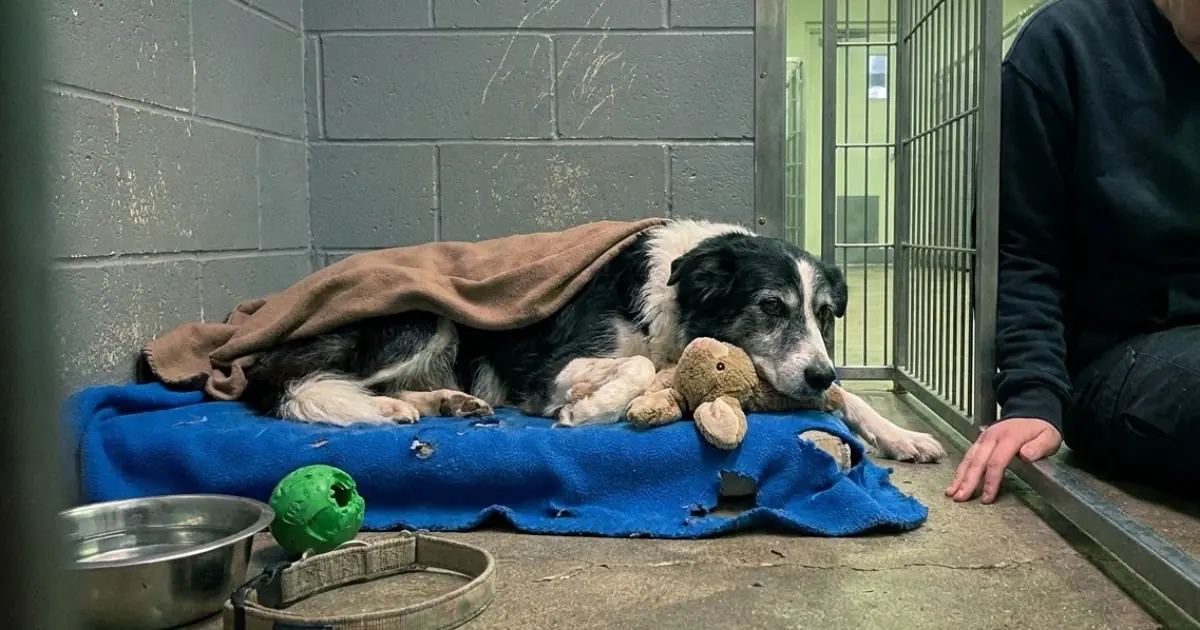
For years, he rose every time someone paused near him.
If they moved toward another kennel, he followed them with his eyes until they disappeared from view.
The shelter was not intentionally cruel to Buddy.
Staff fed him, cleaned his enclosure and made sure he received veterinary care. Volunteers walked him and spent time sitting beside him.
They celebrated his birthdays with treats and new toys.
But none of those moments could replace a home.
At the end of every walk, Buddy returned behind the same gate. When the employees turned off the lights and went home, he slept alone while the sounds of other dogs echoed through the building.
Over time, he stopped rushing to the door for every visitor.
By his seventh year at the shelter, Buddy usually remained on his bed until someone called his name. He still greeted familiar volunteers, but strangers no longer caused his entire body to wag.
He had watched too many people continue walking.
His muzzle slowly turned gray.
The powerful dog who once pulled excitedly toward the exercise yard began moving at a gentler pace. His play sessions became shorter, and he needed more time to stand after resting.
Veterinary examinations eventually confirmed arthritis in his hips and lower spine.
The shelter provided pain medication and replaced his thin bedding with an orthopedic bed. Staff shortened his walks and allowed him to choose the pace.
Buddy still carried his rubber ball.
He no longer chased it when someone threw it. Instead, he held it carefully and walked with it in his mouth.
Potential adopters now saw a senior dog with medical needs.
Some expressed sympathy, but sympathy did not open a home for him.
People worried about medication costs. Others said they could not face losing an older dog shortly after adopting him.
Buddy’s chances became smaller with every passing year.
There were discussions about transferring him to a sanctuary or long-term foster program. Several organizations were contacted, but they were already full or unable to take another large senior dog requiring lifelong care.
One foster placement was arranged during Buddy’s ninth year at the shelter.
For the first time in years, he slept inside a house.
His foster caregiver reported that Buddy was quiet indoors. He followed her from room to room and slept beside the couch while she worked.
At night, however, he paced.
Unfamiliar household sounds frightened him, and he became distressed whenever he was left alone. When another dog approached his food, Buddy reacted defensively.
After several weeks, the foster caregiver said she could no longer manage the situation safely.
Buddy was returned.
When he entered the shelter, he walked directly toward his old kennel.
The door opened, and he stepped inside without hesitation.
He circled his bed once, placed the rubber ball between his front paws and lay down.
It was as though he had never expected to stay anywhere else.
The years continued passing.
The employees who had known Buddy when he arrived eventually moved away or found other jobs. New caregivers learned his routines from notes attached to his kennel.
Do not rush him when he stands.
Let him carry the ball during walks.
Sit beside him before attaching the leash.
Keep his bed away from the cold wall.
Buddy became part of the shelter itself.
People referred to his enclosure as “Buddy’s kennel,” even though countless other dogs had lived in the surrounding spaces and left.
He watched them arrive frightened and confused.
He watched them leave with new families.
Buddy remained.
By his twelfth year inside the shelter, his health had begun declining more rapidly. His hind legs weakened, and he sometimes stumbled while walking to the yard.
Blood tests showed early kidney disease.
He lost interest in dry food, so staff began mixing it with warm water and canned food. His medication schedule grew longer.
Even then, Buddy continued lifting his head whenever the front door opened.
One afternoon, a couple stopped beside his kennel.
Buddy slowly pushed himself upright. His back legs trembled, but he walked toward the gate and pressed his gray muzzle between the bars.
The woman knelt and spoke softly to him.
Buddy remained there until they stood.
For a moment, staff wondered whether someone had finally seen him.
But the couple moved to the puppy area.
They left that afternoon with a young dog.
Buddy watched them pass his kennel on the way out. Then he returned to his bed and rested his head beside the ball.
During his final months, Buddy could no longer walk through the shelter without assistance. A caregiver supported his hindquarters with a padded sling, and his exercise became a slow trip to a small patch of grass near the building.
He still enjoyed lying in the sun.
On warm afternoons, staff placed a blanket outside and sat with him. Buddy no longer explored the yard. He simply rested, breathing in the air and watching people move around him.
Those were the closest moments he had to an ordinary life.
But every evening, he was carried back into the shelter.
One night, Buddy refused dinner.
A caregiver offered his favorite canned food, but he turned his face away. He drank a small amount of water and then lowered his head onto the bed.
The veterinary team examined him the following morning.
His kidney disease had progressed, and his heart rate was weaker than expected. Fluids and medication were started, but Buddy remained unusually tired.
For the next two days, he ate only a few bites.
Staff took turns sitting beside him. Familiar volunteers came to stroke his gray face and tell him that he was loved.
Buddy occasionally opened his eyes when someone said his name.
On his final evening, a caregiver covered him with a soft blanket and placed his old rubber ball beside his front paws.
She remained until the shelter closed.
Buddy was resting quietly when she left.
The overnight building was monitored, but there was no employee permanently stationed inside his kennel area. Cameras showed Buddy lying on his bed beneath the blanket.
He did not cry or attempt to stand.
Sometime before morning, his breathing stopped.
When the first employee arrived, Buddy was still lying in the same position with his eyes closed and the ball beside him.
He had died inside the kennel where he had spent most of his life.
Buddy was approximately 15 years old.
Twelve of those years had passed inside the shelter.
Staff members gathered around his bed that morning. Some had known him for years. Others had met him only after he had become old and gray.
They mourned him deeply.
But their grief could not change the truth of his life.
Buddy had received food, medical treatment and moments of affection. People had remembered his birthday and bought him toys. Volunteers had walked him and called him a good boy.
Yet every night, he watched them leave.
No one ever signed the papers that would make him part of a family. No one brought him through a front door and told him that he would never return to a kennel.
His death was not ignored, but it was lonely.
The shelter created a small memorial using his collar, photographs and the worn rubber ball he had carried for so many years.
Visitors stopped to read his story.
Many said they could not believe that a dog had waited so long.
But Buddy had been visible throughout those 12 years.
He had stood behind the gate while thousands of people walked through the building. He had appeared in photographs, videos and adoption posts.
He had not been hidden.
He had simply never been chosen.
Buddy’s story was not the result of one person walking past him. It was the accumulation of thousands of small decisions—each person believing that another family would eventually come.
That family never did.
The young dog who once pressed his nose between the bars grew old in the same place. His muzzle turned white, his legs became weak and his world gradually became smaller.
He waited until he could no longer stand at the gate.
Then, one quiet night, he closed his eyes for the last time.
The shelter was the only home Buddy had known.
And after 12 years of waiting, he left it without ever knowing what it felt like to truly belong to someone.