The cattle dealer laughed before the auctioneer even finished describing the lot.
“Ninety calves,” he said loudly enough for everyone along the muddy rail to hear. “Ninety chances to dig ninety holes.”
Several men laughed with him.
The sixteen-year-old girl standing near the back of the crowd did not.
She was wearing a red-and-cream plaid shirt beneath dark blue denim overalls, and her brown work boots were already coated in the thick black mud of the county livestock yard. Her light-brown hair had been tied into a ponytail before dawn, but loose strands now clung to her cheeks.
She had twenty-two dollars in her coat pocket.
She had not come to buy cattle.
She had come looking for two used galvanized gates.
The west calving pen at her family’s farm needed repairs before winter, and new gates cost more than her mother wanted to spend.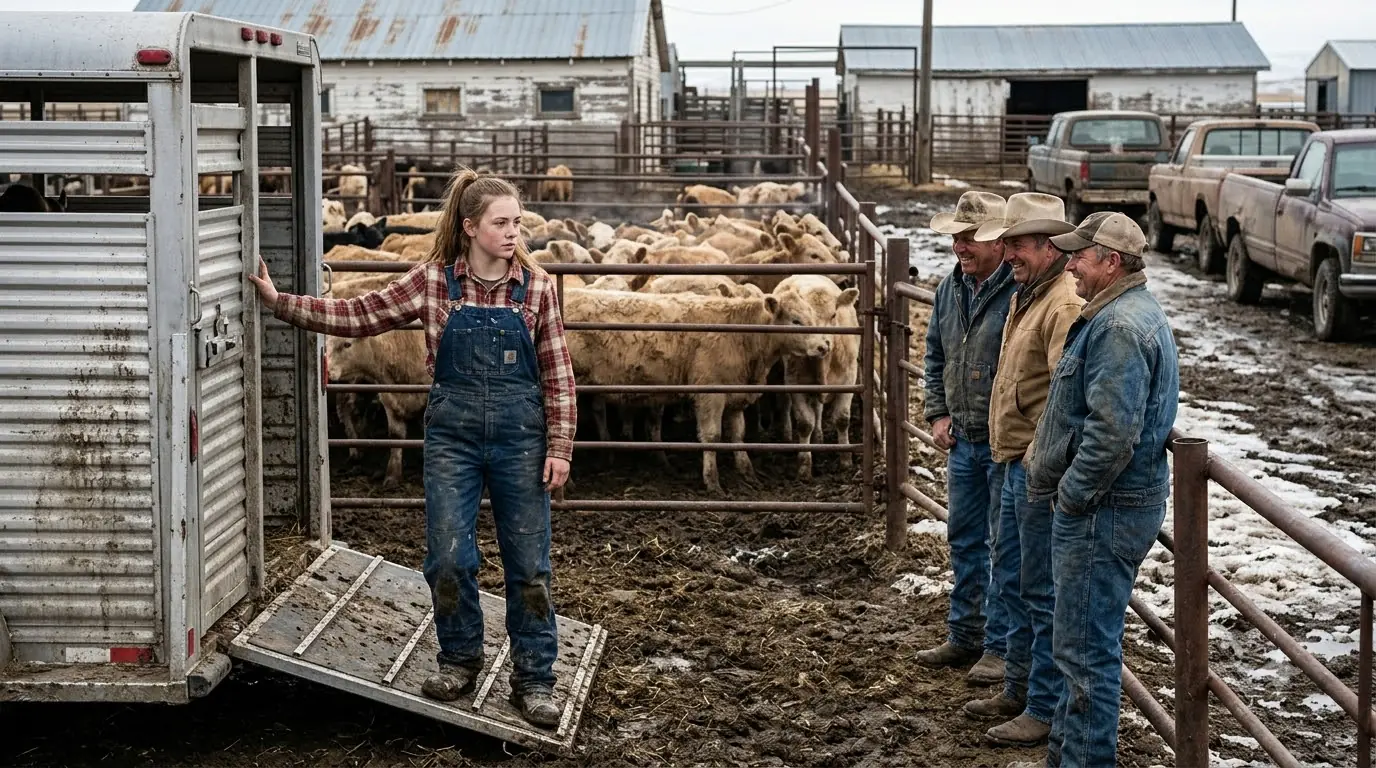
That had been the entire plan.
Find gates.
Stay below twenty dollars.
Go home.
Instead, the girl stood staring at ninety coughing calves packed behind a steel fence.
They looked awful.
Not dying.
But close enough that most buyers did not care about the distinction.
The calves ranged from four to six months old, mostly tan and light brown, with a few black, red, and white-faced animals mixed through the group. Their coats were dull from travel. Several had dried mud along their bellies. Some had watery eyes.
Every few seconds another cough moved through the pen.
Short.
Harsh.
Wet enough to make the men along the fence step backward.
The auctioneer tried again.
“Whole lot, buyer takes all ninety. Sold as-is. Respiratory symptoms disclosed. Veterinary disposition responsibility transfers with sale.”
Nobody moved.
The cattle dealer beside the loading chute shook his head.
“You’d need more medicine than beef.”
The auctioneer pointed toward the crowd.
“One hundred dollars?”
Silence.
“Fifty?”
A man in a brown hat called:
“Not if you pay me.”
Laughter.
The teenage girl moved closer to the fence.
A calf near the gate looked at her.
The animal was small, perhaps three hundred pounds, with a white blaze and one muddy ear tag.
It coughed.
Then lowered its head and began chewing hay.
That detail bothered her.
Sick cattle often stopped eating before they looked truly terrible.
These calves looked terrible.