An “Ugly” Dog Was Ignored for More Than 300 Days—Now His Time at the Shelter Is Running Out
On Bruno’s 300th morning at the shelter, he did exactly what he had done almost every morning before it.
He walked to the front of his kennel when the lights came on.
He stood behind the metal gate and watched the first employees enter the hallway. When one of them said his name, the tip of his tail moved against the wall.
Then he waited.
Bruno had been waiting for more than 300 days.
During that time, dozens of dogs had occupied the kennels around him. Frightened strays arrived, received care and left with families. Puppies sometimes spent only a few days on the adoption floor.
Bruno watched them all go.
Not one family chose him.
He was an older mixed-breed dog with an uneven brindle coat, a broad head and a lower jaw that had healed crookedly after an old injury. One ear stood upright while the other folded permanently to the side.
Scars crossed his muzzle.
Several teeth remained visible even when his mouth was closed, giving his face an expression some visitors found intimidating.
Others were less careful with their words.
They called him ugly.
Bruno did not know what the word meant. But after nearly a year inside the shelter, he understood what usually happened after people looked at him.
They moved to the next kennel.
Animal control had found Bruno behind an abandoned gas station. He was thin, limping and suffering from a severe skin infection that had left large areas of his coat missing.
No collar or microchip connected him to an owner.
His injured jaw appeared to have healed without veterinary treatment. It did not prevent him from eating, but hard treats caused discomfort, so shelter staff offered him softer food.
His scars had also healed long before he arrived.
No one knew where they came from.
Some visitors assumed the marks meant Bruno had been involved in dogfighting. There was no evidence to support that assumption.
Other people believed his unusual mouth made him aggressive.
That was not true either.
During his veterinary examination, Bruno allowed staff to touch his face and inspect his teeth. When he became nervous, he lowered his head and attempted to move away.
He never tried to bite.
Outside the kennel, Bruno was quiet and affectionate. He walked slowly beside volunteers and frequently stopped to look back at the person holding his leash.
If someone sat in the exercise yard, he leaned his shoulder against their legs.
But visitors rarely saw that version of him.
Inside the noisy kennel, Bruno often stood stiffly with his ears pulled back. The surrounding barking made him anxious, and his crooked jaw gave his worried expression a harsher appearance.
People judged him within seconds.
Few agreed to meet him outside.
The shelter posted photographs that showed Bruno resting beside volunteers. They shared videos of him accepting treats gently and carrying a faded stuffed animal through the yard.
The posts received comments.
People called him sweet and said he deserved a chance. Some promised that the right family would eventually find him.
No one arrived to take him home.
Weeks became months.
Bruno learned the shelter’s routine.
He recognized the sound of the breakfast cart and knew when the kennel doors would open for cleaning. He waited for his afternoon walk and returned to his bed without resisting when it ended.
He also learned the sound of families leaving.
Whenever someone adopted another dog, excited voices filled the hallway. A kennel door opened, a leash was attached and the dog was led toward the lobby.
Bruno stood at his own gate and watched.
At first, he wagged his tail whenever those families passed him.
Later, he stopped.
By his 200th day, Bruno no longer approached every visitor. He stayed on his bed unless someone called his name directly.
Some people interpreted this as another reason not to choose him.
They wanted a dog who greeted them immediately.
They did not realize Bruno had once done exactly that.
Months of being ignored had taught him to conserve his hope.
His favorite volunteer still received a greeting.
Whenever she entered the hallway, Bruno rose slowly and carried his stuffed animal to the gate. He did not jump or bark.
He simply stood there with the toy in his mouth until she opened the door.
During their walks, Bruno came alive.
His tail lifted, and his uneven ears moved toward every sound. He enjoyed lying in warm grass and watching birds along the fence.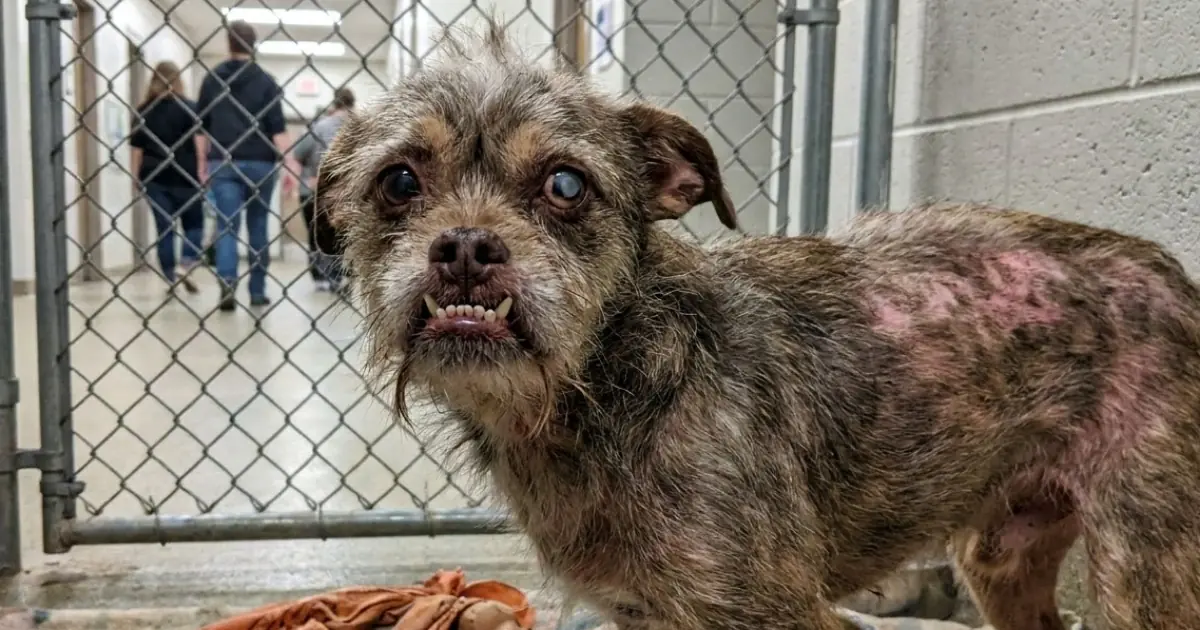
When it was time to return, however, Bruno always slowed near the shelter entrance.
He looked toward the parking lot before following the volunteer inside.
It was as though he wanted to make sure no one had come for him while he was away.
The shelter continued filling.
Animal control brought in more dogs than the available kennels could safely hold. Temporary crates were placed in hallways, and employees contacted rescue groups throughout the region.
Most organizations were already at capacity.
Medical emergencies occupied the quiet recovery rooms. New strays needed legally required holding periods, and dogs involved in cruelty investigations could not yet be released.
Space disappeared quickly.
The shelter began reviewing the dogs who had been there the longest.
Bruno’s name appeared near the top of the list.
He was not selected because he had attacked anyone.
He was not suffering from an untreatable illness, and he was not considered beyond rehabilitation.
He was selected because he had occupied the same kennel for more than 300 days without receiving a viable adoption or rescue commitment.
The building needed space for the animals continuing to arrive.
Staff members had delayed the decision more than once. They shared Bruno’s story again, extended his deadline and contacted every organization they knew.
Nothing changed.
Eventually, a date was placed beside his name.
If no confirmed placement became available, Bruno would be euthanized.
The employees who cared for him struggled to accept it.
They knew the dog beneath the scars. They knew how softly he accepted food and how he leaned against a person once he felt safe.
But knowing him had not been enough to make anyone else stop.
Bruno’s photograph was posted one final time.
The shelter explained that his deadline was approaching. They included a video of him sitting in the exercise yard with his stuffed animal between his paws.
The post spread farther than the others had.
Comments appeared from people across the country. Many expressed anger that a healthy dog could lose his life because of overcrowding.
Others continued discussing his appearance.
Some said his face frightened them.
A few made jokes about his crooked jaw.
Shelter staff deleted the cruelest comments, but the damage behind them was impossible to ignore.
Even with only hours remaining, people were still judging Bruno by the same face that had kept them walking past his kennel for nearly a year.
The evening before his scheduled euthanasia, his favorite volunteer stayed after the public adoption hours ended.
She took Bruno into the yard and sat beside him on the grass.
He rested against her leg with his stuffed animal near his front paws. He did not know that the day had been marked as different.
He watched cars pass on the road beyond the fence and lifted his head whenever one slowed near the shelter.
None turned into the parking lot.
When the air became cool, the volunteer led him inside.
Bruno stopped outside his kennel as usual.
He looked down the hallway, then stepped through the open gate. The volunteer placed his toy on the bed and sat beside him.
For several minutes, Bruno remained near the front.
When she finally stood, he picked up the toy and carried it toward her.
She knelt and returned it to his bed.
Bruno brought it back again.
At first, she thought he wanted to play. But he did not release the toy or pull against it.
He simply pressed it into her hand and waited.
The volunteer placed it beside him once more.
Bruno picked it up and followed her to the gate.
Each time she tried to leave, he carried the only object that belonged to him toward the door.
It seemed as though he was trying to take it with him.
Or perhaps he was offering it to the one person he trusted not to walk past.
The volunteer sat down again.
Bruno lowered himself beside her, still holding the toy.
That was how a staff member found them later—Bruno pressed against the gate, his head resting near the volunteer’s knee and the faded animal secured between his paws.
A photograph of that moment was added to his final post.
It showed none of the features people usually criticized.
It showed only a tired dog trying to remain beside someone who had stayed.
The shelter phones began ringing the following morning.
Many callers asked whether Bruno was still alive. Some offered donations, but money alone could not create kennel space or provide a verified place for him to go.
Several people said they wanted him, but lived too far away and had no transportation plan.
One application appeared promising until the shelter discovered that the landlord prohibited dogs of Bruno’s size.
Another person wanted to take him immediately but would not allow the required introduction with the dogs already in the home.
The shelter could not move Bruno into an unsafe situation simply because time was running out.
His deadline remained.
Bruno received breakfast that morning.
He ate slowly, then carried his empty bowl toward the front of the kennel. When his caregiver arrived, he looked beyond her into the hallway.
The lobby doors opened.
A woman entered carrying printed veterinary records and a leash.
She had seen Bruno’s final photograph late the previous night. She lived several hours away and had followed his shelter posts for months without acting.
Seeing him offer his toy through the gate made her realize that she had become one of the many people waiting for someone else to help.
She had completed an application before beginning the drive.
But an application was not a guarantee.
She had another senior dog at home, and the shelter needed to evaluate whether the two animals could safely live together. Her housing information also had to be verified.
Staff paused Bruno’s scheduled procedure while the process began.
The woman met him in a quiet room away from the kennels.
Bruno entered with his body low and his ears pulled back. He did not approach her immediately.
She did not reach for him.
Instead, she sat on the floor and placed a soft treat several feet away.
Bruno ate it and looked toward the door.
She placed another slightly closer.
After several minutes, he stood beside her. When she touched his shoulder, Bruno leaned carefully against her knee.
The introduction with her dog came next.
Both animals were walked at a distance before being allowed closer. Bruno remained calm, sniffed briefly and then turned toward his handler.
There was no immediate sign of conflict.
The shelter completed the remaining checks.
For the first time in more than 300 days, a person was not asking why Bruno looked different.
She was asking what food he could chew, how he behaved at night and which toys he liked.
She wanted to understand the dog everyone else had overlooked.
Bruno’s kennel door opened again that afternoon.
This time, the leash did not lead toward the exercise yard.
His caregiver attached his identification tag and carried the faded stuffed animal beside him. Bruno walked through the hallway while the surrounding dogs barked.
He paused near the lobby.
The woman waited on the other side of the door.
Bruno approached slowly.
When she knelt, he stood between her knees and allowed her to place one hand against his scarred face.
Then they walked outside together.
Bruno’s story could easily have ended that morning.
For more than 300 days, people had reduced him to a crooked jaw, mismatched ears and a scarred muzzle. They had decided what kind of dog he was without spending enough time to learn anything about him.
His final hours revealed the part of his story no photograph of his face could show.
Bruno was not the frightening or undesirable dog people imagined.
He was a tired animal who had watched hundreds of visitors leave—and who still carried his only toy to the gate whenever someone he loved began walking away.