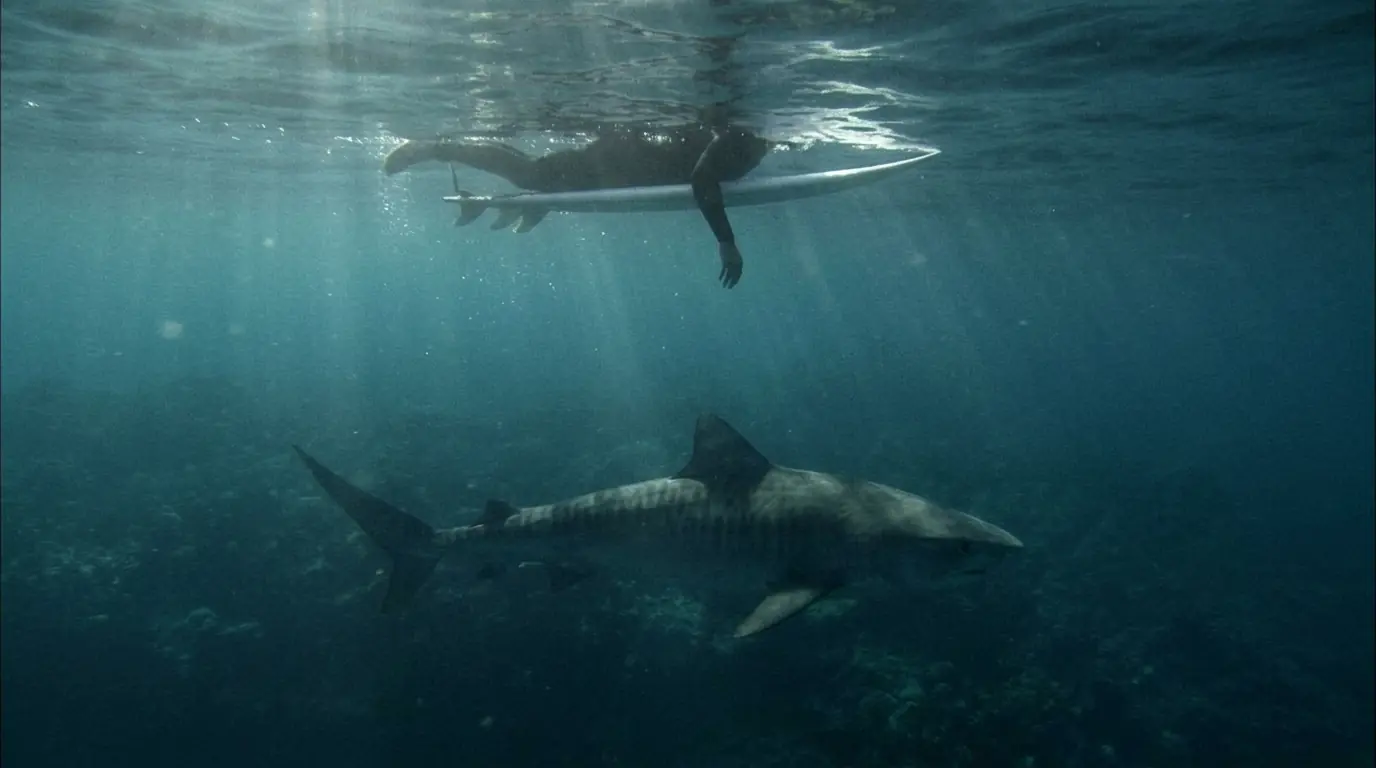
There was no warning.
No dorsal fin moving across the surface.
No scream from another surfer.
No shadow Bethany Hamilton noticed approaching beneath her board.
On the morning of October 31, 2003, the 13-year-old was lying on her surfboard off the north shore of Kauaʻi, Hawaii, with her left arm hanging casually in the water.
It was the kind of position she had probably assumed countless times before.
Then something came up from below.
A large tiger shark, later estimated at roughly 14 feet long, struck once.
The bite removed Bethany’s left arm near the shoulder and tore a huge section from her surfboard.
Then the shark disappeared.
There was no prolonged struggle with the animal. No second attack. For Bethany, there was barely time to understand what had happened.
One moment she was waiting for another wave.
The next, the ocean around her was turning red.
And yet some of the most extraordinary moments in Bethany Hamilton’s story occurred after the shark was gone.
She remained conscious.
She did not panic.
Her companions began the desperate journey of getting her hundreds of yards back toward land.
A makeshift tourniquet was tied around what remained of her arm.
By the time she reached medical care, she had suffered catastrophic blood loss.
Bethany survived.
And less than a month later, she went back into the ocean.
But to understand why the survival of a 13-year-old girl became one of the most famous shark-attack stories ever recorded, it is necessary to return to the quiet moments immediately before the bite.
Because nothing about that Halloween morning looked like the beginning of a disaster.
She Had Been Surfing Almost Her Entire Life
Bethany Hamilton was not an inexperienced child who had wandered into unfamiliar water.
Surfing was already central to her life.
Born and raised in Hawaii, she grew up around the ocean and had developed into an exceptionally promising young surfer. By 13, people around her believed she had the potential to become an elite professional competitor.
She was already sponsored.
She competed.
She trained.
She understood waves and currents in a way most people her age never would.
The ocean was not a mysterious place she occasionally visited.
It was where she felt at home.
That morning, Bethany went surfing at Tunnels Beach on Kauaʻi’s north shore with her close friend Alana Blanchard and members of Alana’s family.
It was October 31.
Halloween.
Nothing about the beginning of the session suggested that within hours Bethany would be undergoing emergency treatment for an injury that would permanently change her body.
The group paddled out.
They surfed.
Then there was a lull.
Bethany lay flat on her board.
Her left arm dangled into the water.
That tiny detail would become permanently attached to the story.
Because somewhere beneath her, something enormous was approaching.
The Shark Came From Where She Couldn’t See It
Tiger sharks are among Hawaii’s largest coastal predators.
They are powerful, broad-headed sharks capable of feeding on an exceptionally wide range of prey. Like other sharks, they navigate an underwater sensory world humans can barely imagine from the surface.
A surfer experiences the ocean primarily horizontally.