It was never about an Apache woman saving a lonely rancher.
It was about two adults who met first in a moment of injustice, met again in a moment of responsibility, and then spent decades refusing to turn gratitude into ownership.
Three years after he cut her ropes, she came back asking him to risk his name for people the territory preferred to ignore.
He did.
But that was not why she loved him.
She loved him because, when fear made him want to command, he learned to ask.
He loved her because, when pain made her want to disappear, she learned to say she wanted to return.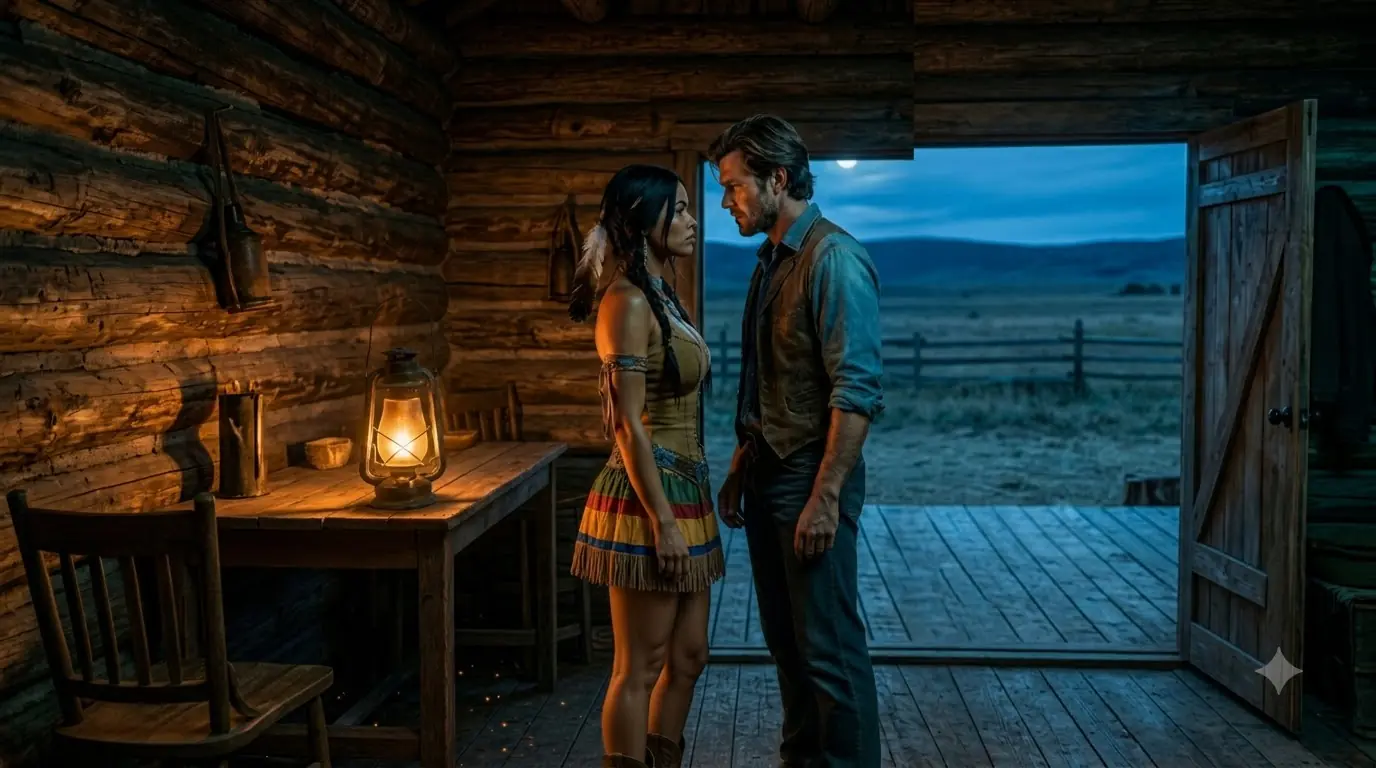
And long after petitions, land speculators, corrupt officials, and courtroom arguments became history, the simplest exchange remained the most important.
One evening inside a small cabin, a widower afraid of betraying the dead asked a woman standing inches from him whether she would still remain if there were no debt, no grievance, and nobody left to rescue.
She answered that she did not know.
Then told him she wanted to find out.
And instead of demanding forever, he accepted tomorrow.
Tomorrow became another.
Then another.
Then forty years.
Not because either promised never to leave.
Because every time the door opened, they remained free to choose which side of it they wanted to stand on.
The years after the rancher’s death changed the Apache woman in ways nobody around her could see at first.
People expected grief to make her quieter.
It did not.
If anything, she became more exact.
More impatient with vague promises.
More suspicious of sentences that began with someday.
When she wanted to visit her daughter, she went.
When she wanted to write to her son, she wrote instead of telling herself there would be time next week.
When she disagreed with the ranch foreman, now an older man himself, she said so before irritation had time to grow into resentment.
For most of her life, she had believed there was strength in waiting until something became necessary.
Her husband had taught her the cost of that.
He had waited too long to admit fear.