Privacy became a form of respect.
2000: Reunited
Eighty-four years after his death, Ishi's remains were reunited.
Think about that timeline.
1860s.
Childhood amid massacre.
Decades in hiding.
Oroville.
Museum.
Death.
Autopsy.
Brain removed.
Biography turns him into an American historical icon.
1990s.
Activists and researchers discover the institutional history of his remains.
Return.
The man whose life had been defined by forced movement finally returned to the region from which he came.
What Did Anthropology Gain?
An enormous amount.
Language recordings.
Songs.
Stories.
Material culture.
Place knowledge.
Technology.
Photographs.
Film.
Descriptions of hunting.
Archery.
Stoneworking.
Ethnobotany.
The historical record would be dramatically poorer without Ishi's collaboration.
Researchers today can study Yana linguistic material because he spoke into those wax cylinders.
Archaeologists can study how he shaped stone.
Historians can analyze his interactions with institutions.
Native communities can engage with recordings created more than a century ago.
That preservation has real value.
It would be dishonest to deny it.
What Did Anthropology Take?
Also an enormous amount.
Time.
Access.
Performance.
Personal information.
Objects.
Public exposure.
And, after death, part of his body.
This is why Ishi remains such an important figure in the history of anthropology.
The case refuses simple moral categories.
The researchers were not merely cartoon villains.
Some cared for him deeply.
Some defended him.
Some formed friendships with him.
Some preserved knowledge that might otherwise have vanished.
Yet benevolence did not cancel colonial power.
The institution could still decide where he lived.
When the public saw him.
What would be collected.
How his body would be treated after death.
Modern anthropology has had to confront that contradiction.
Alfred Kroeber
Kroeber became one of the foundational figures in American anthropology.
His relationship with Ishi became a defining part of his legacy.
He recognized the significance of Ishi's language.
He helped arrange a home for him when alternatives could have been worse.
He worked to preserve Yahi knowledge.
He apparently cared personally about him.
He opposed the autopsy.
Then he sent the brain to the Smithsonian.
These facts resist easy judgment.
A person can understand one ethical principle and violate it later.
An institution can call someone friend while still acting as though science has rights over his body.
Kroeber's later career cannot be separated from this history.
Neither can the Berkeley institution that benefited from Ishi's presence.
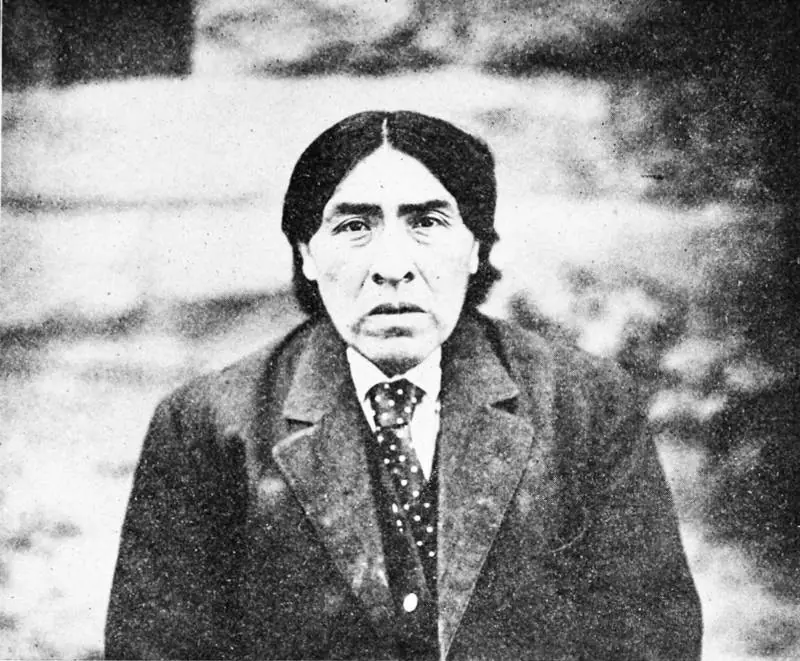
The University Reconsiders
By the twenty-first century, Berkeley began speaking about Ishi differently.
No longer only as a beloved museum story.
Institutional materials acknowledge objectification.
Unequal power.
The autopsy.
The brain.
Repatriation.
Broader questions about Native ancestral remains in university collections became central to campus debates.
UC Berkeley has itself held thousands of Native American ancestors in anthropological collections, part of a broader museum history now undergoing major reassessment.
Ishi's story became impossible to isolate from that larger history.
He had been uncomfortable living among human remains held for study.
A century later, universities were still grappling with thousands of those remains.
What Would Ishi Think?
We cannot know.
This is one of the most common temptations in historical storytelling.
To make the dead speak.
Ishi would have wanted this.
Ishi would have hated that.
Ishi would approve.
Unless reliable evidence exists, those claims tell us more about the writer.
We can say what he reportedly expressed.
He objected to certain treatment of human remains.
He wanted cremation.
He participated in language recording.
He made artifacts.
He formed friendships.
He sometimes refused information.
Beyond that, interpretation should remain cautious.
"He Taught Them His World"
The line is emotionally powerful.
And partly true.
He taught anthropologists.
But the wording can make knowledge look like a gift flowing one direction.
Ishi also learned their world.
English.
Money.
Urban transport.
Museums.
Doctors.
Modern tools.
Social rules.
The exchange was unequal, but it was still exchange.
He did not spend five years frozen as the same man who entered Oroville.
He changed.
He became an urban Indigenous man with two lives behind him.
That complexity makes him more human than the stereotype.
The Sound of His Voice
Among all the objects associated with Ishi, the wax cylinders may be the most powerful.
A photograph captures surface.
A voice captures time.
Breathing.
Cadence.
Silence.
When Ishi sings or speaks on those recordings, the listener encounters something created in a room more than a century ago.
Not a reconstructed actor.
Not an anthropologist's transcription.
Him.
The recordings are technically fragile.
Wax cylinders wear.
Noise overwhelms detail.
Modern audio restoration attempts to recover intelligibility without inventing sound that was never recorded.
Projects involving Native California recordings have used digital tools to preserve these materials for future generations.
The result means Ishi's voice has outlived the technology that first captured it.
The Arrowheads
The stone points also outlived him.
Researchers later measured their form.
Shackley's analysis produced one of the major reinterpretations of Ishi's identity.
Certain stylistic characteristics appeared more consistent with neighboring technologies than the traditional Yahi forms scholars expected.
From this, Shackley argued that Ishi may have been of mixed ancestry or learned from non-Yahi people.
Other scholars have debated implications.
But the larger lesson is clear.
Culture does not live inside sealed boxes.
People meet.
Marry.
Exchange.
Borrow.
Adapt.
Even in catastrophe.
Especially in catastrophe.