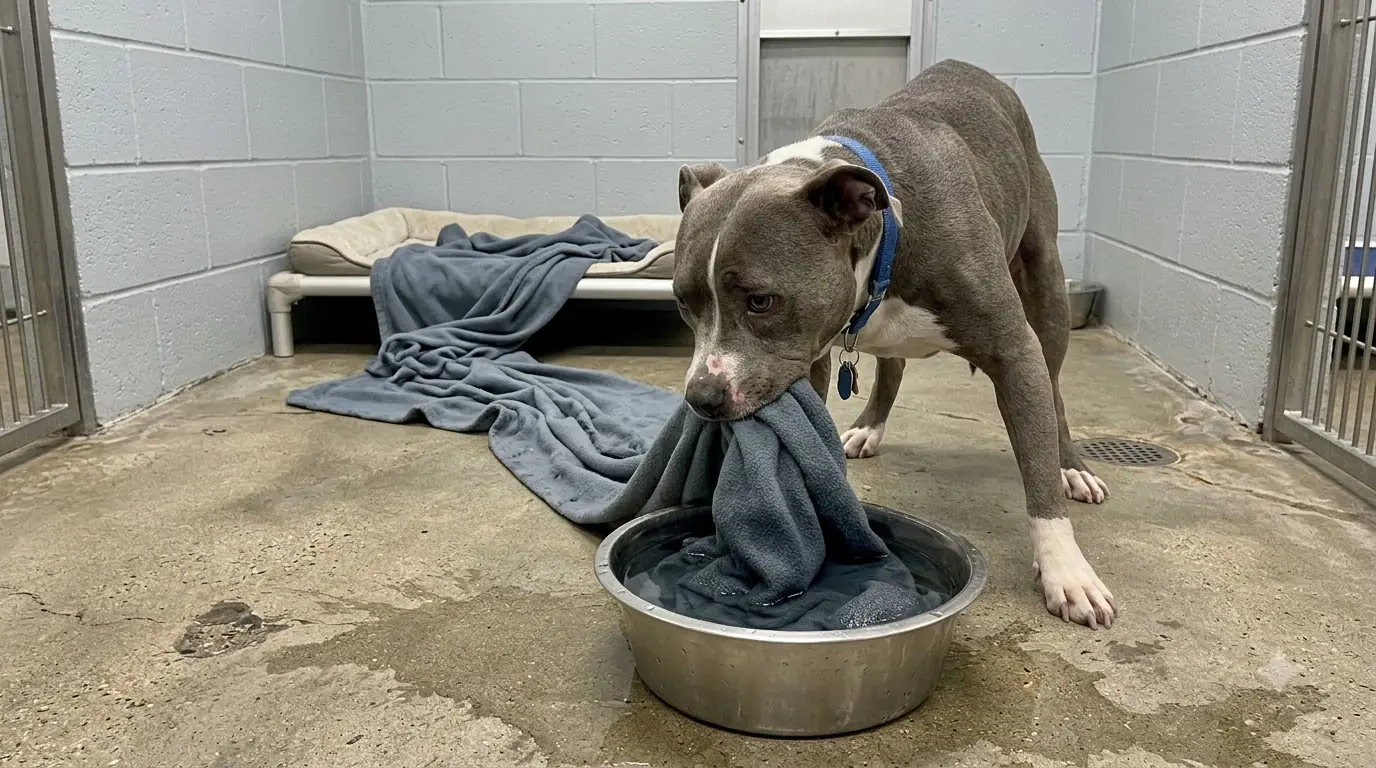
At first, staff thought Maggie had knocked her blanket into the water by accident.
The 8-year-old American Pit Bull Terrier was already being treated for a serious illness, and most of her day was spent resting inside the shelter's medical area.
Her bed was kept simple.
A blanket.
A water bowl nearby.
Enough room for staff to monitor her closely.
Then one evening, Maggie got up.
She gripped the edge of the blanket in her mouth.
Dragged it off the bed.
And pulled it toward the water bowl.
She stopped.
Adjusted her grip.
Then pushed the fabric into the bowl until part of it was completely soaked.
That alone was unusual.
What happened next made staff pay much closer attention.
Maggie pulled the wet blanket back across the kennel.
She took it into the corner.
Then lowered herself directly onto it.
Her body trembled slightly as she settled.
The next day, she did it again.
The Behavior Was Too Specific to Ignore
Dogs move blankets for all kinds of ordinary reasons.
They bunch them up.
Drag them across the kennel.
Push them into corners.
Some even drop toys or bedding into water bowls accidentally.
Maggie was different.
She seemed to be repeating the same sequence.
Blanket.
Water.
Corner.
Lie down.
And the fabric wasn't just touching the water.
Maggie was intentionally working it into the bowl until it became wet.
That made the behavior harder to explain as random.
Staff Started Watching the Entire Sequence
Maggie would rise slowly.
Her illness had already taken some strength from her, so even dragging a blanket required effort.
She would carry or pull one edge toward the bowl.
Then use her mouth and nose to work the fleece downward.
The water darkened the fabric.
Once enough of it was soaked, Maggie pulled again.
The blanket came out heavier.
Water dripped across the floor as she dragged it back.
Then she chose the same corner and lay on top of it.
Sometimes her chest rested directly against the wet section.
Sometimes her abdomen did.
And after she settled, the trembling could continue for a while.
Nobody Knew Whether Maggie Was Hot
That became one of the obvious possibilities.
A wet blanket can feel cooler against the body.
If Maggie was experiencing fever or an abnormal sensation of heat, perhaps the damp surface was providing some relief.
But staff could not simply watch her lie on something cold and declare that she had a fever.
Body temperature needed to be measured.
Her illness needed to be considered.
And if fever was present, the underlying cause mattered far more than the blanket.
The behavior could suggest discomfort.
It could not diagnose it.
Pain Was Another Possibility
Maggie was already medically ill.
Pain can change how a dog rests.
It can make certain positions difficult.
It can cause restlessness.