By the time animal control entered the house, almost everything was gone.
There was no furniture.
No family moving from room to room.
No familiar activity filling the space.
But the house was not completely empty.
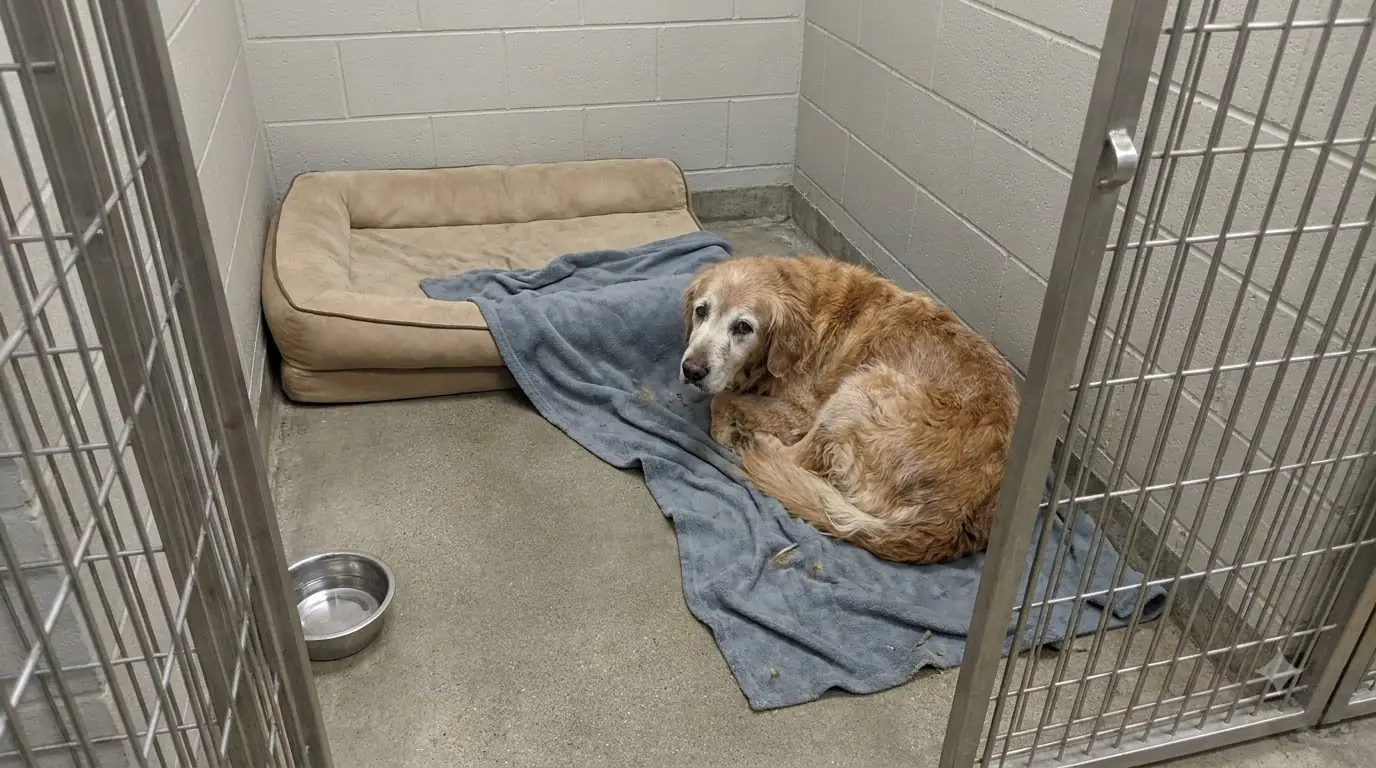
Curled up inside was Penny.
The 12-year-old Golden Retriever was alone in the home where she had once lived.
She was underweight and dehydrated. Her coat had become badly matted, with sections of fur tangled tightly together.
There was no way for Penny to explain how long she had been waiting there or what the final days in the house had been like.
Animal control only knew what they found.
An aging dog.
An emptied home.
And a body showing that she needed care.
Penny was removed from the property and brought into the shelter.
Staff gave her food, water, medical attention and a soft orthopedic bed.
But that first night, Penny did something they hadn't expected.
She pulled her blanket off the bed.
Dragged it into the corner of the kennel.
Then curled herself tightly against the wall.
The Bed Was Softer, but Penny Kept Choosing the Corner
Staff initially assumed Penny simply needed time.
Everything around her had changed again.
The empty house was gone.
Now there were kennel doors, unfamiliar voices, other dogs and the constant background sounds of a shelter.
Her orthopedic bed had been provided because of her age and physical condition.
Penny would step onto it occasionally.
But when she wanted to sleep, she often moved elsewhere.
She grabbed part of the blanket in her mouth.
Pulled.
Stopped.
Then pulled again until enough of it had fallen onto the floor.
Penny took the blanket toward one particular corner.
She turned several times and folded her body into the smallest position she could manage.
Her back pressed close to the wall.
Her nose tucked toward her body.
Then she slept.
The next day, staff put the bedding back.
Penny eventually moved it again.