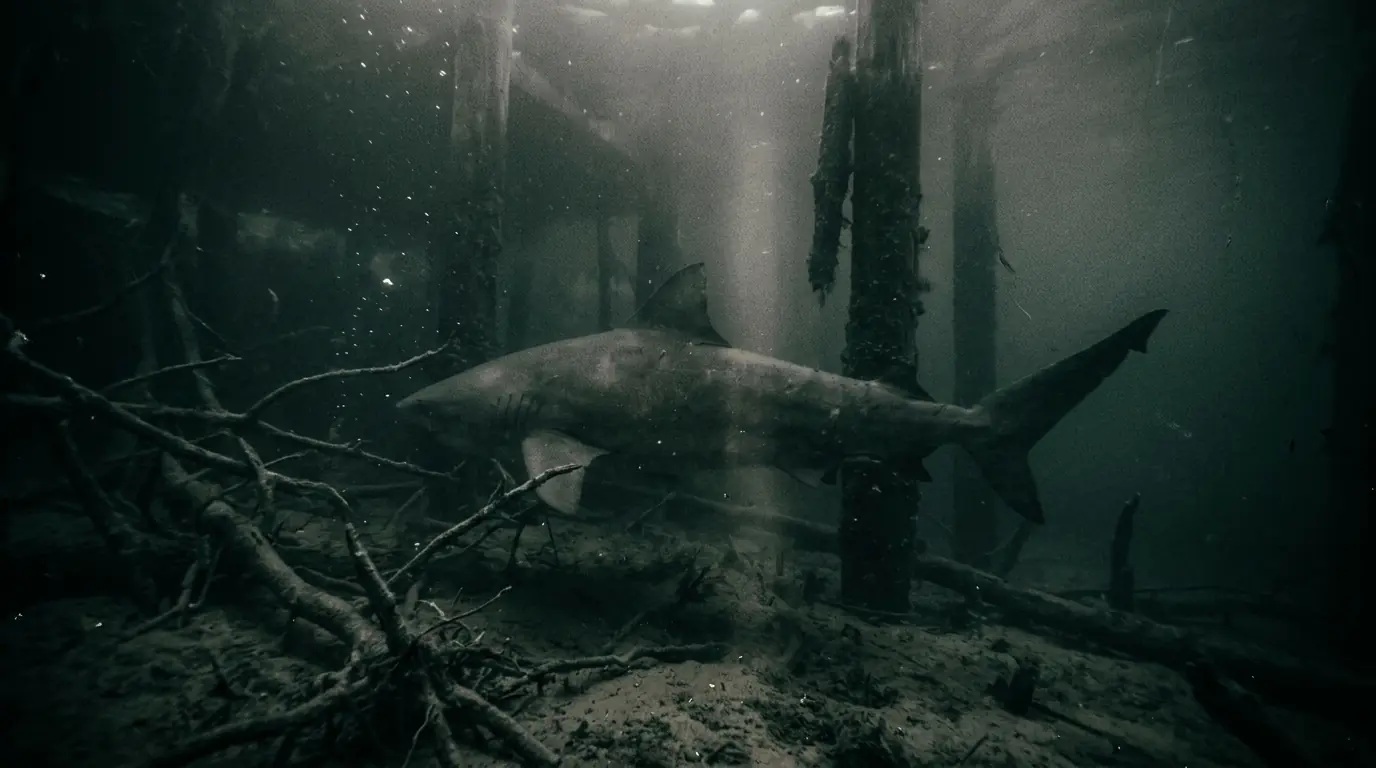
On the afternoon of July 12, 1916, a group of boys climbed into the water of Matawan Creek, New Jersey.
They were not swimming in the Atlantic Ocean.
They were miles inland.
There were no crashing waves, no open horizon, and none of the scenery Americans associated with sharks. Matawan Creek was a narrow tidal waterway running through a small community, the sort of place where local children could cool off on a hot summer afternoon without imagining that an ocean predator might be swimming beneath them.
Eleven-year-old Lester Stillwell was among them.
Then one of the boys saw something strange in the water.
Within moments, Lester disappeared beneath the surface.
What followed would become one of the most extraordinary episodes in the history of shark attacks in the United States: two people would die at Matawan, another teenager would be badly bitten but survive, and a community that had believed itself safely removed from the danger of the ocean would suddenly discover that something large had entered the creek.
Even more unsettling, the Matawan attacks were not isolated.
They occurred during a series of shark attacks along the New Jersey coast in July 1916 that killed four people in less than two weeks. The events shocked a country whose understanding of sharks was still remarkably limited.
But Matawan was different.
The earlier victims had been swimming along the coast.
Lester Stillwell was attacked in a creek.
And when people rushed into the water to find him, the predator was apparently still there.
The Summer When Americans Stopped Feeling Safe in the Water
To understand why the Matawan attack was so shocking, it helps to understand what had already happened along the Jersey Shore.
The summer of 1916 was brutally hot, and beaches along the New Jersey coast had become popular escapes.
Then, on July 1, 25-year-old Charles Vansant went swimming at Beach Haven.
He was attacked in the water and pulled ashore, but his injuries were fatal.
Five days later, roughly 45 miles farther north at Spring Lake, another swimmer was attacked. Charles Bruder, a young hotel bellhop, was swimming offshore when he suffered catastrophic injuries and died.
Two fatal attacks had now occurred along the New Jersey coast.
Today, the possibility of encountering sharks near an ocean beach is widely understood, even though serious attacks remain rare.
In 1916, the situation was very different.
Scientific knowledge of shark ecology, migration and behavior was limited. George Burgess, formerly curator of the International Shark Attack File, told Smithsonian that knowledge of sharks at the time was “very poor.” Even after the attacks began, bizarre alternative explanations circulated, including suggestions that sea turtles or even a killer whale might have been responsible.
The idea of a shark repeatedly attacking humans along the New Jersey coast was difficult for many people to accept.
Then the threat apparently moved somewhere almost nobody expected.
Away from the beaches.
Into Matawan Creek.
July 12, 1916
Matawan Creek connects with the tidal waters leading toward Raritan Bay and ultimately the Atlantic.
To the children who lived nearby, however, it did not feel like part of the ocean.
That distinction would prove tragically misleading.
On July 12, Lester Stillwell and several other boys were swimming in the creek.
Lester was 11 years old.
Accounts of what happened next vary in some minor details, as historical reports often do, but the central event is clear.
Something large appeared in the water.
Then Lester was attacked.
The boy disappeared beneath the surface.
The other children scrambled out of the creek and ran for help.
At first, the story must have sounded almost impossible.
A shark?
Here?
In Matawan Creek?
Yet two people had already been killed along the New Jersey coast that month.
And Lester was missing.
People began gathering near the creek.
Among them was a young local man named Stanley Fisher.
He decided to go into the water.
Stanley Fisher Went Down Looking for Lester
Fisher was 24 years old.