For a few seconds, the people standing on Newcomb Hollow Beach could not understand what they were seeing.
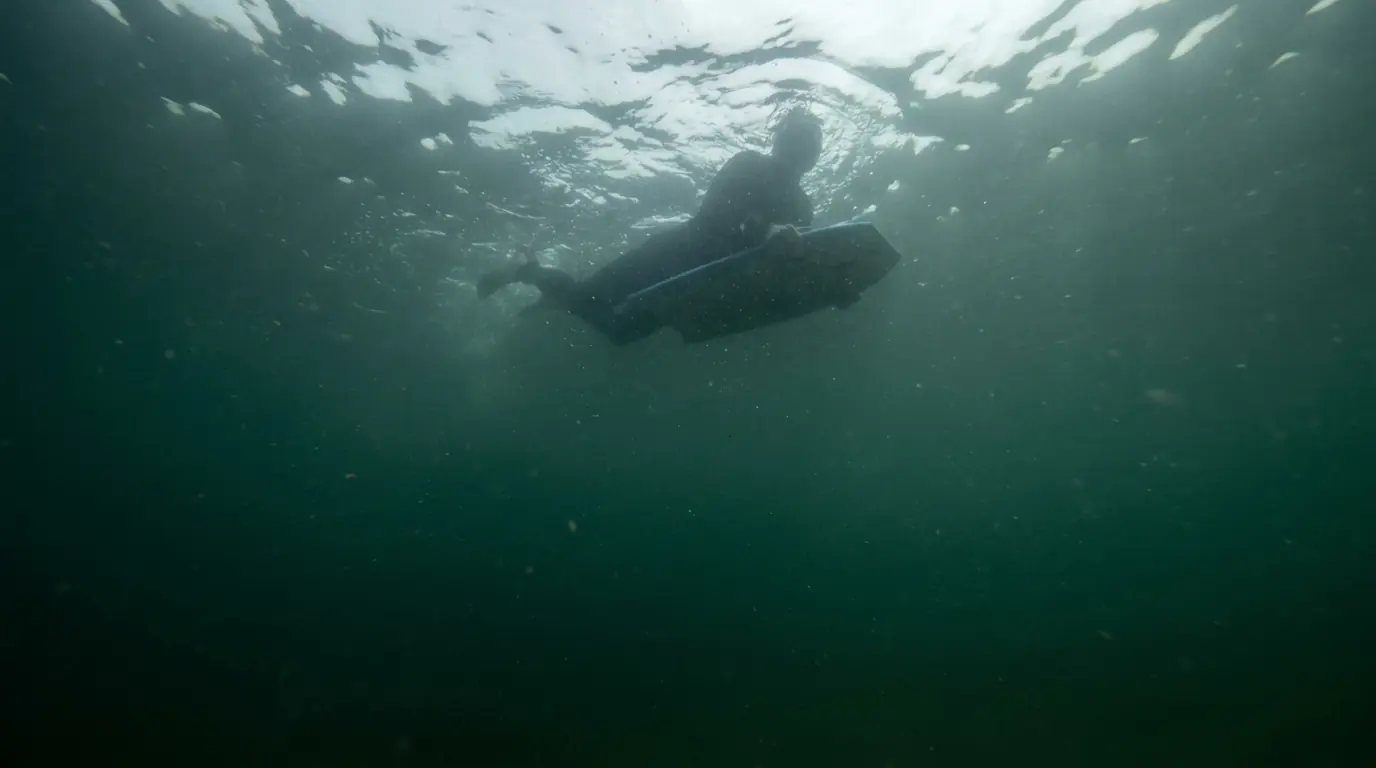
It was just after noon on September 15, 2018, on the Atlantic side of Cape Cod, Massachusetts. Twenty-six-year-old Arthur Medici was offshore on a boogie board with a friend when the water around him suddenly seemed to explode.
There was no long warning.
No shark fin slowly moving toward him from the horizon.
Instead, witness Joe Booth saw what he later described as an eruption of whitewater roughly 15 feet across.
To him, the ocean looked as though it were boiling.
Then he saw a tail.
And Medici was suddenly in the middle of it.
“Out of nowhere,” Booth later recalled, the young man appeared engulfed by violently disturbed water.
By the time people on the beach understood what was happening, the attack had already become catastrophic.
Medici disappeared beneath the surface and came back up bleeding heavily. His friend Isaac Rocha rushed toward him, dragged him through dozens of yards of water and tried desperately to stop the bleeding.
Other beachgoers joined the rescue.
CPR was performed.
Medici was rushed to Cape Cod Hospital.
He did not survive.
The attack became a grim historical marker: the first fatal shark attack recorded in Massachusetts since 1936.
But Medici's death also marked something larger.
For years, great white sharks had been returning in increasing numbers to the waters around Cape Cod as the region's seal population recovered. Researchers knew they were there. Beachgoers had seen warnings. Shark sightings were becoming part of summer life.
Yet there remained an enormous psychological distance between knowing sharks existed offshore and watching the water erupt around a person only a short swim from land.
On September 15, that distance vanished.
And it happened in seconds.
It Looked Like an Ordinary Day at Newcomb Hollow
Newcomb Hollow Beach sits on the Atlantic-facing side of Wellfleet, along the Cape Cod National Seashore.
From the beach, the ocean can appear enormous and open.
There are no tropical reefs visible beneath the surface. No obvious line showing where a predator's territory begins. The shoreline simply slopes into the Atlantic.
Medici was in the water around midday.
Contemporary accounts vary slightly on his precise distance from shore, with reports placing him roughly 30 to 40 yards into the water when the attack occurred. The National Park Service described the incident as happening approximately 300 yards south of the main Newcomb Hollow Beach area.
Medici was using a boogie board.
Rocha was nearby.
From shore, Joe Booth was watching.
Booth was familiar with the water. He was a fisherman and surfer.
That may be one reason he understood so quickly that the disturbance he was seeing was not simply another breaking wave.
Something was happening around Medici.
Booth saw him apparently kick aggressively at something behind him.
Then came the violent eruption.
Whitewater.
Thrashing.
A glimpse of a tail.
And suddenly blood was in the water.
“He Went Down Under the Water”
Rocha later described the moment from much closer.
He saw Medici go beneath the surface.
Then Medici came back up almost immediately.
There was already a large amount of blood around him.
And Medici was screaming.
Rocha also saw what appeared to be part of the shark, possibly its tail.
His response was immediate.
He swam toward his friend.
That decision placed Rocha into the same water where a large predator had attacked only seconds earlier.
There was no guarantee the shark had gone.
No one on the beach could tell him where it was.
But Medici was alive.
Rocha reached him.
Then he began pulling him toward shore.
The distance was only a few dozen yards.