After her father dies, twenty-four-year-old Clara Whitlock inherits a 119-acre Kansas farm, nearly $86,000 in operating debt, failing soil, aging equipment, and enough cash for only one more growing season. Rather than sell the valuable road frontage to a developer, she follows a clue buried in her father’s old notebook: the farm’s problem is not simply how much rain falls, but how little damaged soil can retain.
Clara begins hauling discarded fruits and vegetables from a produce market fourteen miles away and layering them across eighteen struggling acres with straw, hay, and crop residue. To neighbors driving past, the field looks and smells like a garbage dump, but Clara carefully measures infiltration, soil depth, and untreated control strips while ridicule spreads through the local farming community. Pasted markdown A county agent eventually confirms a small but measurable difference: water disappears into Clara’s treated soil faster than into the untreated ground.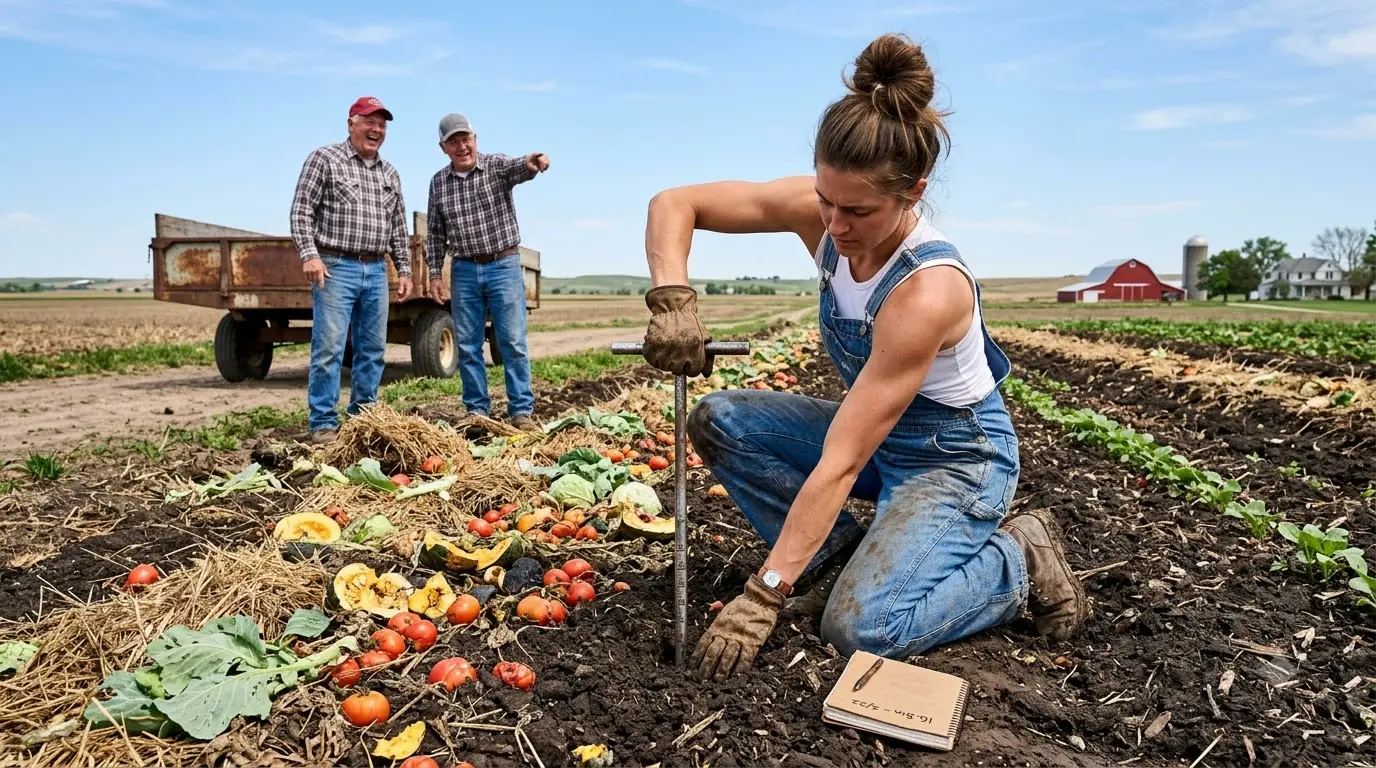
Then summer turns brutal. Rain disappears, wells begin dropping, fields burn brown, and the drought stretches toward sixty-seven days. What began as the most mocked experiment in the county becomes a test not only of Clara’s soil, but of whether she can keep the farm her father spent his life trying to save.
Clara Whitlock did not look up when Earl Mercer laughed.
She knew his laugh well enough to recognize it from halfway across a field.
It was loud, dry, and slightly breathless, the laugh of a man who had spent sixty-three years believing that if something had not been done before he turned thirty, it probably did not need doing now.
The second farmer beside him was laughing harder.
Clara could not remember his last name.
She knew he rented wheat ground east of town, drove a red Ford with a cracked rear taillight, and had once told her father that women were “better at keeping books than fixing tractors.”
Daniel Whitlock had responded by asking whether the man wanted Clara to rebuild his carburetor before or after lunch.
She had been seventeen then.
The man had not laughed.
Now he was laughing.
Clara drove the steel probe deeper into the soil.
It went down fourteen inches before the resistance changed.
She stopped.
Pulled the probe back.
Wiped the depth mark with her thumb.
Then wrote the number in the brown notebook balanced against her knee.
Fourteen.
Three weeks earlier, the same strip had stopped her at ten and a half.
That mattered more than laughter.
Behind her, Earl shouted, “You planning to grow tomatoes or bury them?”
Clara kept writing.
The other farmer barked out another laugh.
“Maybe she figures if she puts enough rotten vegetables down, the good ones’ll get scared and grow.”
Clara closed the notebook.
She pushed herself upright.
Mud darkened both knees of her overalls.
Sweat had pasted loose strands of brown hair against her temples, and her white tank top showed a streak of dirt where she had wiped one forearm across her chest.
She turned.
The two men stood beside Earl’s flatbed trailer.
Beyond them, the eastern eighteen acres stretched toward the road in strange bands of straw, dark soil, decomposing produce, orange marker flags, and untreated control strips.
To anyone passing at forty miles an hour, it looked awful.
Clara knew that.
She had eyes.
Split squash collapsed beneath straw.
Tomato skins clung to the soil.
Brown lettuce curled against wheat residue.
The smell came and went with the wind.
Some mornings it was almost sweet.
Other mornings it smelled like a grocery store dumpster in August.
Earl pointed at a soft cabbage near Clara’s boots.
“Your dad ever see you do this?”
Clara’s jaw tightened.
“No.”
“Probably good.”
The second farmer smiled.
Clara stared at Earl.
There were certain things she had learned not to answer.
Insults about her methods belonged in one category.
Comments about Daniel belonged in another.
Earl saw the change in her face.
For half a second, he seemed to reconsider.
Then pride carried him forward.
“Daniel knew dirt,” he said. “That’s all I mean.”
Clara picked up the soil probe.
“So do I.”
Earl looked across the field.
“No offense, Clara, but this isn’t farming.”
“What is it?”
“Desperation.”
The word landed cleanly.
Not because it was false.
Because it was close enough to true.
Clara looked toward the farmhouse in the distance.
The roof flashed silver beneath the sun.
Behind it stood the barn Daniel had patched so many times that three different generations of sheet metal were visible from the road.
Beyond that sat the machinery shed.
Inside it was a Ford tractor with a hydraulic leak she could not afford to repair properly until harvest.
Behind the house, on the kitchen table, waited a bank notice.
Earl did not know about the notice.
Or perhaps he did.
Small towns were efficient in ways large cities rarely understood.
Money trouble traveled faster than weather.
Clara looked back at him.
“You done?”
Earl frowned.
“With what?”
“Standing in my field telling me what my father would think.”
The second farmer stopped smiling.
Earl placed his hands on his hips.
“You don’t have to get defensive.”
“I’m not.”
“Sounds like it.”
Clara pointed toward the road.
“Then listen carefully. You can laugh from there.”
Silence stretched between them.
Earl stared at her.
Then he looked down at the rotten cabbage near his boot and kicked it toward her.
It rolled through straw and stopped beside the soil probe.
Clara’s expression hardened.
“Get off my field.”
Earl raised both palms.