The first tanker arrived before sunrise.
Nora Tillman heard it long before she saw it.
The low diesel rumble rolled across the frozen pasture, bounced from the metal siding of the machinery shed, and reached the farmhouse while she was standing at the kitchen sink pouring coffee into a dented thermos.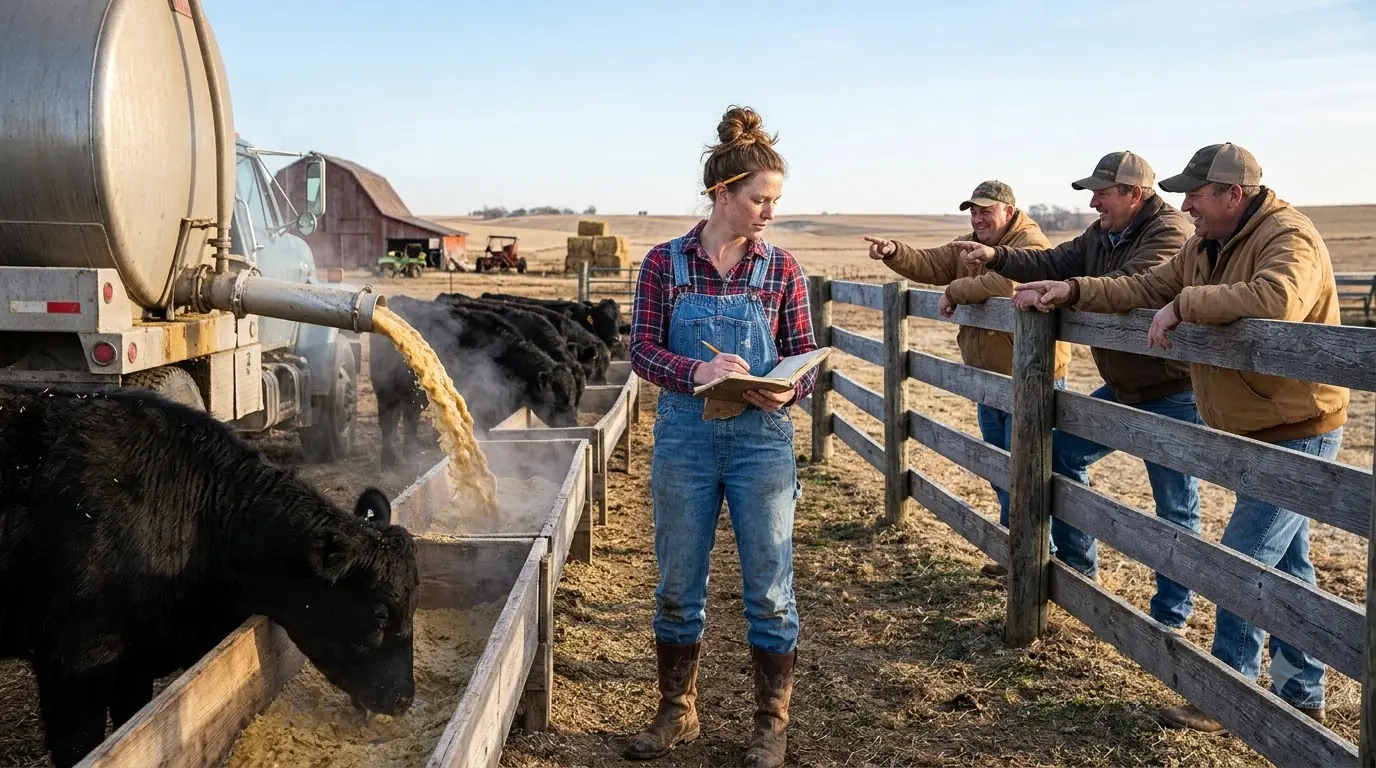
She looked through the window.
Two headlights moved slowly along the gravel lane.
For several seconds, Nora did nothing.
Then she set down the thermos, pulled on her brown work coat, and stepped outside.
The Kansas morning had that particular kind of cold that felt clean rather than cruel.
Frost silvered the fence rails.
Steam drifted from the cattle clustered beyond the feeding lot.
The eastern horizon was beginning to brighten, but the sun had not yet reached the flat line of winter fields.
The tanker reversed toward the feeding shed.
Its brakes hissed.
The driver leaned from the window.
“You Tillman?”
Nora raised one gloved hand.
“That’s me.”
He looked toward the strange arrangement of salvaged pipes, steel troughs, an old auger hopper, and two pumps Nora had spent most of November rebuilding.
“You sure this is where you want it?”
“Yes.”
He frowned.
“All of it?”
“All of it.”
The driver shrugged.
“Your farm.”
Nora walked toward the valve.
She had been waiting three weeks for this moment.
The tanker carried warm spent mash from Heartland Ridge Distillery, twenty-seven miles away.
Until recently, Nora had thought of distilleries the same way most cattle producers around Maple County did.
Whiskey.
Tourists.
Barrels.
Not cattle feed.
Then conventional feed prices climbed again.
Corn had become painfully expensive.
Protein supplements were worse.
Fuel kept rising.
By November, the numbers in Nora’s notebook had begun looking less like business records and more like warnings.
She needed another option.
Heartland Ridge produced large quantities of wet grain after fermentation.
The distillery needed somewhere for that material to go.
Nora needed feed.
The arrangement looked simple enough on paper.
Nothing on a farm was ever simple once machinery became involved.
She had spent evenings studying nutrient analyses provided by the distillery and extension office, calling people who understood livestock nutrition better than she did, calculating how much could reasonably replace parts of her existing ration, and figuring out how quickly the wet material would have to be used.
Then came the practical problem.
Handling it.
Spent mash was heavy.
Warm.
Wet.
It did not behave like dry grain.
Nora’s existing feed bins were useless.
So she built something.
Not elegant.
Not pretty.
Something that worked.
At least she hoped it worked.
The tanker driver opened the valve.
A thick golden-brown stream surged through the steel pipe.
Nora stepped backward.
Steam curled into the morning air.
The mash hit the receiving hopper with a wet roar before moving toward the feeding troughs.
The smell was strange.
Warm grain.
Yeast.
Something faintly sweet.
Nothing like whiskey.
Behind the fence, her cattle lifted their heads.
One steer moved forward.
Then another.
Nora watched carefully.
The animals approached the trough.
Sniffed.
Paused.
One tasted it.
Then returned for another mouthful.
Nora exhaled.
That was when the laughter started.
She turned.
Three pickup trucks had stopped along the county road.
Of course.
Nora should have expected it.
Nothing unusual happened within five miles of Maple Creek without somebody finding time to watch.
Ed Walker stood beside the first truck.
He was fifty-three, thick through the chest, with a gray mustache and the confidence of a man whose family had raised cattle since before anyone remembered exactly when.
Beside him stood Roy Benton and Pete Gardner.
All three were leaning against the fence.
All three were smiling.
Ed cupped both hands around his mouth.
“You planning to feed cattle or brew them?”
Roy doubled over laughing.
Pete slapped the wooden fence rail.
Nora looked back toward the tanker.
The driver grinned.
“You know them?”
“Unfortunately.”
Ed shouted again.
“Better keep matches away from those steers!”
More laughter.
Nora ignored them.
She took the notebook from inside her coat.
Date.
Load weight.
Moisture estimate.
Temperature.
Tanker arrival time.
Number of cattle.
She wrote carefully.
Pete called:
“She’s taking notes!”
Ed answered:
“Probably writing their last wills.”
Nora closed the notebook.
She walked toward the fence.
The men smiled wider.