“We’re dealing with something unusual,” the park ranger said over the phone. “There’s an injured adult Bald Eagle near Sprague Lake. Can your team help?” Dr. Megan Foster, executive director of the fictional Front Range Raptor Rescue Center in Colorado, had heard some version of that sentence many times before.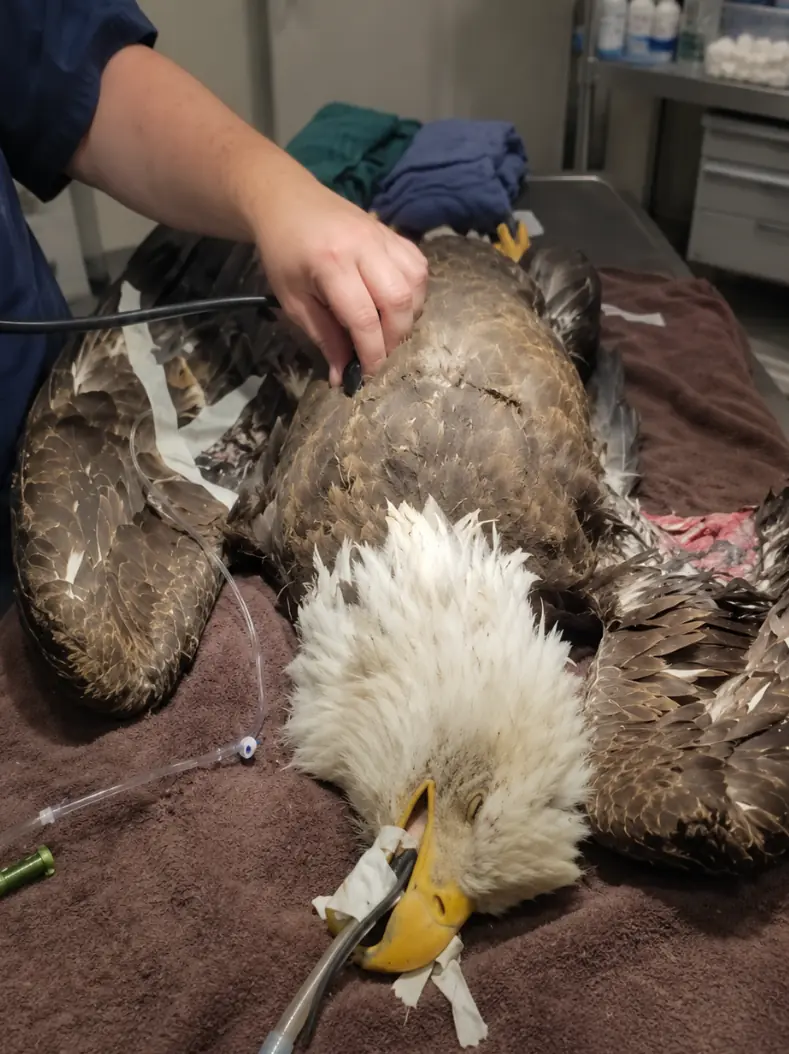 Members of the public regularly called the center after seeing what they believed was an injured Bald Eagle beside a road, in a field, near a lake, or sitting unusually low in a tree. The concern was almost always sincere, but the identification was often wrong. A Red-tailed Hawk viewed from a distance could suddenly become an “eagle.” A Great Horned Owl sitting on the ground after striking a window might be reported as a young Bald Eagle. Ospreys were frequently mistaken for eagles around reservoirs, and on a few memorable occasions the mysterious “large injured bird” turned out not to be a bird at all. Foster had learned never to dismiss the reports, but she had also learned not to build a rescue plan around a species identification until someone experienced had confirmed what was actually there. This call was different because the person on the other end was a National Park Service ranger accustomed to watching wildlife in the field. He had already spent nearly forty minutes observing the bird through binoculars. He could see the white head and tail of an adult Bald Eagle, the yellow beak, and the large dark body. More importantly, he had watched the eagle try to leave. “The right wing is hanging lower,” he told Foster. “It tried to move when hikers came through, but it only got a few feet off the ground. It landed again near the water and hasn’t moved far since.” Foster asked the questions the center used for every potentially serious raptor call. Was the eagle upright? Yes. Was it breathing with its beak open? Not continuously, but its breathing looked faster after it tried to fly. Was there visible blood? Only a small amount around the head and feathers near the shoulder. Could the ranger keep people and dogs away from the area? Yes. Had anyone attempted to catch or feed it? No. Within minutes, Foster had a response team moving toward Rocky Mountain National Park with a padded transport crate, heavy gloves, towels, and the equipment needed to safely contain a large raptor. Most “injured eagle” calls did not turn out to involve an eagle. This one clearly did.
The ranger had first noticed the bird after several hikers stopped along the edge of the trail and began pointing toward the shoreline. Bald Eagles were not impossible to see in Colorado, and an adult standing near water would not normally be enough to trigger an emergency response. What drew the ranger’s attention was how low the bird remained and how little distance it created between itself and approaching people. A healthy adult eagle may tolerate distant hikers in a busy recreational area, but it will generally maintain control over its own space. This bird could not. When the ranger moved closer, staying well outside striking distance, the eagle turned its white head toward him and immediately became alert. Its talons gripped the ground, and its body leaned away. The bird understood that a person was approaching. What it did not do was fly normally. It spread both wings and tried to launch, but the right side opened awkwardly. The eagle managed several strong steps and one short burst into the air before dropping back toward the shoreline. The landing was controlled enough to avoid a fall, but the bird remained only a short distance from where it had started. The ranger backed away and closed part of the trail to keep visitors from surrounding it. He did not know whether the eagle had struck a tree, collided with a vehicle earlier in the day, been injured during a territorial interaction, or suffered some other trauma. No one had witnessed the event. The only certain facts were that the adult Bald Eagle was injured, its right wing was not functioning normally, and it could no longer create the distance from people that a wild eagle ordinarily would. That was enough to justify intervention.
When Foster’s rescue team arrived, they spent several minutes observing the eagle before moving in. The bird was standing near a patch of low vegetation between the water and the trail. Its wings were folded, but the right side remained slightly lower than the left. Several feathers near the shoulder were disturbed and stained. A small abrasion could be seen near the head. The eagle followed every movement of the responders, which told them its awareness remained strong. Its feet also appeared functional. This was important because a wild Bald Eagle can be extremely dangerous even when one wing is injured. The talons, rather than the beak, are the part rescuers are most concerned about during capture. A debilitated eagle may remain motionless until someone gets within reach, then suddenly strike with enough force to cause serious injury. The team therefore approached slowly and deliberately. One responder positioned himself so the bird would be discouraged from moving toward deeper water. Another remained far enough away to reduce pressure but close enough to block the trail side if the eagle attempted to run. The ranger kept hikers at a distance. For several minutes, nothing happened. Then the eagle moved. It opened the left wing strongly, struggled to bring the right side into the same position, and made another attempt to escape. The bird gained only a few feet of height and traveled a short distance before coming down again. That unsuccessful flight was the clearest confirmation the rescuers needed. Waiting longer would not restore the wing, and every escape attempt risked worsening whatever injury was present.
The capture itself lasted only a few seconds once the team committed. A large towel was used to reduce visual stimulation and control the wings. The feet were secured first, with the handlers making sure the talons could not close around a wrist or arm. The body was then supported so the injured right wing would not swing freely. Up close, the eagle looked more exhausted than it had from a distance. The head remained alert, but the bird’s breathing was elevated from the effort of attempting to fly. There were several superficial abrasions around the face and crown and bruising beneath the feathers near the right shoulder. No major open fracture was visible. There was no bone protruding through the skin and no dramatic deformity that immediately explained the inability to fly. That absence was encouraging, but it did not mean the injury was minor. Many of the most important structures in a bird’s shoulder are hidden beneath muscle, feathers, and the chest wall. An eagle can lose the ability to generate effective lift even when the wing looks almost normal from the outside. The rescuers placed the bird inside a padded crate without a high perch and covered most of the carrier to reduce stress. The goal during transport was to keep the eagle quiet, prevent further flapping, and get it to the rehabilitation center before swelling or fatigue became worse.
By the time the transport vehicle reached the Front Range Raptor Rescue Center, the veterinary team had already prepared an examination room and radiography equipment. Foster met the responders at the door and reviewed the field history before the crate was opened. The eagle had been found grounded near water, had made at least two unsuccessful attempts to fly, and showed no obvious major external fracture. Those details narrowed the possibilities but did not provide a diagnosis. The bird could have suffered a shoulder dislocation, a coracoid fracture, a soft-tissue injury, internal trauma, or even neurologic damage that affected the right side more than the left. The center also routinely considered toxic exposure in grounded eagles because lead and other toxins can cause weakness and abnormal flight, although the clear asymmetry of this bird’s wing made mechanical trauma especially likely. When the eagle was removed from the carrier, Foster supported the body while another staff member controlled the feet. The bird resisted strongly, which was a good sign neurologically, but the right shoulder was clearly painful. The eagle reacted immediately when the area was palpated. The long bones of the lower wing did not feel grossly unstable, and the humerus did not show an obvious displaced fracture on physical examination. That pushed the team’s attention closer to the shoulder girdle.
Because a complete examination and high-quality radiographs would require precise positioning, the veterinary team decided to use anesthesia. The decision was not made casually. Any anesthesia carries risk, especially in a recently traumatized wild bird, but repeatedly restraining a conscious eagle while trying to position an injured shoulder can create even more stress and can worsen the injury. Once the bird was anesthetized and carefully monitored, staff were able to evaluate the wing without fighting against the eagle’s defensive movements. The image from this stage of care would show a very different animal from the alert bird at the lake. The eagle lay on a padded treatment surface while a breathing tube was secured at the beak and staff monitored heart rate, respiratory function, and anesthetic depth. The right wing could finally be extended enough for diagnostic imaging. Radiographs of the shoulder and chest revealed the injury that the external examination could not. The eagle had sustained a fracture of the right coracoid, one of the major structural bones of the avian shoulder girdle. The fracture was serious but remained reasonably aligned. There was also substantial soft-tissue bruising around the shoulder. The spine appeared intact, the long bones of the wing were not shattered, and no catastrophic internal injury was visible on the initial imaging. There were no obvious metallic fragments in the body. The head abrasions were superficial. For the first time since the ranger made the call, the team could explain why the eagle looked capable of moving its wing but could not actually fly normally.
The coracoid is not a bone most members of the public think about when they imagine a broken wing, but in a flying bird it is critical. It forms part of the shoulder girdle and helps support the enormous forces generated during the downstroke. In a Bald Eagle, those forces are substantial because the bird must lift a heavy body using repeated powerful wingbeats. A coracoid injury can therefore create a misleading appearance. The wing itself may still open. The feathers may remain intact. The radius, ulna, and humerus may all be normal. Yet the bird can be functionally grounded because the shoulder structure cannot tolerate or transmit the force needed for sustained flight. Foster explained it simply to the ranger later that afternoon: “The eagle hasn’t lost the wing. It has injured one of the structures that makes the wing useful.” That distinction would guide the entire rehabilitation process.
The next decision was whether the fracture required surgery. After reviewing the radiographs, the veterinary team concluded that the alignment was stable enough to attempt conservative management. Surgical stabilization can be appropriate for some coracoid fractures, but every procedure also creates additional trauma, anesthesia time, and risk. In this case, strict cage rest, pain management, and serial imaging offered a reasonable chance of healing without orthopedic hardware. The eagle was given fluids to correct mild dehydration and medications for pain and inflammation as clinically appropriate. The superficial wounds around the head and shoulder were cleaned. The bird was then placed in a quiet indoor enclosure designed to minimize opportunities for powerful wing use. There was no high perch and no long distance across which the eagle could attempt to fly. The first phase of treatment depended on doing something that is often emotionally difficult for people watching a wild animal recover: very little. The fracture needed time more than activity.
During the first night, the eagle spent long periods resting. Its appetite was limited, and staff monitored food intake without repeatedly entering the enclosure. Human contact was kept to the minimum required for treatment because the center wanted to preserve the bird’s normal avoidance behavior. On the second day, the eagle was already more reactive when staff approached. It raised its body, tracked their movement, and shifted away. The right wing remained close to the body. Foster considered the stronger reaction encouraging. “When an eagle starts trying very hard to get away from us, we know we’re beginning to get the wild bird back,” she said. The challenge was that the bird’s improving energy could become dangerous for the fracture. A weak eagle rests because it has no choice. A stronger eagle wants to climb, flap, and escape long before the healing bone is ready. Rehabilitation staff therefore had to protect the eagle from using the wing too aggressively while still allowing enough normal movement to prevent unnecessary stiffness.