Homeowners had faced unnecessary uncertainty.
Public funds required recovery or correction.
A respected contractor's employees had endured scrutiny and disruption.
And a thirteen-year-old girl had spent weeks feeling frightened in her own bedroom because an HOA president tried to silence the wrong person.
None of those consequences could be reversed simply by announcing a verdict.
Willowbrook Estates eventually settled its outstanding financial disputes.
The independent review helped the association identify payments requiring recovery, contracts needing correction, and procedures that had failed.
Where the evidence supported it, the association pursued available reimbursement and legal remedies.
Certain infrastructure projects still needed legitimate repairs.
The drainage problems hadn't disappeared because the invoices were questioned.
Helen understood that.
The association hired an independent engineer to evaluate the actual conditions and prepare a properly supported scope of work.
New contractor proposals were reviewed through a transparent process.
Homeowners received clearer information about projected costs and the reasons particular repairs were necessary.
Marcus declined to bid on the work.
He didn't want anyone claiming he'd raised concerns to obtain a contract for his own business.
But he offered to help residents understand the technical explanations in the public portions of the process.
Helen appreciated that.
During one meeting, she thanked him for his patience.
Marcus laughed softly.
"I don't know whether patience is the word I'd use."
She smiled.
"Persistence, then."
He nodded.
"That sounds more accurate."
The room laughed.
For the first time in months, an HOA meeting ended without accusations, threats, or someone storming out.
It felt almost extraordinary.
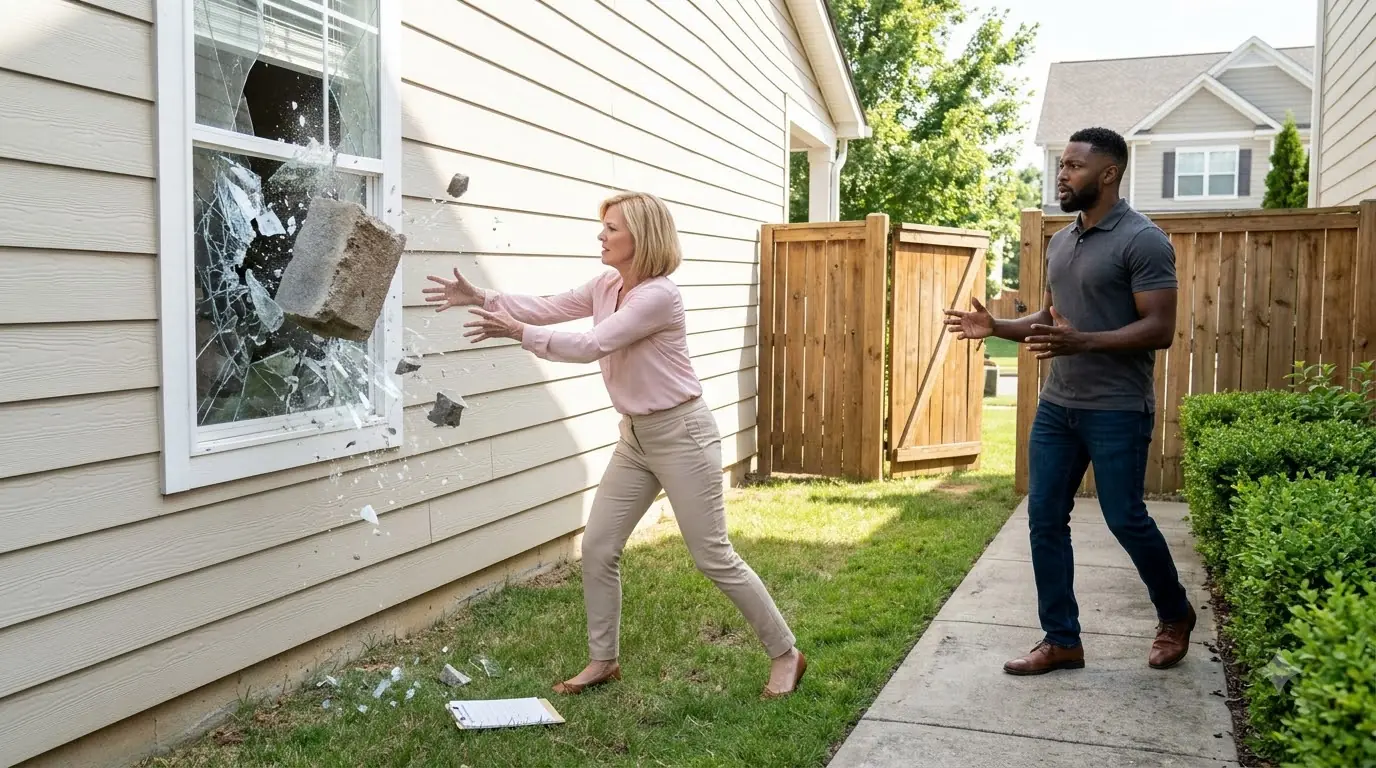
Richard Whitmore moved out of the house he shared with Deborah several months after the window incident.
The decision was painful.
They had been married for twenty-four years.
They'd raised a family, traveled together, and built what he believed was a stable life.
But the investigation revealed financial arrangements and decisions Deborah had hidden from him.
The damage to his trust went far beyond the broken window.
He wasn't able to pretend that their marriage could return to normal simply because she apologized.
They began living separately while considering their future.
Deborah struggled with the change.
For years, she'd defined herself through the roles she occupied.
Wife.
HOA president.
Community organizer.
Respected neighbor.
Now several of those identities had been shaken.
At first, she continued blaming Marcus.
Then Helen.
Then Martin.
Eventually, after months of difficult conversations with counsel, family members, and a professional counselor, she began acknowledging the choices she'd made.
She had accepted payments she should have disclosed.
She had used enforcement authority to retaliate against a homeowner.
She had threatened him.
And she had deliberately damaged a residential window without knowing or caring whether someone might be inside.