More detail.
Multiple crimes.
Direct communication with institutions.
A repeated symbol.
This is escalation not in violence but in communication.
He was increasing the risk of exposure because the earlier attempt had failed to produce the attention he wanted.
That pattern mirrors his criminal psychology more broadly.
Satisfaction faded.
He escalated.
The Journalist Who Named Him
Phil Stanford's label "Happy Face Killer" gave the unknown writer a public identity before police knew his legal one.
Journalistic nicknames can be controversial because they can romanticize criminals.
In this case, the name also served a practical purpose.
It gave reporters and readers a way to refer to one anonymous person claiming multiple crimes.
Once that label existed, public awareness helped put pressure on the supposedly closed Bennett case.
But it also gave Jesperson the notoriety he craved.
Both effects existed simultaneously.
A Killer Can Tell the Truth for the Wrong Reason
Jesperson's motivation does not change the factual value of his confession.
That is another subtle lesson.
He may have spoken because he wanted attention.
He may have wanted to prove superiority.
He may have wanted to clear people who were taking his credit rather than because he cared about their innocence.
Whatever the motive, if the information can be corroborated, it remains evidence.
Investigators must separate why someone talks from whether what they say is true.
A False Confessor Can Cry
Likewise, Pavlinac's emotion did not make her story true.
People can cry while lying.
They can cry because they are terrified.
Because they regret their lie.
Because they are abused.
Because they are overwhelmed.
Because they partly believe the story they have been repeating.
Emotion is real.
Its interpretation is uncertain.
The prosecutor heard emotion and saw guilt.
The defense heard emotion and saw desperation.
Both were interpreting the same tears.
Physical corroboration should have carried more weight.
The Body Location Was Not Magic
Pavlinac's ability to identify the body site seemed almost supernatural.
It was not.
She had information.
She observed clues.
She inferred.
A person can appear to possess secret knowledge when the secrecy has already been compromised.
This is why modern interrogation protocols try to document what information has been disclosed and when.
Without that discipline, investigators can accidentally feed a suspect the very facts later used to validate a confession.
The Happy Face Case as a False-Confession Study
The case remains valuable far beyond serial-killer history.
It demonstrates:
How a person can initiate a false accusation.
How investigators can become emotionally invested in a witness.
How fabricated evidence can be rationalized.
How a confession can evolve.
How police questions can communicate information.
How a jury can hear a recantation and still trust the original confession.
How a plea can follow a wrongful conviction.
How later evidence can force an entire system to reverse itself.
Few cases contain the entire chain so clearly.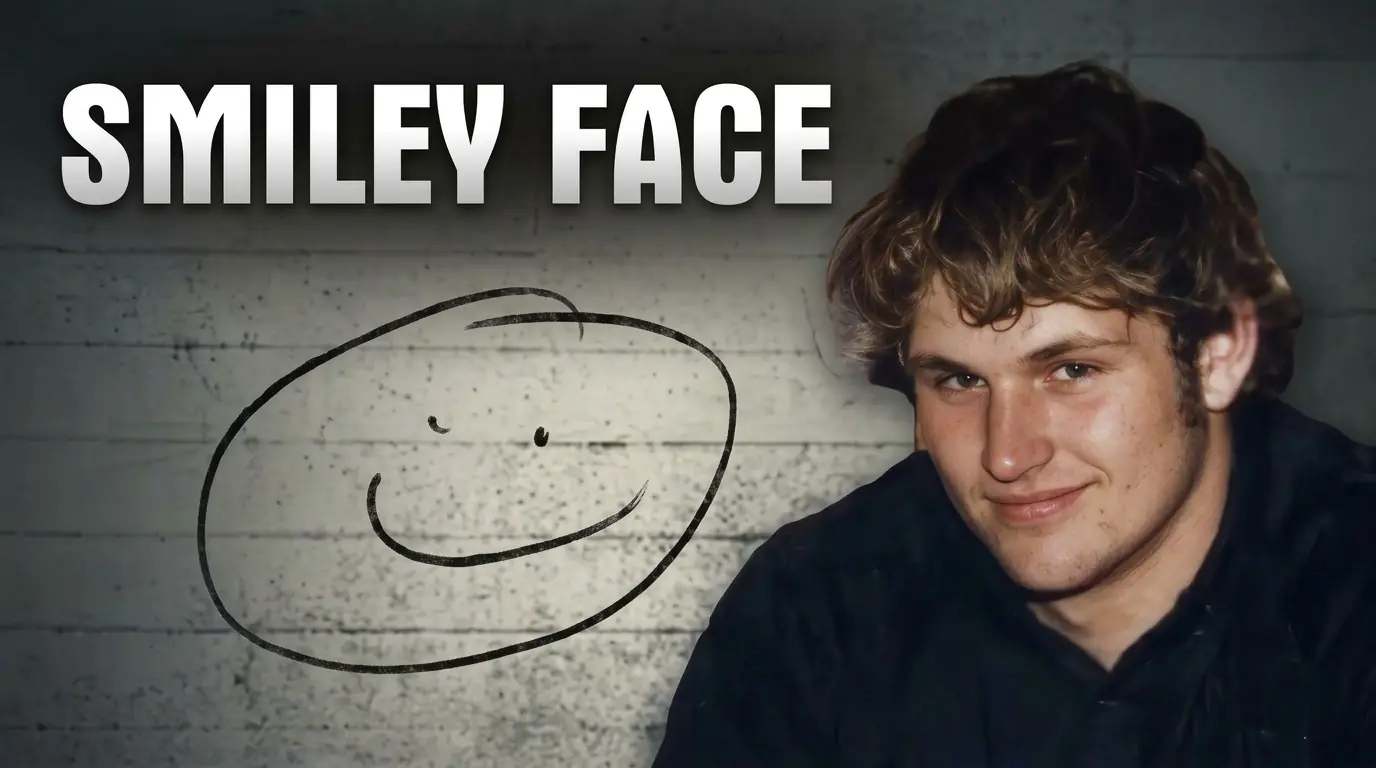
The Happy Face Case as a Serial-Killer Study
It also demonstrates:
How mobility fractures investigations.
How victims in transient circumstances can become difficult to trace.
How jurisdictional boundaries protect patterns.
How offenders may communicate with media.
How notoriety can become part of motivation.
How serial killers may exaggerate victim counts.
How one final victim with a stronger social connection can bring down an otherwise mobile offender.
Two different criminal-justice stories coexist.
Wrongful conviction.
Serial murder.
The Happy Face Case as a Cold-Case Study
And now there is a third layer.
Victim identification.
Twenty-seven years after Jesperson's arrest, Patricia Skiple was identified.
Twenty-eight years later, Suzanne Kjellenberg.
Thirty-one years after arrest, Lydia McWhorter.
The killer stopped killing in 1995.
The investigation did not truly finish until 2026.
What Jesperson Could Not Erase
Names.
Eventually.
He could move bodies across states.
He could leave women where strangers found them.
He could know only a first name or an alias.
He could destroy belongings.
But preserved DNA eventually outlived his anonymity strategy.
Technology changed.
The remains did not need the killer to identify themselves.
Their families could.
The Smiley Face Failed
In the end, Jesperson wanted the symbol to represent power.
The unknown killer laughing at police.
Instead it became evidence of insecurity.
He could not tolerate being unknown.
He could not tolerate other people receiving credit.
The smile led him to communicate.
Communication created physical evidence.
Physical evidence helped identify him.
The symbol designed to mock investigators became part of the paper trail that authenticated his crimes.
The Most Important Piece Was Not the Smile
It was Taunja's Oregon identification card.
Covered in mud.
Hidden near the Sandy River.
Found five years later.
That object did what the smiley face never could.
It separated the true killer from the false confessor.
Jesperson knew where it was because he had put it there.
Pavlinac did not.
Once searchers recovered it, the case's entire moral geometry changed.
One Murder, Three Confessions
Think about how extraordinary that is.
Taunja Bennett's murder produced:
Laverne Pavlinac's false confession.
John Sosnovske's incriminating but false narrative and later no-contest plea.
Keith Jesperson's genuine confession.
For investigators, the case became an exercise in distinguishing legal admissions from factual truth.
The confession alone could not be the answer.
Only evidence could decide between confessors.
The First Wrong Answer Looked Stronger
Pavlinac's confession looked convincing because it was emotional and detailed.
Jesperson's confession initially looked weaker because he was an attention-seeking serial killer who got some details wrong.
Yet the weak-looking confession was true.
The strong-looking one was false.
That reversal is what makes this case feel almost like detective fiction.
The person who looks least credible may possess the truth.
The person who appears to know everything may simply have learned how to perform knowledge.
The Final Victim Gives the Final Correction
In a way, Lydia's 2026 identification extends the same theme.
For decades Jesperson called her "Claudia."
Even the killer's knowledge was incomplete.
He knew he killed her.
He did not truly know who she was.
Investigators eventually corrected him too.
Her name was Lydia Jane Wade McWhorter.
The murderer did not get the final word.
DNA did.
The True Beginning Was January 21, 1990
Return to Portland.
Taunja Bennett enters the B&I Tavern.
Keith Jesperson is there.
No one knows the significance of that meeting.