Roberta Ellis.
Forensic links to the Happy Face letters.
Eventually McIntyre had to do one of the hardest things someone in his position can do.
Say:
I was wrong.
The Los Angeles Times' later reconstruction of the case focused heavily on that internal crisis.
If a sincere prosecutor, experienced detectives, a judge and a jury could all accept a false confession, what did that say about certainty in criminal justice?
The Happy Face case did not provide a comforting answer.
It showed that decent people can reach a wrong result together.
The Death Penalty Shadow
Oregon's death penalty hung over the original case.
That mattered to Sosnovske.
Pavlinac had been convicted.
Several jurors reportedly favored an aggravated-murder finding.
Sosnovske's attorney had to consider what might happen if he went before another jury.
So he accepted a no-contest plea that avoided the worst possible outcome.
Later, after Jesperson proved he was the killer, Sosnovske's plea could easily be misread as proof that he had admitted guilt.
But guilty pleas and no-contest pleas do not always reveal factual truth.
They can reflect risk.
A defendant may accept a severe but survivable sentence rather than gamble with death.
The case thus contains another warning.
A conviction does not always mean investigators independently proved every fact at trial.
Sometimes a defendant makes a strategic decision under enormous pressure.
The Woman Who Started It All
Pavlinac remains one of the most complicated figures in the story.
She was innocent of Taunja Bennett's murder.
But she was not an innocent participant in the wrongful conviction.
She knowingly lied.
She knowingly accused Sosnovske.
She fabricated evidence.
Her actions helped place an innocent man in prison.
At the same time, she described herself as desperate to escape an abusive relationship.
That context explains her motive.
It does not erase the consequences.
When she was finally released, the judge openly criticized her conduct.
The legal system faced a difficult moral problem.
How do you treat a person who caused her own wrongful murder conviction through deliberate lies?
The answer ultimately separated factual innocence from other wrongdoing.
Pavlinac had done serious harm.
But she had not killed Taunja.
Imprisoning her for a murder she did not commit could not be justified simply because her behavior had been reprehensible.
Taunja Bennett Disappears Behind Everyone Else
One danger in telling this case is that Taunja herself can vanish from her own story.
First she becomes the victim in the Pavlinac case.
Then the evidence in the Sosnovske case.
Then the first victim of the Happy Face Killer.
Then the murder that exposes a wrongful conviction.
Her death becomes a puzzle through which everyone else's story is told.
But Taunja was twenty-three.
She had a family.
Her mother lost a daughter.
Her relatives watched strangers confess falsely.
They watched one legal theory collapse and another replace it.
Every time the case reopened, their daughter's last hours became public evidence again.
The fact that the justice system convicted the wrong people did not make Taunja less dead.
It delayed accountability for the person who actually killed her.
The Eight Confirmed Victims
As of 2026, all eight confirmed victims tied to Jesperson have been identified.
They are:
Taunja Bennett.
Lydia Jane Wade McWhorter.
Cynthia Lyn Rose.
Laurie Ann Pentland.
Patricia Skiple.
Suzanne Kjellenberg.
Angela May Subrize.
Julie Ann Winningham.
Some were identified soon after death.
Others waited decades.
Lydia McWhorter waited thirty-four years for her name to be restored.
Patricia Skiple was known only by a case nickname for nearly three decades.
Suzanne Kjellenberg remained unidentified until 2023.
This makes the Happy Face case not merely a serial-killer investigation but an ongoing forensic-identification story that lasted long after Jesperson was imprisoned.
The killer was caught in 1995.
The work of identifying his victims was still continuing in 2026.
The Highway Problem
Jesperson's job is essential to understanding why the crimes were difficult to connect.
Long-haul trucking produces a particular geography.
A driver can sleep in one jurisdiction and wake in another.
He can meet someone in Washington.
Drive through Oregon.
Stop in California.
Continue toward Arizona.
Then return east.
A missing person might never be reported in the state where she died.
A body may appear hundreds of miles from the last confirmed sighting.
The victim's hometown police may never communicate with the agency holding the unidentified body.
Before widespread digital information-sharing, the problem was even worse.
Different databases.
Paper files.
Telephone calls.
Faxed bulletins.
Investigators depended heavily on someone noticing a similarity.
Serial killers who traveled could exploit jurisdictional fragmentation without necessarily needing a sophisticated plan.
Movement itself created confusion.
A Truck Cab as Private Territory
For Jesperson, the truck offered more than transportation.
It was a private environment.
A temporary room.
A workplace.
A bedroom.
A vehicle constantly expected to be somewhere else.
Unlike an apartment, it did not stay within one police district.
That mobility complicated scene reconstruction.
A homicide might occur inside the cab.
The body could be transported.
The interior could then cross hundreds of miles before anyone knew a crime had occurred.
Investigators later relied on trucking records to reconstruct Jesperson's routes.
The same occupation that gave him mobility eventually generated documentary evidence of where he had traveled.
This is a recurring pattern in crime.
The thing that protects an offender often leaves its own trail.
Julie Winningham Broke the Pattern
Jesperson's earlier strategy depended partly on victims having little durable connection to him.
Julie had one.
She was his girlfriend.
Her friends knew him.
Her family had met him.
Records connected them.
She had sold him a vehicle.
Investigators could work from her life directly toward him.
That was why the final murder brought the series down.
Not because the crime itself was necessarily more careless in every detail.
Because the relationship was traceable.
For years, Jesperson had benefited from being the mysterious last man no one could name.
With Julie, people could name him.
Keith.
Truck driver.
Very tall.
Once detectives had that, his employer supplied the road map.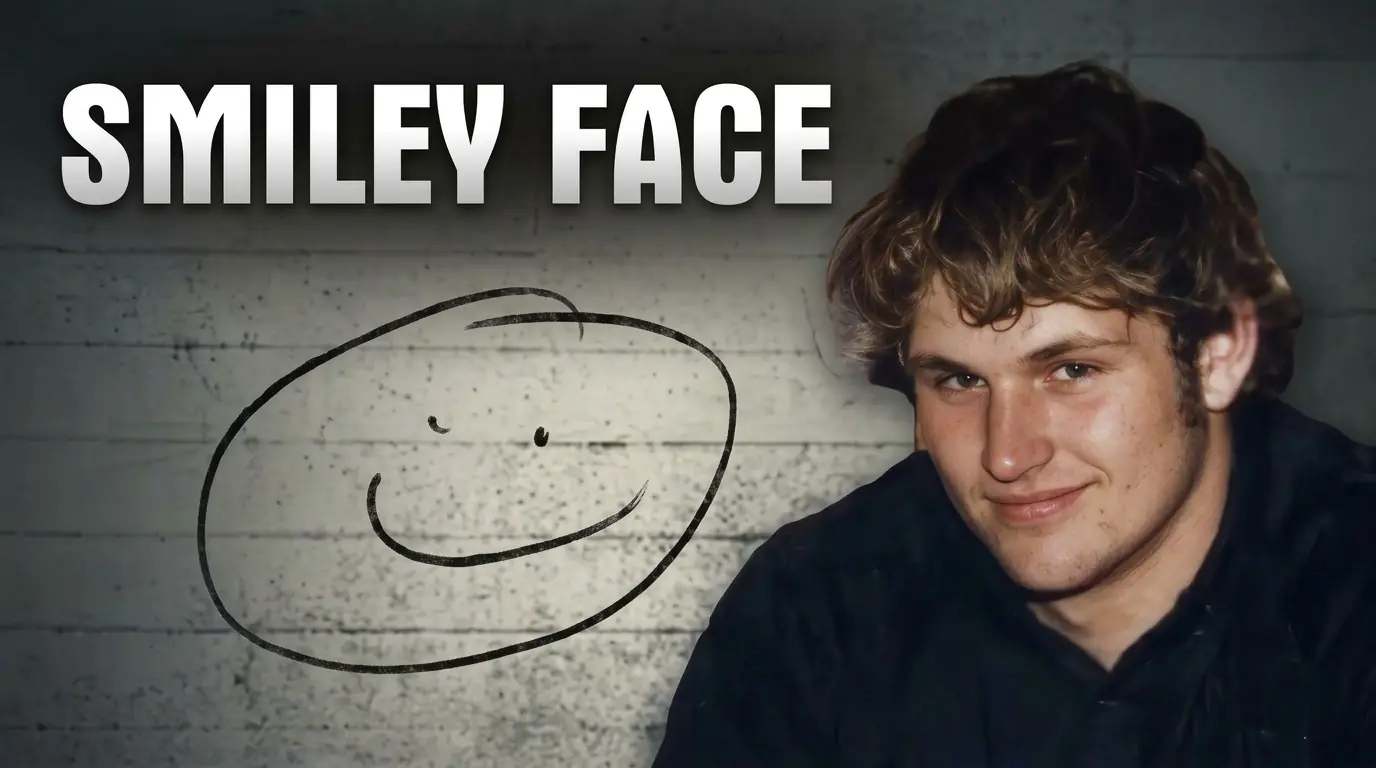
March 22, 1995
Detective Rick Buckner and other investigators confronted Jesperson in New Mexico.
They questioned him for hours.
He did not immediately confess.
Without sufficient evidence, they released him.
This moment resembles countless murder investigations.
Police know who they want.
They feel something is wrong.
But feeling is not probable cause.
They cannot simply imprison someone indefinitely because his girlfriend is dead.
Jesperson left.
The investigators continued working.
Then Jesperson called.
He wanted to surrender.