The Black executive had spent almost three months preparing for the moment when she would officially control Meridian Aviation Group, yet when the lawyers finally slid the completed acquisition documents across the conference table that morning, the first thing she thought about was not the $4.2 billion transaction.
It was whether her daughter had eaten enough.
The baby had slept through most of the closing.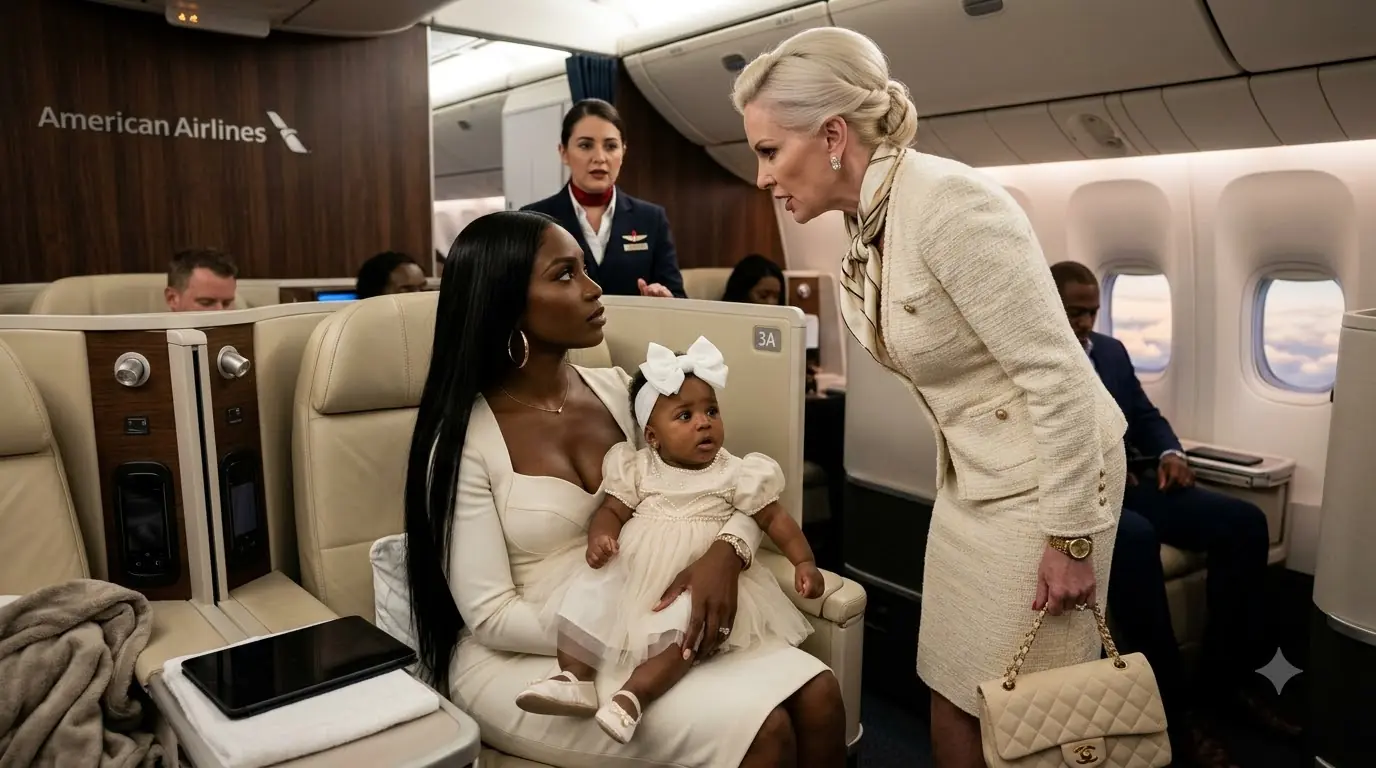
Eight months old, round-cheeked, curious, and completely uninterested in corporate history, she had spent the first hour in the arms of a trusted nanny in a private room down the hall before waking just as the final signatures were being reviewed.
The executive excused herself immediately.
Half the room stood when she did.
She hated that.
“Please sit.”
They sat.
The acquisition counsel looked uncertain.
The investment bankers looked exhausted.
Three executives from the airline looked as though they had been holding their breath for six consecutive weeks.
Meridian Aviation Group had purchased controlling ownership of Northstar Atlantic, a legacy American airline with international routes, a valuable airport network, strong crews, aging internal systems, and a board that had spent several years treating culture as something that appeared automatically in annual reports.
The Black executive had not purchased it because she liked airplanes.
She had purchased it because the airline was worth saving.
There was a difference.
She had built her career by identifying companies whose valuable parts were hidden beneath bad decisions. Sometimes that meant manufacturing. Sometimes logistics. Sometimes hospitality. This was her first airline.
Her advisors had warned her about it constantly.
Labor risk.
Fuel exposure.
Regulatory scrutiny.
Fleet replacement costs.
Maintenance liabilities.
Customer-service volatility.
One banker had described airlines as businesses where nearly every variable capable of becoming expensive eventually did.
The executive had smiled.
“So are children.”
The banker had not known whether she was joking.
She had not entirely known either.
Now, at thirty-four, she stood in the private nursery suite of a Manhattan law firm and lifted her daughter from the nanny’s arms.
The baby wore a little cream romper at the time, soft cotton, no elaborate decorations.
That would change before the flight.
Her mother kissed her forehead.
“Did you behave?”
The nanny smiled.
“She attempted to negotiate with a bottle.”
“Did she win?”
“She usually does.”
The executive looked down at the child.
“Family trait.”
Her daughter grabbed the thin gold chain at her mother's neck.
“Not that.”
The baby smiled.
The executive laughed.
For six weeks, nearly every conversation around her had involved ownership percentages, voting control, debt covenants, union agreements, airport slots, aircraft valuations, and transition committees.
The baby's hand in her necklace reduced the whole morning to something understandable.
Hold.
Feed.
Protect.
Go home.
Her plan had been simple.
Sign the documents in New York.
Take the afternoon Northstar flight to Los Angeles.
Spend one quiet evening with her daughter.
Begin formal ownership transition meetings the next morning.
No announcement until market filings were complete.
No public appearance.
No press.
No entourage on the aircraft.
The airline's senior corporate leadership knew Meridian had acquired controlling interest.
Most operating employees did not yet know the identity of the individual who ultimately controlled Meridian.
That anonymity had been intentional.
She wanted one ordinary flight before the company learned her face.
Not to trick anyone.
To see the product as it actually existed.
Her chief of staff hated the idea.
“You cannot travel anonymously on an airline you just acquired.”
“I can if nobody recognizes me.”
“That is exactly what anonymous means.”
“You understood the sentence.”
“You also have a baby.”
“I am aware.”
“You should take the corporate jet.”
“No.”
“Why?”
“Because I just bought an airline.”
“That is not a reason.”
“It is precisely a reason.”
He had sighed.
She had won.
By one-thirty, she had changed clothes.
The ivory dress was not chosen for attention.
It was simply the cleanest option after a morning of meetings. Structured fabric, elegant neckline, fitted without being severe. Gold hoops. Minimal jewelry. Long straight black hair falling smoothly over her shoulders.
Her daughter, however, looked spectacular.